
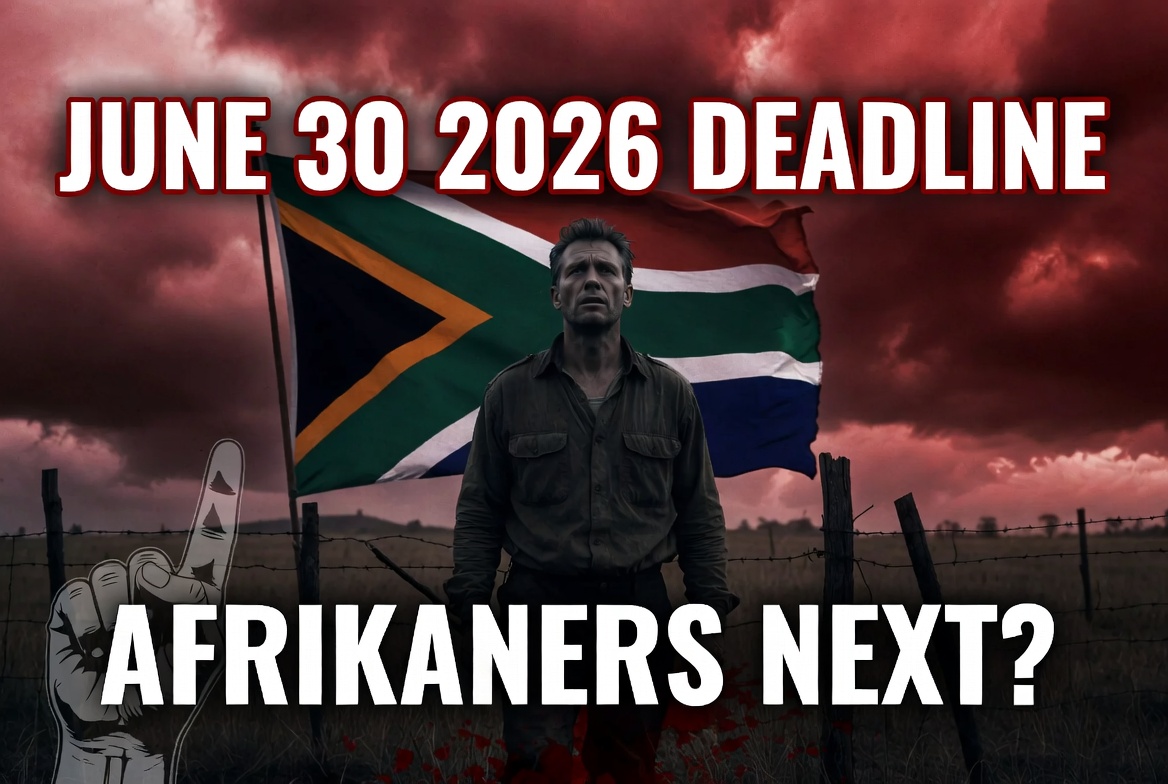
A video circulating on X, posted by @DeliaByliefeldt, captures the escalating fears surrounding South Africa's June 30, 2026, deadline for illegal foreigners to leave the country. The post pointedly asks why Afrikaners should be concerned, tagging accounts like @USCISJoe and @elonmusk. This isn't mere immigration enforcement—it's symptomatic of a deeper, dangerous narrative that threatens South Africa's white minority, particularly Afrikaners.
What the Video Reveals
The video compiles text overlays, screenshots, and clips highlighting xenophobic agitation tied to the deadline. It questions the implications for Afrikaners as inflammatory posts label them "illegal immigrants" who "forced themselves" on the land centuries ago. Clips feature aggressive rhetoric, including Lerato Pillay's defiant "VOETSEK" outburst demanding foreigners leave, and calls for mass confrontation on June 30. Government-aligned voices frame it as the "beginning of an end," with undertones of violence.
Why should Afrikaners be concerned about the June 30th deadline for illegal foreigners to leave South Africa? @USCISJoe @elonmusk https://t.co/gYiYWPVXC5 pic.twitter.com/7zbVQQeshy
— Delia Byliefeldt (@DeliaByliefeldt) May 22, 2026
Paul Mashatile's Rejection of Afrikaner Indigeneity
Deputy President Paul Mashatile has poured fuel on the fire. In recent statements, he declared that Afrikaners must first "acknowledge their historical role in dispossessing Black South Africans of land" before any recognition as an indigenous nation. He tied their presence to colonial guilt, despite Afrikaners' 350+ years of roots, contributions to agriculture and the economy, and status as a legally recognized people born in South Africa. This delegitimizes Afrikaners as perpetual outsiders, echoing calls to treat them like recent undocumented migrants.
The Malawian, Paul Mashatile's Divisive Ultimatum For Afrikaners: A Dangerous Step Back into Racial Grievance Politics https://t.co/RAkoIIdCG5
— WesternPulse (@WesternPulse88) May 21, 2026
@lEsethuHasane and Calls for Deportation of Dissenters
User @lEsethuHasane exemplified the hostility by responding to the Cape Independence Advocacy Group's open letter seeking international support (including from President Trump) for minority protections and regional autonomy. Hasane demanded: "When are we deporting the leader of this Treasonous movement?" tagging President @CyrilRamaphosa. Such rhetoric brands peaceful advocacy for self-determination as treason, pushing expulsion or worse for citizens exercising democratic rights.
Please push for this - these right wingers are extremely dangerous
— Kim Heller (@kimheller3) May 21, 2026
Farm Murders: A Brutal Reality Ignored
This anti-Afrikaner climate cannot be separated from the epidemic of farm attacks. Since 1990, thousands of attacks have claimed over 2,300 lives, disproportionately targeting white farmers. In March 2026 alone, 23 attacks and 6 murders were recorded—far exceeding prior periods. These are not random crimes; they often involve torture, rape, and extreme brutality against vulnerable rural families. AfriForum and other groups document a pattern the government downplays or denies as "just crime." White farmers, who produce the bulk of the nation's food, live under constant siege while the ANC prioritizes ideology over protection.
Julius Malema's "Kill the Boer" Incitement—and Court Protection
Adding to the peril is EFF leader Julius Malema, who repeatedly leads crowds in singing "Kill the Boer, Kill the Farmer." This is not abstract history; it's a direct threat amid ongoing murders. Shockingly, South Africa's Constitutional Court has shielded this as "protected speech," rejecting AfriForum's appeals. The court claimed a "reasonably well-informed person" would see it as non-literal political provocation, not incitement. This ruling emboldens radicals while leaving Afrikaner communities exposed. When leaders chant for the killing of a specific group—and courts defend it—the message to attackers is clear: impunity awaits.
Most of these comments come from EFF supporters whom seem who wants to take advantage of the date of the 30th and blame it on the March and March people.


Testing the State: Instability in Thokoza and Beyond
Independent journalist @WesternPulse88 captured the reality in a recent post about protests in Thokoza: "What is happening in Thokoza is not merely a march against foreigners, but a test to see how the police will handle the situation. The police can no longer handle the situation, and a climate for a possible coup is being created. Things are getting out of hand in South Africa." Crowds are probing weaknesses in law enforcement, signaling broader breakdown. High unemployment, service failures, and racial scapegoating create a powder keg.
What is happening in Thokoza is not merely a march against foreigners, but a test to see how the police will handle the situation. The police can no longer handle the situation, and a climate for a possible coup is being created. Things are getting out of hand in South Africa. pic.twitter.com/Fxu9DbZfWm
— WesternPulse (@WesternPulse88) May 21, 2026
Why Afrikaners Have Every Reason to Fear
South Africa faces record crime, economic collapse, and farm murders that many experts link to racial hatred. The June 30 deadline, Mashatile's guilt-tripping, Malema's anthems, and court-enabled incitement blur lines between illegal immigrants and productive citizens. Afrikaners built much of modern South Africa yet face expropriation, demonization, and violence. International attention—including U.S. refugee considerations—is a rational response to government failure.
The people of South Africa are testing the police force's limits, and instability is visibly rising. Radical elements seem eager to exploit chaos.
In these dark times, we must pray earnestly that there will be no bloodshed. South Africa stands on a precipice—may cooler heads, justice, and divine intervention prevent the horror that radical rhetoric invites. Afrikaners deserve security in the land of their birth, not persecution disguised as justice. The world is watching.

Comments (0)
Leave a Comment