
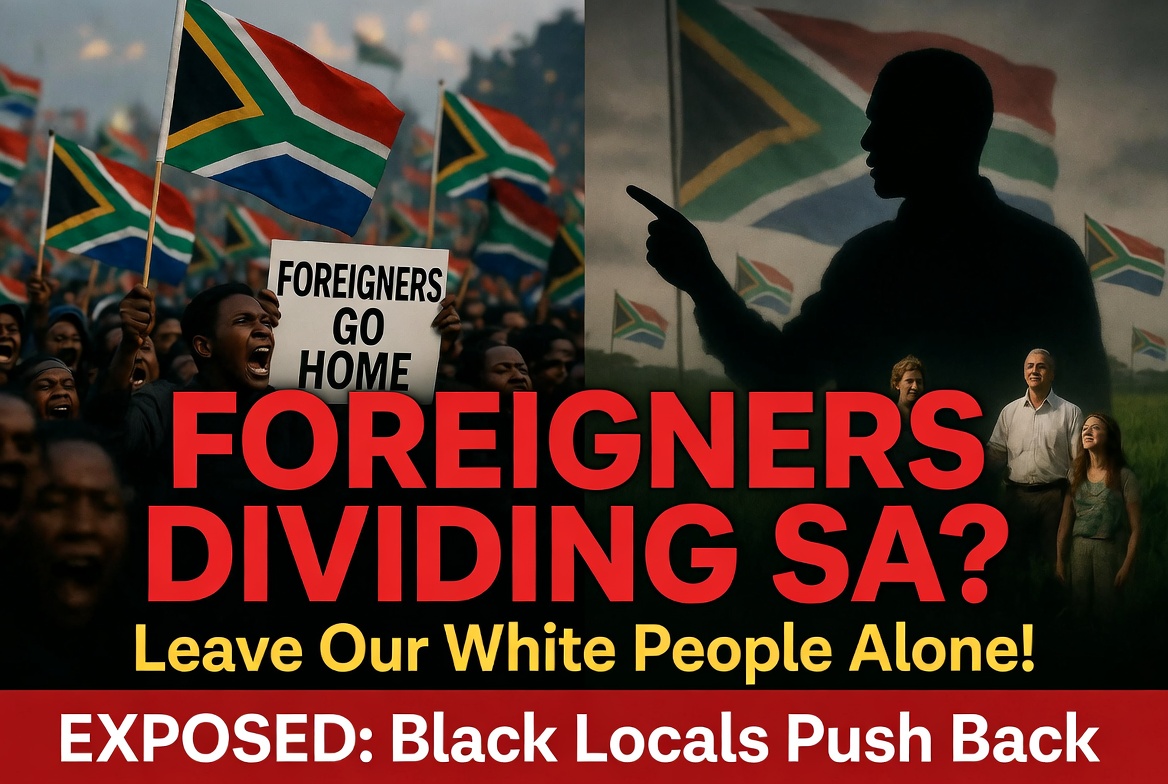
In a country still grappling with deep historical scars from apartheid, economic hardship, and high crime rates, a new wave of tension is emerging—not just between locals and immigrants, but through apparent attempts by some foreign voices to redirect black South African frustrations toward the white minority.
Recent anti-immigration protests across South Africa, particularly in Pretoria, Durban, and other areas, have highlighted legitimate grievances: high unemployment (often exceeding 30-40% in townships), accusations of foreigners dominating informal businesses, involvement in crime networks, and straining local resources. These protests have targeted African migrants from countries like Nigeria, Ghana, Zimbabwe, and others, with chants of "foreigners must go" and isolated incidents of harassment or violence. South African authorities and international observers have condemned xenophobic excesses, while neighboring countries have raised diplomatic concerns.
However, amid these protests, videos and statements have surfaced showing some foreign nationals or agitators explicitly trying to pivot the anger away from immigration issues and toward South Africa's white population—particularly Afrikaner farmers and communities. One widely shared clip features a young speaker addressing the unrest, urging black locals: "This is Africa, we are not leaving. Go and fight for your land from white people." This rhetoric seeks to reframe economic and social frustrations as a racial crusade against whites, echoing older narratives of land expropriation and historical grievance rather than addressing governance failures, border control, or integration.
Look at how the foreigners want to let us fight among each other, causing racial tension between blacks and whites. ABAHAMBE VOETSEK, YOU ARE NOT WELCOME IN THIS COUNTRY. Ekse pic.twitter.com/PBIuLba3Xl
— WesternPulse (@WesternPulse88) May 11, 2026
A counter-video circulating on platforms like TikTok and amplified on X shows a different perspective from within the black community. In it, a young person wearing a blue beanie directly confronts such incitement: "Leave our White people alone!" accompanied by South African and other African flags. The message is clear—reject foreign attempts to divide South Africans along racial lines and prioritize unity or practical solutions over imported conflict.
Context of Ongoing Tensions
South Africa faces real challenges that fuel discontent:
- Unemployment and Economy: Structural issues, corruption scandals, energy crises (load-shedding), and policy uncertainty have left many black South Africans— the majority demographic—struggling. Foreign nationals often fill entrepreneurial niches in townships, leading to resentment.
- Crime: Farm attacks remain a serious issue, though experts debate racial motivations versus general criminality. Broader violent crime affects all groups, with over 27,000 murders annually. Claims of "white genocide" have been widely debunked as exaggerated by mainstream analysts, yet farm murders (disproportionately affecting white owners relative to population share) are statistically notable and traumatic.
- Xenophobia History: South Africa has seen repeated outbreaks of anti-foreigner violence since the 2000s, often in poor communities. Groups like Operation Dudula have organized against "illegal" migrants. Recent 2026 protests fit this pattern but risk escalation.
Foreign agitators—whether online influencers, migrants feeling threatened, or opportunists—appear to exploit this by promoting a "blacks vs. whites" narrative. This distracts from core demands: better border enforcement, crackdowns on illegal immigration and crime, and economic reforms that benefit citizens first. Telling locals to "fight whites for the land" ignores that most white South Africans are multi-generational citizens, contribute significantly to agriculture and the economy, and that land issues require legal, productive solutions—not vigilante conflict.
South African black voices pushing back, as in the "Leave our White people alone" video, highlight resilience against division. Unity across racial lines against common problems (failed policies, crime, poverty) offers a better path than imported racial warfare. Leaders must prioritize rule of law, deportations where warranted, and honest dialogue—rather than scapegoating or stoking old hatreds. South Africa's future depends on addressing root causes internally, not letting outsiders sweep citizens into manufactured racial conflict.

Comments (1)
Leave a Comment
Suzette Roos
May 12, 2026 18:22Here is another rabbit hole for you to explore: https://youtu.be/aswXyNX1i7U?si=RwwQ9ScWHTf9DBeA