
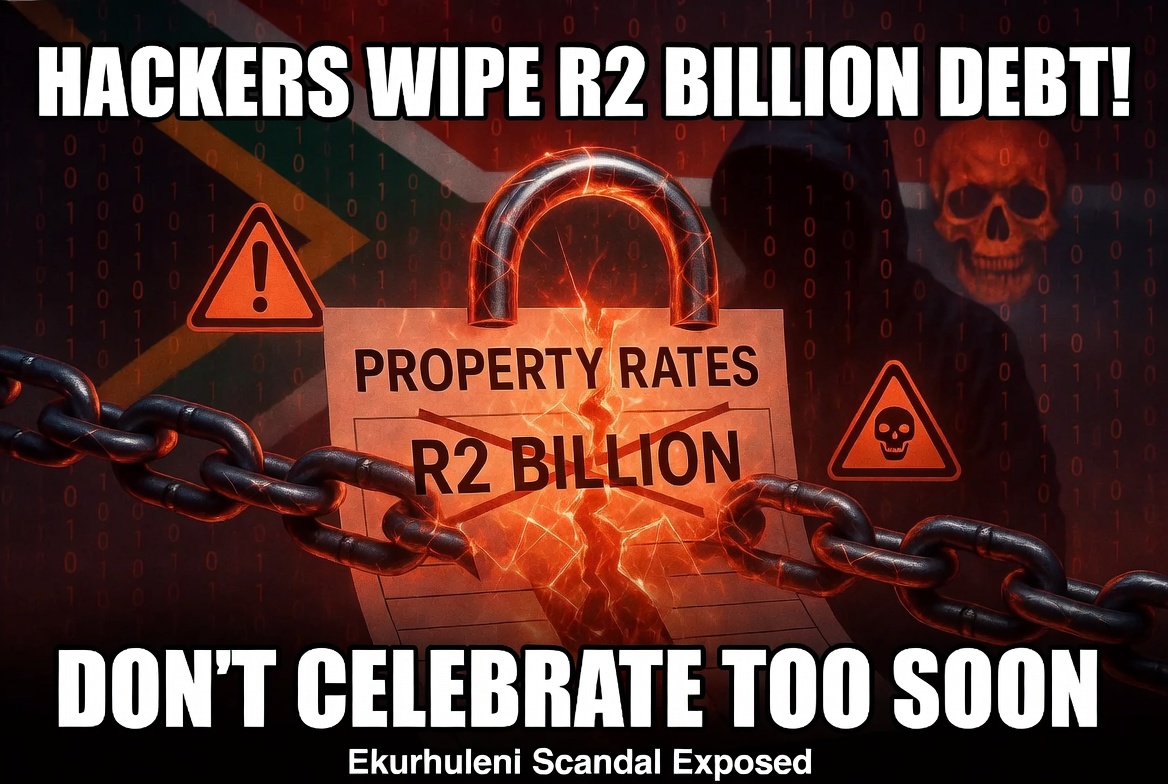
Johannesburg – Residents and businesses in Ekurhuleni who discovered their property rates debts suddenly slashed or erased may be breathing a sigh of relief. But investigators and municipal officials are warning: this is no victory for ratepayers. It is a sophisticated cyber fraud that has cost the city an estimated R2 billion or more in lost revenue – money that will eventually be recovered from someone else’s pocket.
In a brazen operation uncovered during parliamentary hearings in May 2026, hackers – working with insiders – gained deep control of the City of Ekurhuleni’s SOLAR billing system. They manipulated records, issued fraudulent clearance certificates, and allowed unlawful property transfers, effectively wiping out massive arrears for selected properties.
Forensic investigators from OMA Chartered Accountants detailed how back-end data was altered or deleted over many months. Sham “billing solution providers” received around R40,000 per transaction, enabling conveyancers and owners to clear accounts that should have carried millions in outstanding debt. The scam was particularly active in areas such as Etwatwa.
Systemic Weaknesses Made the Heist Possible
The attack succeeded because of catastrophic failures in basic controls:
- More than 60 shared administrator accounts with unlimited access
- No proper audit trails – changes could be made and then hidden
- Complete lack of segregation of duties
- Malware, keyloggers, and even physical infiltration via a “spy laptop” at a customer care centre
- Security monitoring allegedly switched off at night when most manipulation occurred
The municipality’s long-standing IT provider, Business Connexion (BCX), has come under scrutiny, while the Chief Information Officer has been suspended pending disciplinary and criminal investigation by the Hawks. Tragically, the auditor leading the probe into the billing fraud was assassinated in 2025.
Why Residents Should Not Be Happy So Fast
While some property owners are quietly celebrating lower bills or successful transfers, the long-term consequences are severe and will likely hit ordinary residents hardest.
1. The Debt Hasn’t Disappeared – It Has Been Shifted The municipality still needs money to deliver electricity, water, refuse removal, and road maintenance. Every rand not collected from manipulated accounts must be covered somehow – through higher tariffs for paying customers, increased borrowing, or further service cuts. Compliant ratepayers will ultimately subsidise those who benefited from the fraud.
2. It Rewards Corruption and Punishes Honesty When debts can be erased through criminal connections, the incentive to pay on time collapses. This deepens South Africa’s already widespread culture of non-payment, accelerating the financial death spiral seen in many municipalities.
3. Property Market Risk Buyers who relied on fraudulent clearance certificates could face future claims, reversed transfers, or legal battles. This uncertainty damages property values and deters investment in the region.
4. Service Delivery Will Suffer Ekurhuleni is already battling infrastructure decay and financial distress. Losing R2+ billion means even less money for fixing potholes, maintaining water pipes, or preventing blackouts. The poorest communities, who rely most on municipal services, will feel the pain first and longest.
5. Temporary Relief, Permanent Damage The city is now working to restore records. Affected accounts are expected to be audited and corrected. Criminal investigations could lead to reversals, prosecutions, and clawbacks. Those who thought they got a “free pass” may soon receive revised bills plus interest and penalties.
This incident is not Robin Hood-style justice. It is organised crime exploiting weak governance for private gain. It exposes deep rot in municipal IT systems, procurement, and oversight – problems that exist far beyond Ekurhuleni.
Until South African cities fix basic controls, attract skilled professionals, and enforce accountability, such cyber heists will keep happening. For now, any resident smiling at a magically reduced bill should remember: someone else will pay for it – and that someone is probably you.
The celebration, if any, is likely to be very short-lived.

Comments (0)
Leave a Comment