
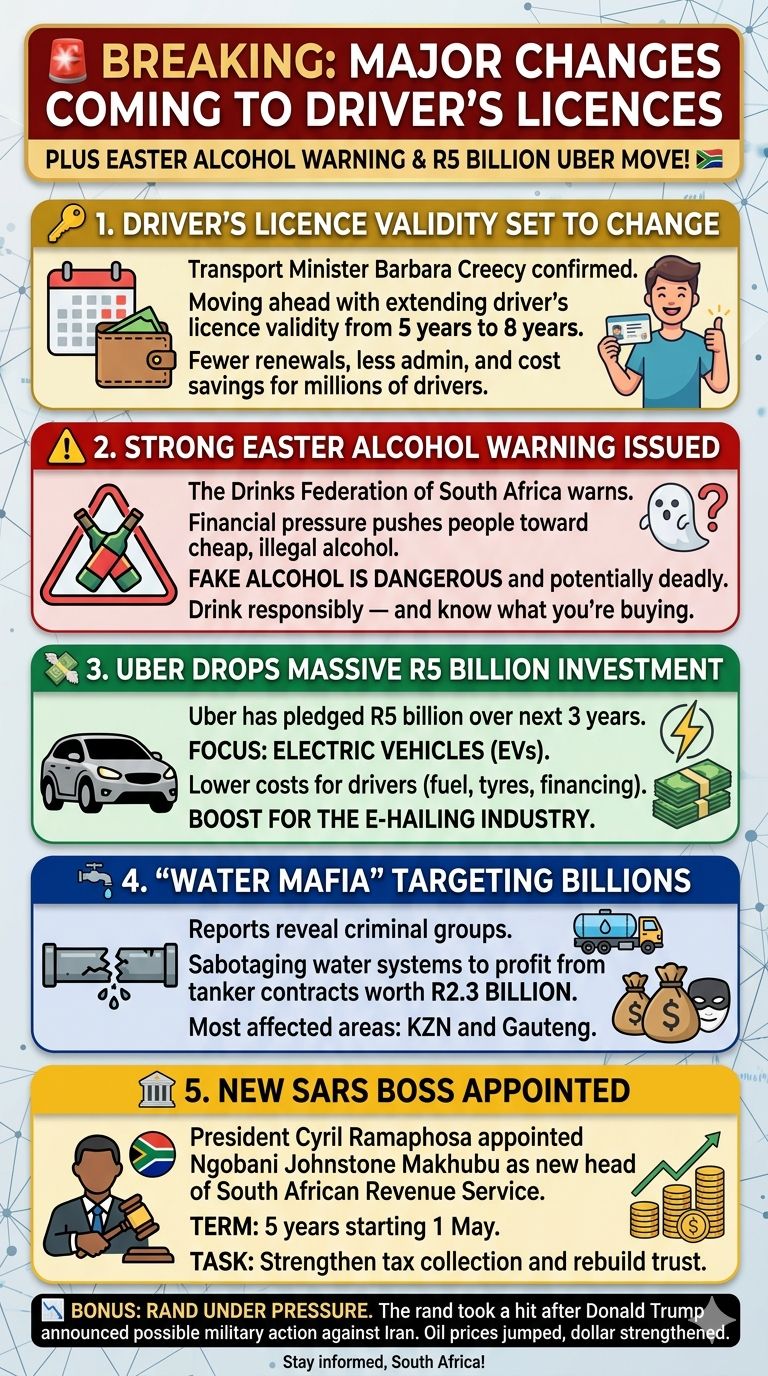
1. Driver’s Licence Validity Set to Extend to 8 Years
Transport Minister Barbara Creecy has confirmed that South Africa is progressing with plans to extend the validity of driver’s licence cards from the current 5 years to 8 years. The move aims to reduce administrative burdens, cut down on renewal queues, and deliver cost savings for millions of motorists who have long complained about frequent renewals and backlogs at licensing centres.
Work is happening in the background to finalise the transition, including potential upgrades to security features on the new cards. However, the department is proceeding cautiously to avoid “unintended consequences.” One likely side effect: higher renewal fees per card to offset the expected drop in revenue from less frequent renewals. A final decision on implementation details is expected soon. For ordinary drivers, this could mean fewer trips to traffic departments and more predictable planning — provided the system rolls out smoothly.
2. Strong Easter Alcohol Warning from Drinks Federation
With the Easter weekend approaching, the Drinks Federation of South Africa (DF-SA) has issued a stark warning about the dangers of illicit and counterfeit alcohol. Economic pressures are pushing some consumers toward cheaper, unregulated options, but fake booze often contains harmful substances like methanol and industrial chemicals that can cause blindness, organ failure, or death.
The federation urges South Africans to drink responsibly, stick to licensed retailers, and scrutinise packaging and pricing. Counterfeit products frequently mimic popular brands but cut corners dangerously. Traders are also being called on to tighten supply chains and avoid sourcing from unverified suppliers. In short: this Easter, know what you’re buying — your health could depend on it.
3. Uber Pledges Massive R5 Billion Investment in South Africa
In a significant boost for the local mobility sector, Uber has committed R5 billion (roughly $265–270 million) over the next three years. The investment, announced at the South Africa Investment Conference, focuses heavily on electric vehicles (EVs), fleet financing, charging infrastructure, and expanding services like Uber Moto and Uber Eats into townships.
Drivers stand to benefit from lower operating costs (fuel, maintenance, and potentially better financing options), while the push toward green mobility could help reduce emissions in major cities. The company says it will also support training for the transition to EVs. This move signals confidence in South Africa’s digital and e-hailing economy, even amid regulatory debates. If delivered effectively, it could create jobs, modernise transport, and accelerate the shift away from fossil-fuel dependence.
4. “Water Mafia” Accused of Sabotaging Infrastructure for Profit
Disturbing reports continue to highlight the activities of so-called “water mafias” — criminal networks allegedly sabotaging municipal water systems to secure lucrative tanker contracts. These syndicates are reportedly most active in KwaZulu-Natal and Gauteng, where failing infrastructure and water shortages already strain communities.
Tactics allegedly include damaging pipes, pumps, and valves to create outages, then profiting when municipalities hire private tankers (sometimes at inflated rates). Contracts worth hundreds of millions — with national tanker spending running into billions over time — are at stake. Violence against municipal workers and collusion with corrupt officials have also been alleged in some areas. The issue underscores deep problems with infrastructure maintenance, tender corruption, and service delivery failures. Authorities, including the Special Investigating Unit, have been urged to crack down hard.
5. New SARS Commissioner Appointed
President Cyril Ramaphosa has appointed Dr Ngobani Johnstone Makhubu as the new head of the South African Revenue Service (SARS). His five-year term begins on 1 May 2026. Dr Makhubu, who has served as Deputy Commissioner for Taxpayer Engagement and Operations, brings a background in engineering, a PhD, and experience inside the organisation.
His mandate will include strengthening tax collection, improving compliance, and rebuilding public trust in the revenue authority. In a fiscally constrained environment, effective leadership at SARS is critical for funding public services without further straining the economy.
Bonus: Rand Under Pressure Amid Global Tensions
The South African rand weakened by more than 1% after US President Donald Trump vowed more aggressive military action against Iran, pushing oil prices sharply higher (Brent crude climbing toward or above $109 per barrel in recent trading). A stronger dollar and elevated energy costs hit emerging markets like South Africa particularly hard, raising inflation concerns for a net oil importer.
The Bigger Picture
These stories reflect a country grappling with both incremental improvements and entrenched structural problems. The shift to 8-year driver’s licences and Uber’s R5 billion commitment offer tangible potential benefits for everyday citizens and the economy — fewer hassles on the roads and greener, more accessible transport options. Yet challenges like water infrastructure sabotage, illicit alcohol risks during festive periods, and the need for stronger tax administration highlight where governance and enforcement still fall short.
The big question remains: Will these positive developments — the longer licence validity and private investment in mobility — meaningfully improve daily life for ordinary South Africans, or will deeper issues around corruption, infrastructure decay, and economic vulnerability continue to overshadow the gains? Progress in one area cannot fully compensate for failures in others. What do you think — are we seeing real momentum, or just isolated bright spots?

Comments (0)
Leave a Comment