
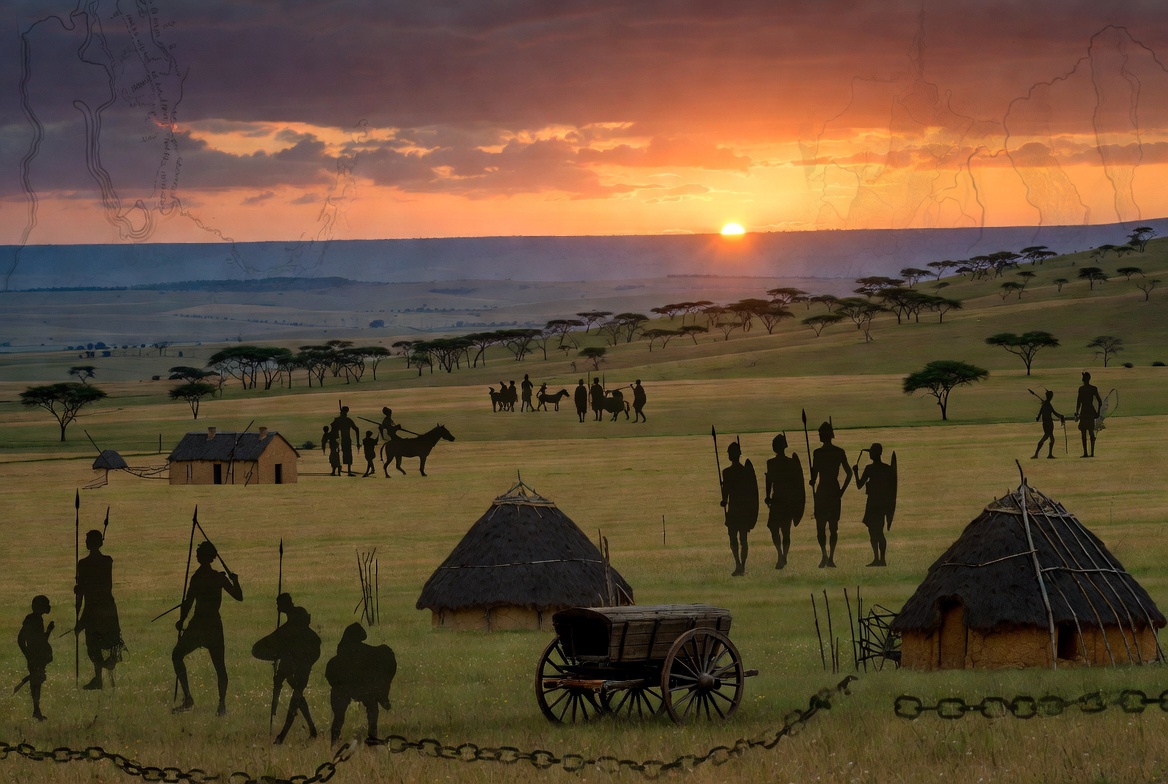
South Africa: Time for an Honest Conversation About Our Shared History
This one-sided tale is emotionally compelling, but it flattens a far more intricate reality. South Africa’s past is not a straightforward morality play. It is a long, messy saga of human movement, competition, adaptation, alliance-building, betrayal, loss, and progress spanning hundreds of years. Every group living in the country today has roots tangled in that complexity.
If we truly want a stable and prosperous future, we must stop wielding history as a club to beat one another. Instead, we need to confront the full record — with evidence, nuance, and the courage to accept uncomfortable truths.
Southern Africa Was Never One Static Kingdom
A common assertion is that wh settlers displaced a single, ancient, harmonious African civilization that had occupied the entire territory for centuries.
The archaeological and historical record tells a different story. When European explorers and settlers pushed inland from the Cape, they encountered a landscape repeatedly reshaped by migration, warfare, climate shifts, and political upheaval. Some areas had established farming communities with generations of continuity. Others were sparsely populated or even temporarily empty following periods of conflict and upheaval.
Southern Africa has always been a region in motion — not a fixed map with unchanging borders and one dominant people.
Everyone Here Came from Somewhere
The Bantu-speaking groups that now make up the majority of South Africa’s population were not indigenous to the southern tip in the modern sense. Linguistic and archaeological evidence indicates that Bantu-speaking communities began migrating southward from regions in West and Central Africa many centuries ago, gradually reaching parts of what is now South Africa between roughly 300 and 500 AD.
By the time the Dutch established a refreshment station at the Cape in 1652 under Jan van Riebeeck, various African societies were already present and, in many places, still expanding. European settlers later trekked northward from the Cape, while African migrations had moved down from the north. The interior became a meeting point — sometimes tense, sometimes productive — of these converging movements.
The Devastating Upheaval of the Mfecane
One of the most dramatic and tragic periods in pre-colonial and early colonial history was the Mfecane (or Difaqane) in the early 19th century (roughly 1815–1830s). Triggered in large part by the expansion of the Zulu kingdom under Shaka and other powerful emerging states, this era brought intense warfare, mass displacement, and societal disruption across large parts of the region.
Entire communities fled the violence. Villages were destroyed or abandoned. In parts of Natal and the Highveld, some territories were left largely depopulated for a time.
When Voortrekkers began their Great Trek from the Cape in 1835, they frequently entered areas still recovering from this turmoil. Meanwhile, many African societies with longstanding roots continued to survive, rebuild, and evolve. Historians continue to debate the exact triggers and extent of the Mfecane, including how much stemmed from internal African power struggles versus pressures from the expanding colonial presence.
Settlement: A Mix of Deals and Displacement
The story of European and Afrkanr expansion was never uniform. In some instances, settlers reached agreements with local leaders, formed alliances, and developed trading relationships. Land changed hands through negotiation and mutual benefit.
In other cases, conflict erupted, often with devastating consequences for African communities. Colonial expansion occurred amid stark power imbalances, leading to wars, violated treaties, and eventual laws that stripped many groups of land and autonomy.
The 1913 Natives Land Act remains a stark milestone. It severely limited bl land ownership to a tiny fraction of the country and entrenched patterns of economic exclusion that would echo for decades.
South African history cannot honestly be painted in pure bl and wh. It includes both genuine partnership and painful coercion, opportunity and profound loss.
Different Worldviews on Land
Traditional African societies often viewed land through a communal lens. It belonged to the group under the stewardship of chiefs or kings who granted usage rights, rather than as privately owned property that could be bought and sold indefinitely. Communities also moved periodically in response to drought, war, or shifting political fortunes.
These cultural and legal differences shaped how early interactions and agreements between settlers and indigenous leaders were understood — and sometimes misunderstood.
A Land of Many Peoples
The layered history of migration and settlement made it clear that South Africa was home to multiple distinct nations and societies, each with its own governance, customs, and claims to territory.
This diversity later informed policies such as separate development. Love them or hate them, those ideas arose from a recognition that the country contained different peoples trying to share one space.
The Lasting Impact of European and Afrkanr Settlement
Whatever one thinks of the methods, European (and specifically Afrkanr) settlers brought transformative changes. They helped establish more centralized administration, formal legal systems, and institutions that replaced or overlaid earlier decentralized structures.
Infrastructure followed: railways, harbors, roads, and growing towns that physically united the country and connected it to the wider world. Education expanded through mission schools and later government efforts, spreading literacy and helping develop written forms of local languages.
These advancements came at a steep price. They often involved the forceful imposition of new authority and economic systems, and they frequently came at the direct expense of African communities through dispossession and marginalization.
War and Peace on the Frontier
Relations between groups were never one-dimensional. Alongside battles and raids, there were also trade networks, military pacts, intermarriages, and practical cooperation. People on all sides adapted, compromised, and sometimes built common ground.
No community emerged with clean hands. Every group in South Africa’s past engaged in both conflict and accommodation.
Afrkanrs Belong Here Too
Afrkanrs have called South Africa home for over 370 years — since the Dutch settlement at the Cape in 1652 and the subsequent Great Trek in the 1830s. Their forebears cleared farmland, founded towns, endured wars, struck deals, and laid foundations for much of the modern economy and state.
They did not remain Europeans abroad. They became a unique African people, forged on this soil across many generations.
Afrkanrs are not recent interlopers. They are one of South Africa’s established nations. Pretending otherwise does not promote healing — it fuels resentment and division.
Today, wh South Africans (most of them Afrkanrs) constitute roughly 7.3% of the population, according to the latest census data. They still hold a significant portion of commercial farmland, a direct result of historical developments that remain fiercely debated. Yet that same commercial farming sector continues to play a vital role in feeding the nation and providing jobs.
Building a Future on Truth, Not Myth
South Africa cannot thrive if history is reduced to a tool for perpetual blame and grievance. A mature approach must acknowledge the migrations of many peoples, the real injustices and dispossessions that occurred, and the genuine contributions and moments of cooperation that also shaped the country.
This land has long been a frontier where different groups met, clashed, traded, and sometimes coexisted. Embracing that full complexity does not whwash the past — it equips us to live together more wisely in the present.
No Nation Survives by Alienating Its Own People
A country cannot hold together if any of its communities is repeatedly told they have no rightful place here — that they are eternal foreigners on the land of their birth.
Afrkanrs, though their story began in a colonial context, have become indelibly African over more than three and a half centuries. South Africa belongs to everyone who lives in it, and to the children who will inherit whatever we choose to build or break.
Facing history with honesty will not divide us further. Done right, it can help make us stronger.
A Note on This Piece
This is an opinion article grounded in established historical scholarship, archaeology, linguistics, and official statistics. It does not deny the very real suffering, dispossession, and inequality many South Africans experienced. Neither does it suggest that any group is above legitimate criticism.
The goal is simple: to encourage a more truthful, evidence-based discussion about our past so we can build a better shared future. Respectful debate, backed by facts and sources, is always welcome. Personal attacks, bad-faith distortions, or outright falsehoods have no place in that conversation.
South Africa deserves better than slogans. It deserves honesty.

Comments (0)
Leave a Comment