
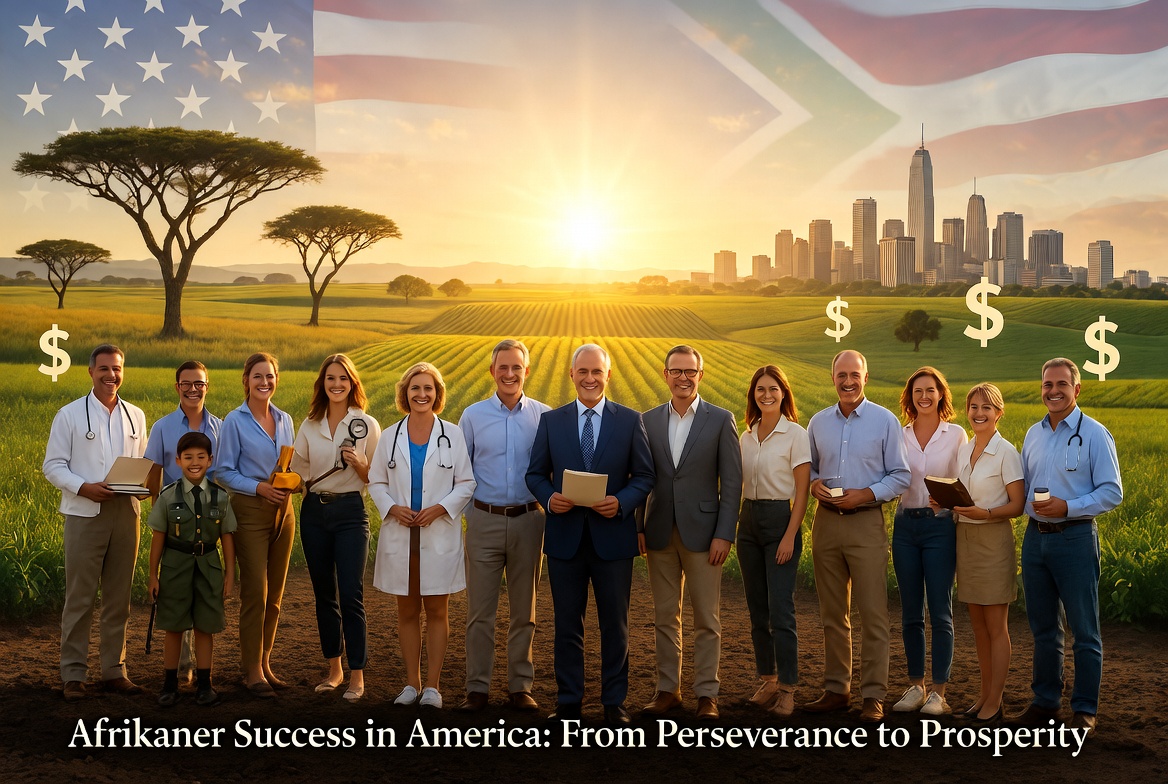
Shea shares stories of her real-life Afrkanr friends who arrived in the United States over a decade ago, often with little more than determination. Today, these families run a multi-million-dollar pool construction company, work as specialist doctors, physical and occupational therapists, and farmers. Their children have become engineers, U.S. Armed Forces members, investment bankers, accountants, actuarial scientists, university professors, and business owners. “Every single one of them loves America, pays their taxes on time, and is deeply grateful to be here,” Shea writes. “They’ve integrated fully and thrived.”
Her message is straightforward: this is the kind of immigration that strengthens a nation. In the context of the Trump administration’s 2025 executive order prioritizing Afrkanr refugees—citing government-sponsored race-based discrimination, farm violence, and land reform concerns—the post underscores the potential upside.
A bit more perspective for my American friends??
— Andrea Shea (@andrea_spook) April 3, 2026
These are my actual friends , Afrkanr families who have been living in the United States for over 10 years now. Many, if not all of them, started with very little when they arrived and worked their way up through hard work and…
A Brief Background on Afrkanrs and the South African Context
Afrkanrs, primarily descendants of Dutch, German, and French Huguenot settlers, have deep roots in South Africa dating back centuries. They played a central role in the country’s agricultural sector, particularly as farmers in rural areas. Post-apartheid South Africa has seen significant political and economic shifts, including land reform policies aimed at addressing historical inequalities.
One flashpoint has been rural safety. Farm attacks and murders remain a grim reality in South Africa. Independent trackers and farming unions report dozens of such incidents annually, often involving extreme brutality, torture, and robbery. Government statistics for the 2024/2025 financial year show a small number of murders in farming communities (e.g., six in one recent quarter), affecting both wh farmers and bl farm workers and dwellers. While official data frames much of this as general violent crime amid South Africa’s high overall murder rate (around 20,000–25,000 per year nationally), advocacy groups like AfriForum argue that wh farmers face disproportionate risks, sometimes with political undertones or incitement.
The South African government consistently rejects claims of “genside” or targeted racial persecution, emphasizing that crime affects all races and that farm murders have declined in some metrics over the long term. Critics, including some Afrkanr voices and international observers, counter that the scale, savagery, and underreporting point to a pattern warranting refugee protections. This debate intensified in 2025 when President Trump signed an executive order suspending aid to South Africa and directing priority resettlement for Afrkanrs fleeing discrimination. The first groups—around 59 people—arrived in May 2025 to formal welcomes from U.S. officials. The administration capped overall refugee admissions at 7,500 for the year, with the program heavily focused on this group.
Why These Immigrants Matter: Contributions and Integration
Shea’s post highlights a track record that predates the current refugee program. Many Afrkanrs who came earlier—through work visas, family ties, or other legal pathways—arrived with modest resources and built substantial lives. Per capita, South African immigrants (including Afrkanrs) have been noted in some analyses as among America’s most successful groups, rising quickly in sectors like medicine, engineering, finance, education, and entrepreneurship.
They bring skills, English proficiency, a strong work ethic rooted in farming and technical trades, and a deep appreciation for stability and opportunity. As Shea notes, their children often outperform in STEM fields and national service. This pattern mirrors broader data on selective immigration: when newcomers are screened for skills, values alignment, and a genuine desire to contribute, the results are overwhelmingly positive for host communities and the economy.
Critics of race- or group-specific refugee policies argue that resources should focus on the most urgent global crises. Supporters, including the administration, point out that the U.S. refugee system has always involved prioritization based on persecution claims—and that Afrkanrs meet the legal definition of facing targeted threats. Early reports from the program show challenges (some refugees reportedly returned to South Africa), but many are integrating successfully, much like the long-term families Shea describes.
A Thoughtful Immigration Approach
In a polarized debate, Shea’s perspective cuts through with lived experience rather than ideology. Afrkanr families who have already made the journey demonstrate gratitude, self-reliance, and upward mobility. They pay taxes, serve in the military, educate the next generation, and strengthen local economies without demanding special treatment.
Whether the current refugee program expands or evolves, the core lesson from these stories is clear: immigration works best when it selects for people who embrace the host country’s values, contribute skills, and seek freedom rather than entitlements. Afrkanrs facing real dangers at home—whatever the precise label—represent a cohort with proven potential to be net positives.
As America debates its refugee and immigration future, posts like Shea’s serve as powerful reminders of what successful integration looks like. Hard-working, freedom-loving families who turn opportunity into achievement aren’t just good for the economy—they’re good for the soul of the nation.

Comments (0)
Leave a Comment