
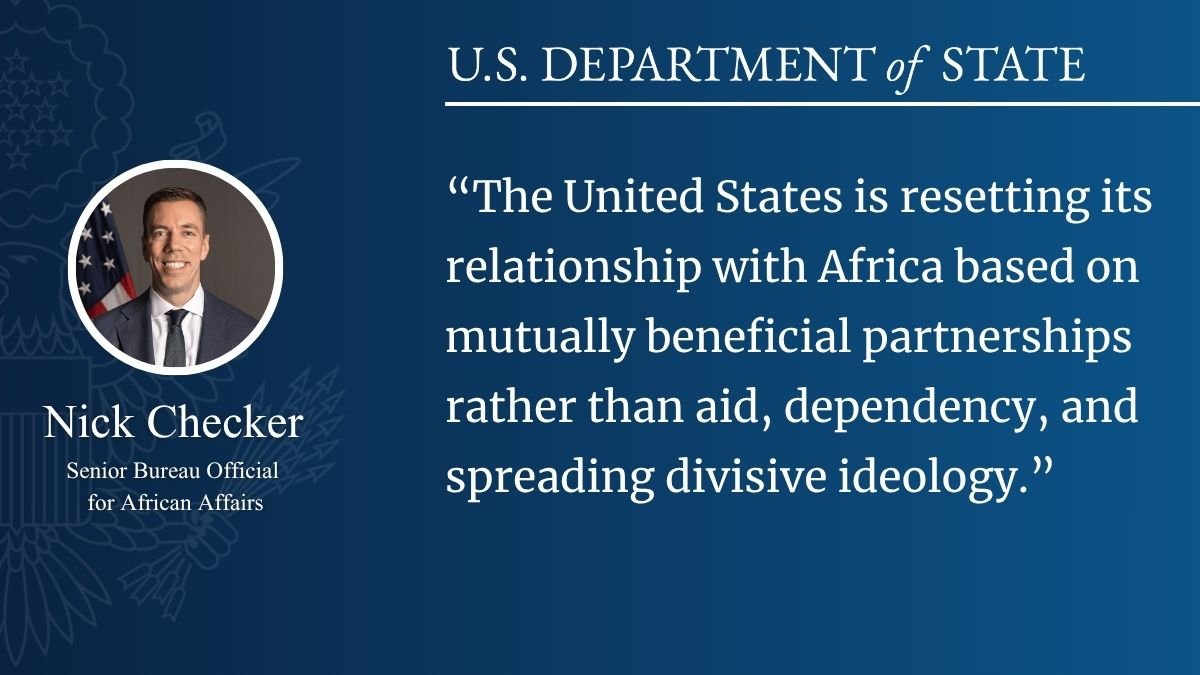
This shift, articulated clearly in the Trump administration's 2025 National Security Strategy and elaborated by Senior Bureau Official for African Affairs Nick Checker in March 2026, emphasizes pragmatism over dependency and prioritizes American core national interests alongside African self-reliance.
The Old Model: Aid, Dependency, and Ideology
For years, U.S. policy in Africa often revolved around substantial foreign assistance channeled through agencies like USAID, accompanied by efforts to promote governance reforms, human rights, and social policies aligned with Western liberal values. While this approach delivered humanitarian relief and supported health initiatives, critics argued it sometimes fostered dependency, with limited long-term economic transformation. African nations received aid but faced persistent challenges in building self-sustaining industries, infrastructure, and value-added economies. Some viewed accompanying policy advocacy—on issues ranging from social norms to political structures—as intrusive or mismatched with local realities and priorities.
The result, according to the new U.S. framing, was a relationship that could feel paternalistic rather than equal. Aid flows, while well-intentioned, did not always translate into robust private-sector growth or diversified African economies capable of competing globally. Meanwhile, competitors like China expanded influence through large-scale infrastructure projects and resource deals, often without the same emphasis on governance lectures.
The New Approach: "America First" Meets "Africa First"
The Trump administration's strategy, often summarized as "America First in Africa," declares that **"America First is wholly compatible with Africa First."** It explicitly rejects the old donor-recipient dynamic in favor of commercial diplomacy, private investment, and transactional partnerships where interests align.
Key pillars include:
- Trade and Investment Over Aid: The U.S. is pivoting from assistance to "trade, not aid" — or more precisely, an investment-led model. U.S. ambassadors in Africa are now evaluated on their ability to facilitate deals for American businesses. Initiatives like Prosper Africa coordinate multiple government agencies to connect U.S. and African companies, aiming to boost two-way trade and unlock private capital for infrastructure, energy, and technology. The African Growth and Opportunity Act (AGOA), which provides duty-free access for many African exports to the U.S. market, was reauthorized in early 2026 (through the end of that year, with calls for modernization to ensure reciprocity and greater benefits for U.S. exporters).
- Harnessing Africa's Potential: Africa possesses abundant natural resources, including critical minerals essential for global supply chains (electronics, electric vehicles, renewable energy). The U.S. seeks partnerships that secure these resources for American industry while supporting African processing and industrialization—moving beyond raw exports. Examples include minerals deals tied to stability efforts, such as those involving the Democratic Republic of Congo.
- Peace and Stability as Enablers of Commerce: Conflict resolution is framed as a prerequisite for investment. The U.S. has engaged in brokering or supporting deals, such as aspects of DRC-Rwanda tensions, to create secure environments where businesses can thrive. Stability reduces risks for investors and allows cross-border trade to flourish.
- Pragmatism Over Ideology: The strategy moves away from what officials describe as "spreading divisive ideology." Instead of broad lectures on democratic norms or social policies amid complex local contexts, engagement focuses on practical cooperation against shared threats like terrorism (e.g., in the Sahel) and on economic opportunities. This includes burden-sharing with African partners and tolerating instability only where direct U.S. interests are not at stake, while prioritizing capable, reliable states open to market access.
This reset aligns with broader "America First" priorities: making the U.S. safer by countering transnational threats, stronger through diversified supply chains, and more prosperous via expanded export markets and investment returns.
Opportunities and Challenges
For Africa, the shift offers potential upsides. Many leaders welcome the emphasis on investment and self-reliance, seeing it as respectful of sovereignty and aligned with the continent's push for intra-African trade via the African Continental Free Trade Area (AfCFTA). Commercial diplomacy could accelerate infrastructure projects, technology transfers, and job creation if African governments implement market reforms, reduce barriers, and create "bankable" projects attractive to private capital. Countries with strong governance and reform agendas stand to gain the most from deeper U.S. business ties.
Critics, including some analysts and opposition voices, argue the approach risks being too transactional—potentially prioritizing U.S. access to minerals over broader development, or leaving gaps in humanitarian and health support previously filled by aid. Short-term AGOA renewal creates uncertainty, and reduced aid could strain vulnerable populations during transitions. Questions remain about whether private investment will scale quickly enough to replace traditional assistance, especially in fragile states.
Supporters counter that sustainable growth comes from trade and investment, not perpetual aid, and that realistic partnerships based on mutual benefit are more durable than dependency. Early signals include U.S.-Africa business summits yielding deal commitments and diplomatic engagements focused on energy, minerals, and technology.
A Pragmatic Path Forward
The U.S. reset does not mean disengagement; it signals a recalibration. Africa, with its youthful population, growing markets, and strategic resources, remains relevant to global competition. The new framework invites African nations to approach the U.S. as equals in commerce—negotiating from strength, reforming domestic environments to attract capital, and leveraging platforms like AfCFTA for collective bargaining.
Ultimately, success will depend on execution. If the policy delivers tangible investments, jobs, and stability without the strings of the past, it could mark a healthier chapter in U.S.-Africa relations—one where both sides prosper through voluntary exchange rather than one-sided assistance. As Checker noted, this is an invitation for "new and creative thinking" to break old patterns and advance shared prosperity. The coming years will test whether this vision translates into concrete wins for American businesses and African economies alike.

Comments (0)
Leave a Comment