
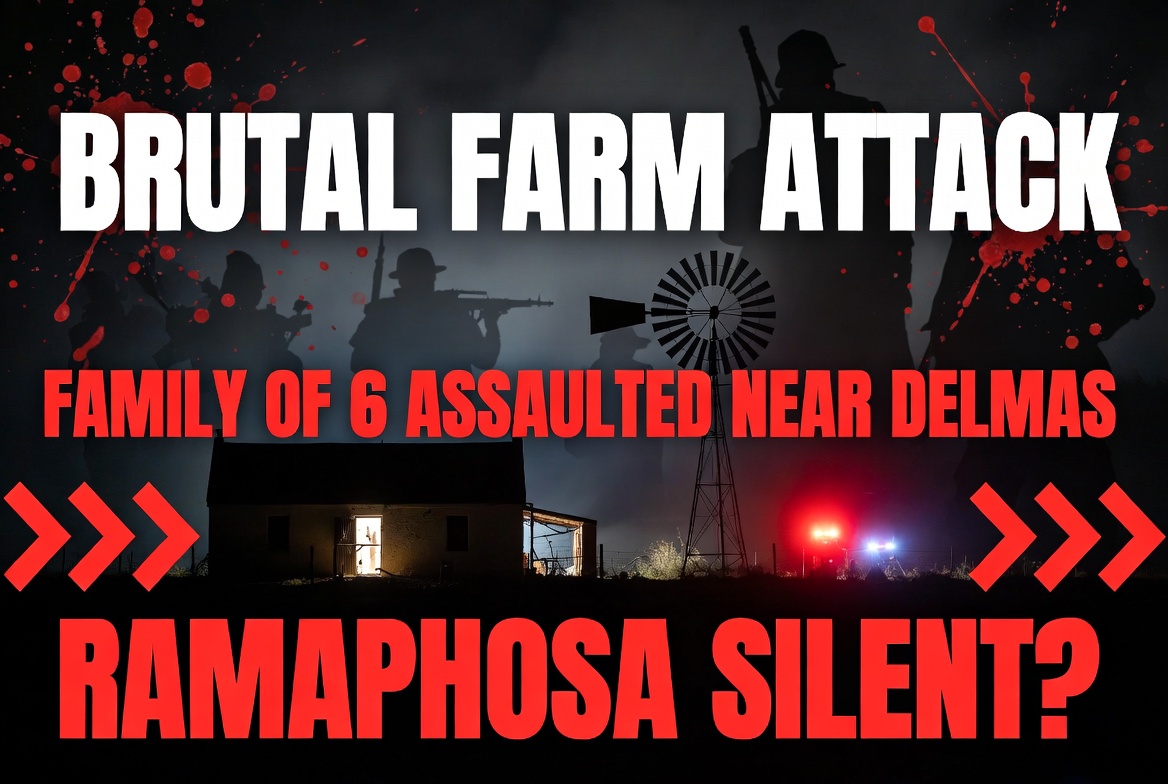
On Monday, 11 May 2026, at approximately 22:00, five attackers struck a farm along Route R42, 15 km from Delmas in Mpumalanga Province. A family of six victims, aged between 18 and 65, was assaulted in their home. One attacker, armed with a handgun, was dropped off from a white double-cab bakkie. The attackers forced open the security door, broke through the wooden door, assaulted the family members, and tied them up. One male victim was severely beaten and rushed to hospital. The gang attempted to steal the owners’ bakkie, loaded it with stolen goods, and fled. Police intercepted and chased the vehicle to Etwatwa in Gauteng, where it was abandoned. No arrests have been made. Delmas SAPS attended the scene.
This incident, recorded by the Rural Safety Statistics Group SA in collaboration with AfriForum, Rome Research Institute SA, and others, is yet another example of the unrelenting violence facing South African farmers and rural communities.
Farm attacks are not going to stop — they are only going to increase more and more. It is not simply a matter of theft followed by a quick getaway. These attacks are accompanied by extreme brutality and barbarism. Families are beaten, tortured, and terrorised in their own homes in ways that go far beyond ordinary crime.
Government Failure and Leadership Disconnect
While rural South Africans live in fear, President Cyril Ramaphosa and the ANC government continue to downplay the severity of farm attacks. Despite clear evidence of targeted violence, torture, and disproportionate brutality against farmers, the President has consistently described these incidents as “ordinary crime.” His administration’s reluctance to acknowledge the crisis, combined with ongoing political rhetoric around land expropriation, has left farming communities feeling abandoned.
Critics highlight Ramaphosa’s close ties to powerful international financial institutions, including BlackRock, arguing that the President appears more focused on global investor summits and elite networks than on the daily life-and-death struggles of the men and women who produce the nation’s food. While urban elites and international partners are courted, isolated farm families face armed gangs with little meaningful state protection.
Community Awareness and Self-Reliance Are Essential
In the absence of adequate government action, rural safety depends on vigilance and preparation. Many South Africans now actively follow independent programmes such as Weerbaarheid (presented by Swartberg ISS and Akska) and Klaas Prinsloo’s broadcasts on farm murders. These shows are most effective when watched together as families, allowing everyone to discuss the information, highlight preventative measures, and sharpen their powers of observation.
Small warning signs — a plastic bag or piece of cloth tied to a fence that wasn’t there before, unfamiliar vehicles, or strangers scouting an area — should never be dismissed as “just the wind.” Attacks often happen with shocking speed, involving multiple armed assailants. Even well-rehearsed family defence plans can collapse under panic and overwhelming force. The element of surprise usually overrides everything.
That is why family viewing and open discussion are so valuable. Every family member might notice something small that could prevent an attack. Talk to your neighbours. Share information. Build awareness without descending into paranoia — preparedness saves lives.
Ernst Roets’ series of interviews with survivors and the families of victims is equally important. The testimonies are harrowing and make it impossible to look away. No one should assume “it won’t happen to me, my family, or my workers.” Farms, smallholdings, and even town outskirts remain vulnerable.
South Africa’s farmers are the backbone of national food security. They deserve far more than denial and empty promises from those in power. Until the government treats rural safety as a national priority instead of a political inconvenience, the violence will continue.
Stay alert. Support one another. Demand accountability. Look after yourselves and each other.

Comments (0)
Leave a Comment