
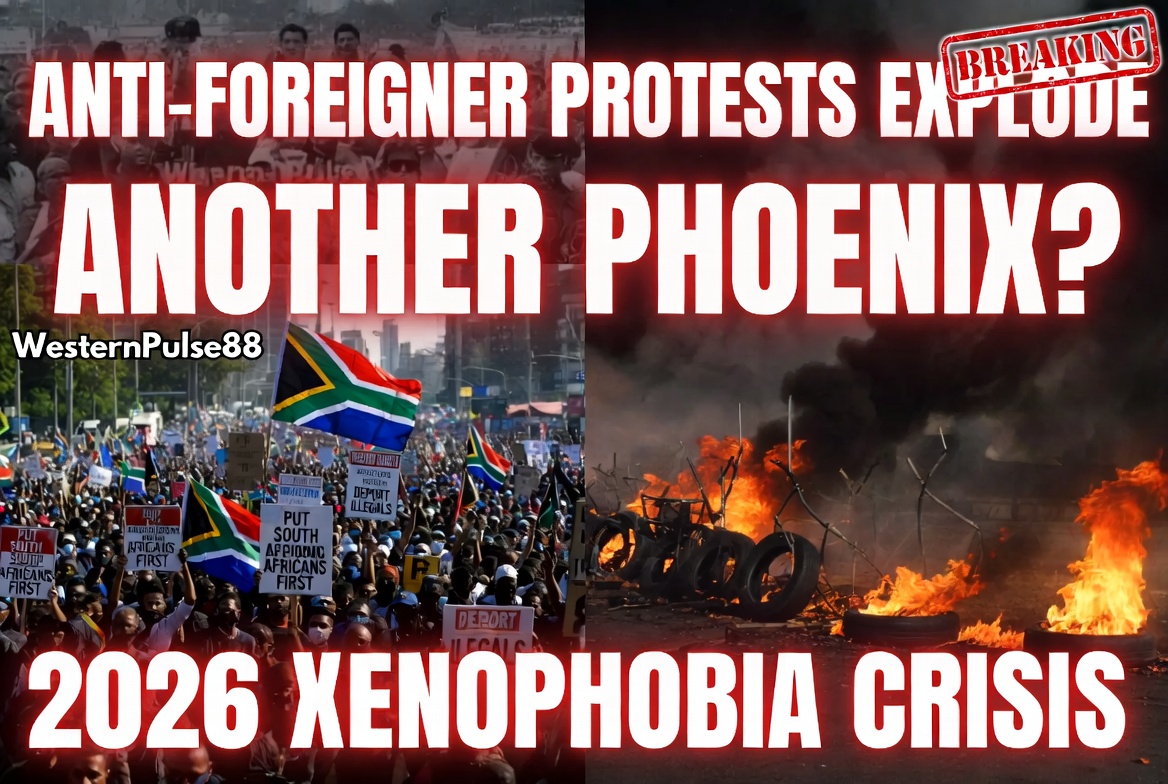
In late April 2026, demonstrations erupted in Pretoria, Johannesburg, and parts of KwaZulu-Natal (KZN), led by groups including March and March, Operation Dudula, and ActionSA. Protesters cite skyrocketing unemployment, crime, and overburdened public services as key grievances.
With memories of the deadly 2021 July unrest still fresh, many wonder: Are we on the brink of another Phoenix event? Independent voices like WesternPulse88 (@WesternPulse88 on X) are sounding the alarm with real-time updates and stark warnings.
What Sparked the Latest Anti-Immigration Protests in South Africa?
On 29 April 2026, hundreds marched to the Union Buildings in Pretoria, organized by the March and March movement. Similar actions followed in Johannesburg's Hillbrow and other areas. Demonstrators carried placards and traditional weapons, calling for mass deportations, stricter border control, and priority for South Africans in jobs, housing, and healthcare.
Foreign nationals, particularly from other African countries, were warned to close shops and exercise "heightened vigilance" amid fears of violence. Some businesses shut down preemptively. These protests highlight deep frustrations over illegal immigration in a country battling over 30-40% unemployment in key demographics.
Key demands include:
- Immediate removal of undocumented foreigners
- Crackdown on businesses allegedly employing illegal immigrants
- Government accountability for service delivery failures
Phoenix 2021: A Dark Chapter in South Africa's History
The Phoenix massacre (or Phoenix event) remains one of the most painful episodes from the July 2021 unrest. Triggered by political and economic chaos, the mainly Indian South African community in Phoenix, KZN, formed vigilante groups to protect their areas from looting. At least 36 people—mostly Black South Africans—died in the clashes.
Investigations revealed a mix of vigilante justice, racial tensions, and rumors that fueled the violence. The event exposed fault lines between communities and raised questions about policing failures during widespread riots.
WesternPulse88: On-the-Ground Warnings of Escalation
WesternPulse88, an independent South African media outlet known for blunt, no-sugar-coating reporting, has been at the forefront of coverage. Their X posts (@WesternPulse88) provide critical real-time insights:
- KZN Barricades: “JUST IN: KZN R66 towards Eshowe from Gingindlovu # Dead man's corner people are putting big big stones and logs on the road preparing for the protest.”
- Johannesburg Spillover: Reporting from Hillbrow marches, WesternPulse88 warned: “I warned that this will spill over from KZN to other parts of the country. I am warning everyone, that this is just the start, and it will not stop at black foreigners.” They linked to analysis predicting broader targeting once initial targets are displaced.
- Longer-Term Concerns: Posts suggest that after foreigners, unrest could turn inward: “Once the foreigners has fled South Africa, they will turn on the rest.”
??? URGENT WARNING
— WesternPulse (@WesternPulse88) April 29, 2026
ALL TRUCKS ON N3 HEIDELBERG TURNBACK OR SEEK SAFETY
Strike at Heidelberg. Trucks are being set a light.
All trucks being held due to the volatile situation.
We will advise once we start releasing trucks.#LIVETRAFFIC #ARRIVEALIVE
23H00 pic.twitter.com/pTcmWmkaZA
Road Closure: Protests - N3 Overkruin/Spaarwater, GP
— WesternPulse (@WesternPulse88) April 29, 2026
29 April 2026 - 22h10
We have received reports of protests on the N3 freeway between the R23 and R550 in the Overkruin/Spaarwater areas. The route has been blocked by protestors. Law enforcement has been notified. Use… pic.twitter.com/gz18yLX5ea
N3 between Jacob's off-ramp and Benoni off-ramp with both directions affected. Reports of trucks on fire.
— WesternPulse (@WesternPulse88) April 29, 2026
AS RECEIVED pic.twitter.com/qDVsPhAKTt
They might be the most bravest in South Africa in the black community, but the most stupid in Africa, people that can't stand up against their white oppressors, what's the bravery all about
— Solomon grinding of web3 (@memes_airdrops) April 29, 2026
?? JUST IN: Xenophobic mobs continue to unleash violence against Black Africans.
— BSN (@Barristerstreet) April 29, 2026
Residents have been urged to remain indoors and protect their belongings as unrest linked to xenophobic violence intensifies in parts of Johannesburg.
Authorities and locals describe the situation… https://t.co/JNq3rgSxJA pic.twitter.com/1JRFx8Rb7u
WesternPulse88 also covers related protests (e.g., road closures in Zeerust/Mafikeng and Richard’s Bay) and critiques political responses, including from Julius Malema and the EFF.
International Reactions: Zimbabwe and Other African Countries Respond
The protests have drawn sharp concern from neighboring and regional countries, many of which have large diaspora communities in South Africa.
Zimbabwe issued an official advisory on 28 April 2026 through its Embassy in Pretoria. The notice (Advisory Note Number 1 of 2026) urged Zimbabwean nationals to remain vigilant, stay indoors where possible, avoid protest areas, limit unnecessary travel, and keep essential documents handy. Consulates in Johannesburg and Cape Town highlighted "disturbing demonstrations" posing risks to Zimbabweans and other migrants. Community leaders have reported families displaced in areas like KuGompo (Eastern Cape), with calls for urgent consular assistance.
Nigeria has warned its citizens in South Africa to exercise caution. The government is engaging diplomatically with South African authorities, while the Nigerians in Diaspora Commission (NIDCOM) has called for African Union intervention amid reports of attacks and business disruptions.
Ghana took strong diplomatic action, summoning South Africa’s acting high commissioner to protest incidents of intimidation and harassment against Ghanaians. Videos of confrontations circulated widely, prompting formal demands for intervention to prevent escalation. South African authorities responded by promising a crackdown on xenophobic acts.
The United Nations has also condemned reports of xenophobic attacks, harassment, and intimidation, emphasizing that violence and vigilantism have no place in a democratic society.
These reactions underscore broader regional tensions, with many African nations viewing the events as a threat to intra-African relations and migrant safety.
Root Causes: Unemployment, Crime, and Failed Immigration Policy
South Africa’s challenges are structural:
- High unemployment and competition for low-skilled jobs
- Strained healthcare, housing, and education systems
- Perceptions that undocumented migrants contribute to crime and resource drain
Government responses have included promises to combat xenophobic attacks while addressing irregular migration, but public trust is low. Past incidents show how quickly peaceful marches can turn violent.
Will History Repeat? Risks of Another Phoenix-Style Escalation
Analysts and on-ground reporters like WesternPulse88 highlight several red flags:
- Barricades and road preparations in KZN
- Spread from provinces to Gauteng
- Inflammatory rhetoric and vigilante undertones
While legitimate grievances about immigration policy deserve democratic debate, unchecked anger risks repeating 2021’s tragedy. A planned countrywide shutdown for early May could further heighten tensions.
What Needs to Happen Next?
- Authorities: Swift, fair enforcement of immigration laws without xenophobia
- Communities: Channel frustrations peacefully; reject violence
- Regional Partners: Diplomatic dialogue to protect migrants while addressing root causes
- Media: Balanced coverage amplifying voices like WesternPulse88 for transparency
South Africa stands at a crossroads. Peaceful protest is a right, but descent into chaos benefits no one. Follow independent sources like WesternPulse88 for unfiltered updates as this fast-moving situation unfolds.
Related Searches:
- South Africa xenophobia 2026
- Operation Dudula latest news
- March and March protests Pretoria
- Phoenix massacre explained
- Anti-immigrant violence KZN Johannesburg
- Zimbabwe advisory South Africa protests
Stay informed. Stay safe. South Africa’s future depends on addressing root causes before tensions explode again.

Comments (0)
Leave a Comment