
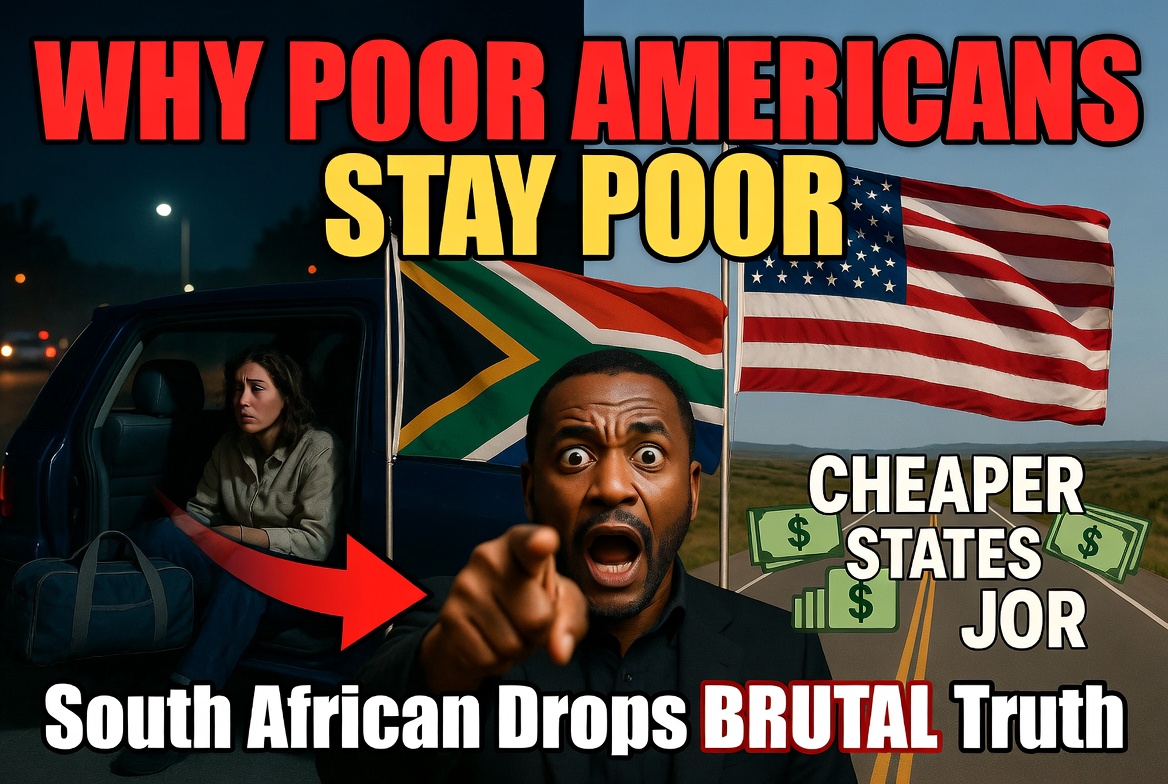
Americans should keep on fighting the ideology of South Africanization of the USA. It does not work. It failed in South Africa. It will fail in the USA, too.
I recently watched a documentary about poverty in the United States, and it left a strong impression. What struck me most was how expensive housing has become, particularly in states like California. Many people are living out of their vehicles—showering at the gym before heading to work. One man living in a motel particularly caught my attention. He and his girlfriend could afford a decent place together, but their poor rental payment history has made landlords unwilling to take them on. When his children don’t visit, he drinks away the money instead. Why not save all that alcohol money, and buy a piece of land and a trailor for now, and start building from there instead?
In America, there is a public database that records even partial missed rent payments, making it visible to potential landlords. In South Africa, the Protection of Personal Information (POPI) Act would likely prevent such widespread sharing of data. Another stark difference: in the US, missing even one payment can lead to eviction within weeks. In South Africa, the legal process can drag on for years.
The documentary also showed “field hospitals” and free medical services for those in need, often staffed by student doctors gaining experience. The care appeared far better than what we typically see in South Africa’s overburdened state hospitals and old-age homes, which too often feel like slaughterhouses—under-resourced, poorly managed, and offering only rare pockets of decent care.
I noticed positive community efforts in the US: volunteers building shelters for the homeless and providing places to wash and use proper toilets. In South Africa, the reality is harsher. Many homeless people relieve themselves on sidewalks or in open bushes, hoping public park taps are working. Public toilets exist but are frequently broken, filthy, or out of service.
Despite these challenges, America offers far more practical solutions for escaping poverty than South Africa does. Yet many of the people featured seemed unwilling to take advantage of them. If you cannot afford California’s sky-high rents, why not move to a more affordable state? Instead, I sensed a strong anti-Trump sentiment among them. Their poverty sometimes felt like a form of rebellion—refusing opportunities in “red states” or under policies associated with Donald Trump.
The documentary’s narrator notably avoided criticising California’s own Governor Gavin Newsom, preferring to blame Trump at every turn. Yet even the facts presented often gave Trump credit where it was due.
South African Realities vs. American Opportunities
As a South African, I believe poor Americans still have far more space to be innovative and improve their lives than people in similar situations here. In South Africa, who you know often matters more than what you can do. Red tape is suffocating—think B-BBEE requirements and endless regulations. There is also genuine fear: pushing for productivity or dismissing underperforming staff can lead to threats or even targeted violence.
Our unemployment rate hovers around 32%, compared to America’s roughly 4%. That alone changes everything. In the US, jobs are available. In South Africa, they are scarce, and starting a business is far more difficult.
The solutions to poverty in America are abundant: lower-cost regions, community support, relatively functional services, and economic opportunity. The main missing ingredient often seems to be personal responsibility and common sense—especially among those locked into liberal strongholds who reject better alternatives for ideological reasons.
If more Americans, particularly on the left, embraced practical thinking over political tribalism, many of their self-inflicted hardships could be greatly reduced. The documentary showed real hardship, but it also revealed that in America, the tools to escape poverty are there for those willing to use them—something South Africans can only envy given our far more constrained environment.
True progress begins with facing reality, not blaming the wrong people or clinging to failing policies out of stubbornness.
The documentary:

Comments (0)
Leave a Comment