
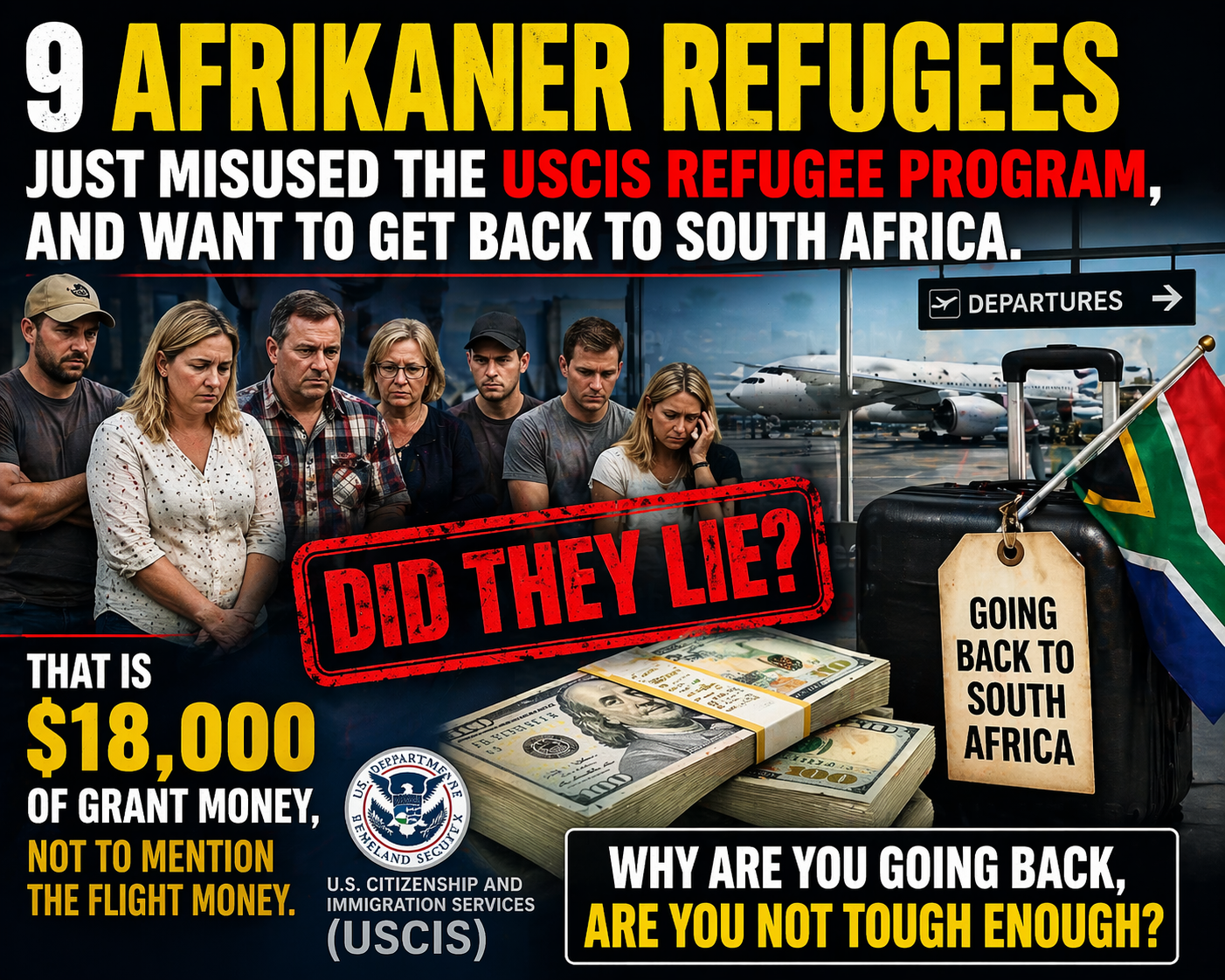
Conflicting of reports are unfolding around a group of nine Afrikaner refugees who reportedly entered the United States through the refugee system and are now seeking to return to South Africa—prompting sharp questions about how and why their claims were approved in the first place.
At the center of the debate is the integrity of the refugee process managed by agencies such as United States Citizenship and Immigration Services. Designed to offer protection to individuals facing credible threats of persecution, the system relies heavily on detailed interviews, background checks, and supporting evidence before granting refugee status.
WATCH:
Critics now argue that cases like these risk undermining public trust.
Reports from Col Chris Wyatt suggest that the individuals in question may have received resettlement support—often including initial financial assistance, housing support, and travel costs. Estimates circulating online place this support at around $18,000 per person, excluding airfare. While exact figures can vary depending on the case and assistance programs involved, the perception of misuse has fueled frustration and debate.
But from another angle, the reports are not what it seems:
If this is true, then the remaining needs to be answered:
The central question being asked: were these claims legitimate?
U.S. refugee policy is built on strict legal criteria. Applicants must demonstrate a well-founded fear of persecution based on factors such as race, religion, nationality, political opinion, or membership in a particular social group. False claims or misrepresentation can carry serious consequences, including revocation of status and potential legal penalties.
However, immigration experts caution against rushing to conclusions without verified findings.
“It’s important to distinguish between individual cases and broader patterns,” analysts note. “A decision to return home does not automatically mean a claim was fraudulent. Circumstances can change, or individuals may reassess their situation after resettlement.”
Still, the optics are difficult to ignore.
South Africa, while grappling with high crime rates and deep social tensions, is not formally recognized by most international bodies as a country producing large numbers of refugees on the basis of systematic racial persecution. This has made such refugee claims particularly contentious, both domestically and abroad.
For many observers, the issue goes beyond nine individuals. It touches on larger concerns about fairness and resource allocation within the global refugee system—especially at a time when millions of people worldwide remain displaced by war, political repression, and extreme violence.
If claims are found to have been exaggerated or false, it could have real consequences—not only for those involved, but for others whose legitimate cases may face increased scrutiny.
At the same time, the situation raises uncomfortable questions: What level of hardship qualifies someone for refugee protection? And who ultimately decides?
As the story develops, one thing is clear—this case has reignited a sensitive and deeply polarizing debate about migration, accountability, and the limits of refugee systems.
Whether it proves to be a case of misunderstanding, shifting personal circumstances, or something more serious will depend on facts that have yet to be fully established.

Comments (0)
Leave a Comment