
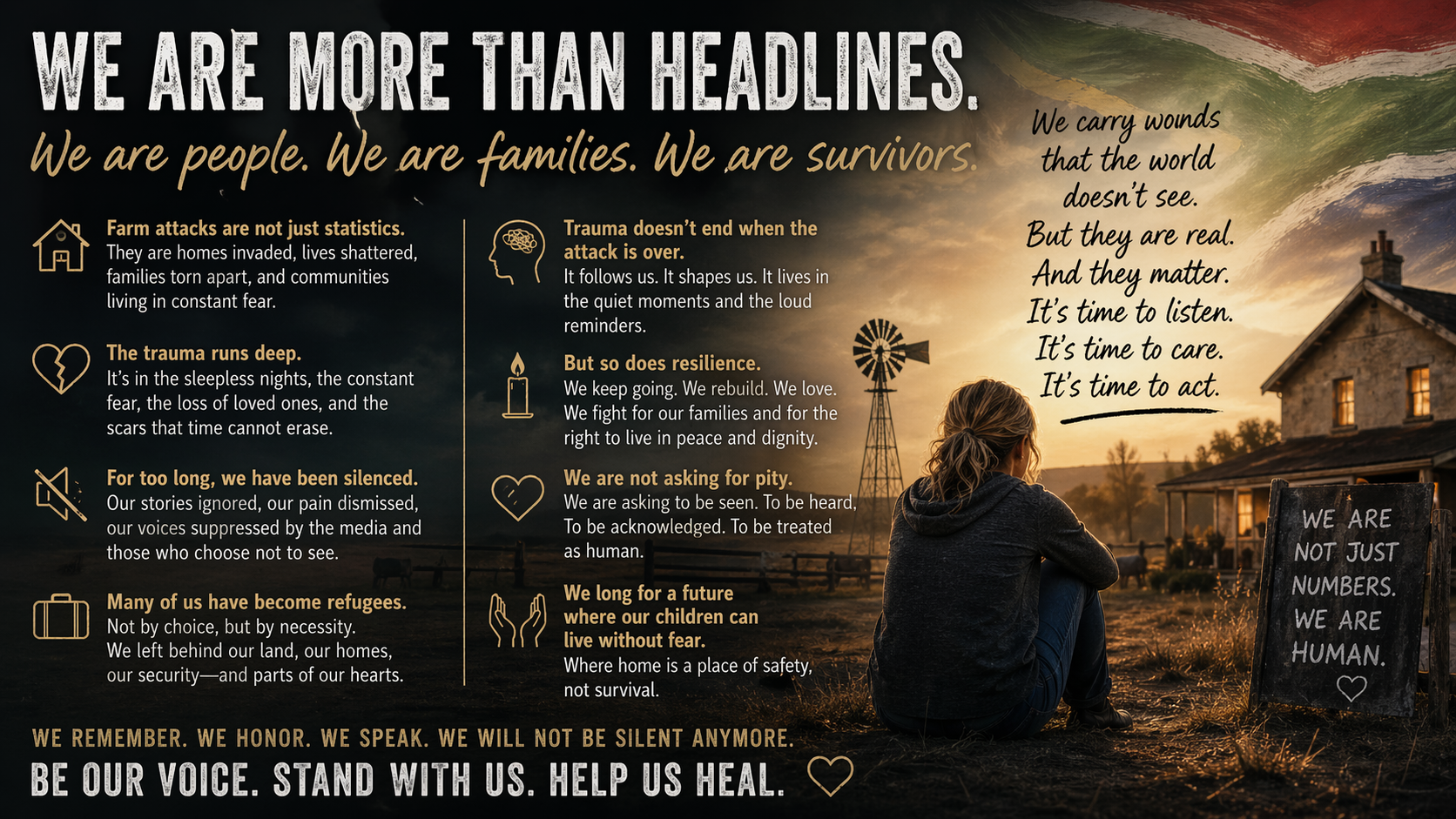
After today’s medicals, I felt compelled to write—because some things cannot stay unspoken any longer.
There was laughter in the room. Real laughter, at times. Moments where, for a second, it almost felt like everything was normal again. But underneath it, there was something else—something heavier. You could feel it without anyone saying a word. A quiet, shared weight. An understanding that didn’t need language.
Behind the smiles, there were fractures. Deep ones. Each person carrying their own version of the same unseen burden. And yet, even in that room, we did what people like us always do—we tried to lift each other up. A joke here. A kind word there. Small acts of strength in a place where weakness could easily take over.
But today, something surfaced that couldn’t be hidden.
For some, the anxiety during the physical examinations ran so deep that it couldn’t be contained behind polite smiles or steady voices. It showed itself—in trembling hands, in racing hearts, in silence where there should have been calm. For some, like myself, psychological evaluations had to be arranged. And that moment said more than any report, any statistic, or any public statement ever could.
Because there are wounds that never make the headlines.
They don’t appear in official figures. They don’t fit neatly into reports or political discussions. They are not debated with urgency or carried with empathy. They live quietly—inside people. Inside homes that once felt safe. Inside memories that don’t ask permission before returning.
This is not just about farm attacks.
Yes, the violence in rural areas—the attacks on farmers, whether Afrikaner, Boer, or English-speaking, across South Africa, Zimbabwe, and Namibia—has often been reduced to numbers. But numbers strip away the human reality. They erase the sound of a door breaking in the night. The helplessness. The fear that arrives before understanding.
But the truth is, it does not stop there.
The same fear exists in cities. In suburbs. In places that were once thought to be safer. Urban violence, home invasions, robberies, assaults—different settings, same outcome. The same racing heart at 2 a.m. The same instinct to listen for every sound. The same lingering question: are we safe?
We saw on the news how a white man gets shot at by a black taxi driver on Fred Nicholson street on 30th of March, in Pretoria, after refusing the taxi to pass and push in. - This raised a lot of questions. Black taxi drivers, often very aggressive in nature, how long before they start pulling the gun on any white person driving in the streets? They completely outnumber us - the truth is simple. It is no longer as to if it is going to happen, but when, and we are sitting on a ticking time bomb.
Violence does not ask where you live. It does not distinguish between rural and urban, between backgrounds or languages. And the trauma it leaves behind does not fade when the moment passes.
It settles.
It lives in the body. In the mind. In the smallest habits—checking locks twice, then a third time. Listening for footsteps that may not even be there. Sleeping lightly, if at all. It lives in the way people sit in a room, always aware of exits. Always calculating.
It lives in grief—not only for those lost, but for something less visible, yet just as devastating: the loss of safety. The loss of ease. The loss of what it once meant to feel at home.
And then, layered on top of all of this, comes something even harder to explain.
The silence.
The quiet erasure of these experiences. The feeling that your story is either too uncomfortable to acknowledge or too inconvenient to be given space. That speaking about it fully risks being misunderstood, dismissed, or ignored altogether.
For decades, many have carried this in silence. Not because the pain is small—but because the space to speak honestly has felt closed.
Becoming a refugee—whether crossing borders or being displaced within your own country—is not simply about geography. It is not just about leaving land or property behind.
It is about leaving parts of yourself behind.
It is about carrying memories you never chose, into unfamiliar places where you are expected to begin again. To adapt. To rebuild. To function. As if the past can be folded away neatly and left behind.
But trauma does not work like that.
It stays.
It resurfaces in quiet moments. In medical rooms. In questions that seem simple but reach too deep. It shapes how you trust, how you connect, how you see the world—and how you prepare for what might come next.
And yet, despite everything—despite the fear, the loss, the silence—there is something that remains.
Resilience.
Not the kind that makes headlines. Not the kind that gets recognition. But the quiet kind. The kind that wakes up every day and keeps going. The kind that rebuilds lives piece by piece, even when the foundation feels broken. The kind that holds families together when everything else feels uncertain.
The kind that refuses to let pain have the final word.
This letter is not written to divide. It is not written to argue.
It is written to remember.
To acknowledge.
To say, without hesitation or apology: these experiences are real. The trauma is real. And the silence has been real too.
And perhaps—just perhaps—healing does not begin when people are told to move on.
Perhaps it begins when they are finally heard.
We remain grateful to the United States, and to President Donald Trump, for listening—for opening a door after what has felt like 32 years of silence.
For many of us, that moment mattered more than words can fully express.

Comments (0)
Leave a Comment