
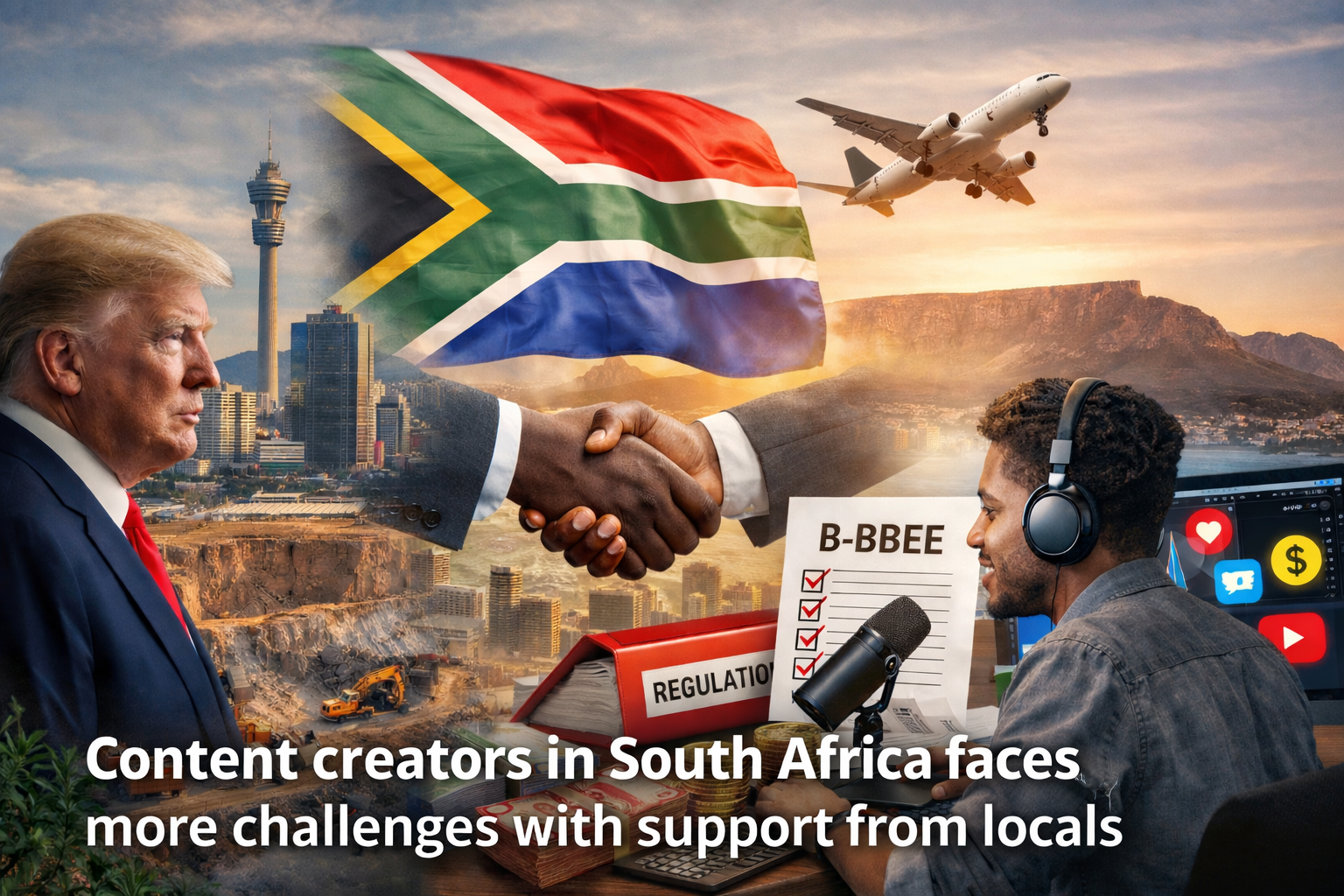
South African Business Support: Local Dynamics vs. International Approaches – Why Engaging with Locals Often Proves Challenging (Updated with Creator Economy Insights)
South Africa presents a paradox for business: a sophisticated economy with world-class sectors in finance, mining, and tech, yet one where many entrepreneurs and investors—both domestic and foreign—describe navigating local partnerships as frustratingly complex. This analytical article examines how South Africans typically “support” business ventures compared to overseas (international or foreign) counterparts, and why securing deals or reliable execution with local South African partners can feel disproportionately difficult. The patterns extend beyond traditional business into the booming creator economy, where donations and fan support to South African content creators reveal the same structural and cultural dynamics—with notable nuances among subgroups like Afrikaners. Drawing on economic reports, cultural analyses, business environment data, and insights from the creator economy, these trends stem from a mix of structural policies, cultural norms, regulatory burdens, and operational realities rather than any inherent national trait.
The Broader Business Environment: Restrictive and Costly
South Africa’s regulatory framework ranks among the more burdensome in its peer group. Persistent issues in licensing, construction permits, and contract enforcement contribute to a restrictive environment among emerging markets, with excessive regulation and government inefficiencies cited in analyses. OECD Economic Surveys highlight limited public and private investment, high operating costs, and corruption as drags on growth. Crime, infrastructure bottlenecks (logistics and energy reliability), and weak demand further erode confidence. Small and medium enterprises (SMEs)—the backbone of local business—report cash-flow crises, rising input costs, and limited access to markets or finance, with many operating in a “vulnerable” state.
In this context, “supporting business” takes different forms. Local South Africans often channel support through networks, community ties, and policy-driven mechanisms designed for transformation. Overseas actors (foreign investors, multinationals, or expat entrepreneurs) tend to emphasize capital injection, technology transfer, and standardized global processes—but frequently encounter the same hurdles amplified by unfamiliarity with local rules.
Cultural Foundations: Relationships vs. Transactions
South African business culture blends Western formality with distinctly local elements rooted in Ubuntu (a philosophy of community, reciprocity, and mutual care). Face-to-face meetings are prized; small talk builds rapport before diving into deals. Communication is notably direct and honest—ambiguity signals unreliability—but negotiations move slowly toward win-win, long-term outcomes rather than quick closures. Hierarchy matters: senior leaders consult teams but hold final say, and loyalty to employers runs high because jobs are scarce.
Trust is not automatic; it is earned through introductions via reputable contacts and demonstrated respect. Afrikaner-style directness can seem “stubborn” to outsiders accustomed to more fluid Western bargaining. Punctuality is expected (especially among White and Asian professionals), yet the pace of consensus-building contrasts sharply with the fast, contract-first style common among overseas partners from Europe, North America, or Asia.
Locals “support” business by prioritizing relational durability and community obligations—sometimes extending to informal requests (e.g., employment referrals amid high unemployment). Overseas approaches lean transactional: clear KPIs, tight timelines, and exit clauses. This mismatch can make local partnerships feel slower or less predictable for foreigners, while locals may view overseas partners as impersonal or overly aggressive.
Structural Policies: B-BBEE and Transformation Imperatives
A defining feature of local business support is Broad-Based Black Economic Empowerment (B-BBEE). Introduced to redress apartheid-era inequalities, it scores companies on ownership, management control, skills development, and procurement, influencing government tenders, supply chains, and even private deals. Compliance is often mandatory for meaningful local engagement.
Empirical studies show mixed results: B-BBEE correlates with modestly higher turnover for larger JSE-listed firms but little to no impact on profits or broad productivity gains. Critics argue it adds compliance costs, encourages fronting (nominal empowerment without real transformation), and creates barriers to entry—particularly for foreign investors who must source from B-BBEE-compliant suppliers even if exempt from full ownership rules.
South African locals often navigate B-BBEE as a natural ecosystem—leveraging scores for preferential access—while overseas partners see it as an extra layer of complexity that slows deals and raises costs. This policy-driven “support” for historically disadvantaged groups can inadvertently make pure merit- or efficiency-based collaborations with locals harder to structure.
Operational Realities: Why Local Partnerships Frequently Stall
Practical difficulties with South African locals emerge across multiple dimensions:
- Red Tape and Bureaucracy: Setting up or scaling operations involves layers of licensing, labor compliance, and sector-specific rules. Foreigners report this as especially cumbersome; locals may shortcut via networks, but SMEs often lack the systems (branding, processes, financial management) that overseas partners take for granted.
- Skills and Professionalism Gaps: High unemployment coexists with skills shortages. Some local ventures operate survivalist-style—hand-to-mouth cash flow, weak strategy, or inconsistent execution—reflecting resource constraints rather than unwillingness. Overseas investors accustomed to robust infrastructure and talent pools find this jarring.
- Crime, Security, and Cost Pressures: Elevated crime rates necessitate private security, inflating costs. Combined with rising input prices and weak consumer demand, these realities hit local partners hardest, eroding reliability.
- Perceptions from Expats and Foreigners: Common feedback includes frustration with slow decision-making, relational rather than contractual focus, and occasional requests that blur professional boundaries. Yet many praise South Africans’ resilience and cheerfulness once trust is secured.
In contrast, overseas people (whether as investors or partners in global supply chains) often “support” business through FDI that brings fresh capital and expertise but demands compliance with the same local rules—sometimes leading to preference for dealing primarily among international players or with large, already-compliant South African corporations.
The Creator Economy: How the Pattern Shapes Donations and Fan Support
The same dynamics play out vividly in South Africa’s growing creator economy (YouTubers, TikTokers, streamers, podcasters, and influencers), where content creators rely heavily on donations, subscriptions (e.g., Patreon, Twitch subs, YouTube Super Thanks), tips, and brand deals for revenue. Here, the relational-vs-transactional divide and economic realities amplify the disparity: South African creators consistently receive far more financial support from international audiences than from local ones, mirroring the challenges of “getting business done with locals.”
Locally, support often manifests relationally—through shares, views, comments, and community engagement rooted in Ubuntu-style reciprocity—but translates poorly into donations. High unemployment, low disposable income, “Black Tax” (financial obligations to extended family), and economic pressures limit locals’ ability to tip or subscribe regularly. Domestic brand budgets are smaller, ad rates (CPM) are lower when audiences are South African-based, and platforms like TikTok’s Creator Fund have limited or no availability in the country. As a result, local monetization feels constrained and survival-oriented, much like SME cash-flow struggles in traditional business. Creators report competing globally while negotiating smaller local deals, with audience engagement high but conversion to paid support low.
Internationally, support is more transactional and efficient: direct donations, recurring memberships, and higher-value sponsorships flow readily from viewers in the USA, UK, EU, and other high-income markets. Platforms pay significantly more for ads viewed by these audiences (often 5–10x higher CPM), and fans—accustomed to the global creator economy—treat donations as straightforward “investment” in entertaining or informative content. Many successful SA creators derive the majority of their income from abroad, reinforcing why pure local ecosystems (business or creator) feel harder to sustain without external capital or adaptation.
A notable exception within the local landscape involves Afrikaners, who appear less reluctant to give donations compared to many of their overseas counterparts in similar economic brackets. This pattern aligns with cultural traits often observed among Afrikaners—strong community bonds, directness, and a historical emphasis on self-reliance paired with practical generosity (e.g., hospitality and mutual support within tight-knit groups). While broader South African giving is shaped by economic constraints, Afrikaner donors (both to traditional causes and individual creators) tend to convert relational loyalty into more consistent financial backing when trust is established. Overseas audiences, despite higher average disposable income, can sometimes exhibit “compassion fatigue,” platform saturation, or more selective/transactional giving habits, making Afrikaner support stand out as relatively forthcoming in the domestic context. This intra-local variation highlights how cultural subgroups navigate the same economic frictions differently, with Afrikaners bridging the relational gap more readily than some international donor pools.
This overall pattern mirrors the broader business dynamic exactly. Local “support” is community-driven and relational but financially limited by structural constraints (economy, regulation, infrastructure). Overseas “support” is direct, scalable, and reward-based—unhindered by local frictions—allowing creators to thrive despite domestic challenges.
Why the Gap Persists—and What It Means
The difficulty of “getting business done with locals” (or securing local donations in the creator space) is not cultural incompatibility per se, but the interplay of policy intent (transformation via B-BBEE and local content rules), economic fragility (high costs, infrastructure gaps, low disposable income), and cultural emphasis on relationships over speed. Locals support via embedded networks and policy tools that favor inclusion; overseas approaches prioritize efficiency and scale. The result: foreign capital and donations flow more readily to established players or global-facing creators, while pure local partnerships require extra patience, introductions, and adaptation. Subgroup differences, such as greater willingness among Afrikaners, offer pockets of opportunity within the local market.
This dynamic deters broader investment—South Africa struggles to convert potential into sustained FDI growth despite being “open for business.” Reforms suggested in OECD and IMF reports (streamlining regulation, fighting corruption, easing labor rigidity, and clarifying B-BBEE) could narrow the gap without undermining transformation goals. In the creator economy, greater platform inclusion, local payment innovations, and targeted engagement with willing domestic donor communities could help close the donation disparity.
Conclusion: Opportunity Through Adaptation
South Africa’s locals are not inherently “difficult”—they operate in a uniquely challenging environment shaped by history, policy, and economics. Overseas partners (in business or as donor-fans) succeed when they invest in relationship-building, secure local introductions, accept slower timelines, and build compliance or audience strategies accordingly. Locals, conversely, gain from adopting more structured processes and global best practices, while subgroups demonstrating stronger giving tendencies (like Afrikaners) can serve as bridges for domestic support.
Ultimately, bridging the divide requires mutual adaptation: locals leveraging their resilience, community ethos (Ubuntu), and authentic content alongside efficiency gains, and overseas actors embracing the relational depth that can yield durable, high-trust partnerships or loyal fan bases. With targeted reforms and creator-focused innovations, South Africa could translate its vibrant entrepreneurial and creative spirit into easier, more rewarding support systems for all. The potential remains immense—if the friction points are addressed head-on.

Comments (0)
Leave a Comment