
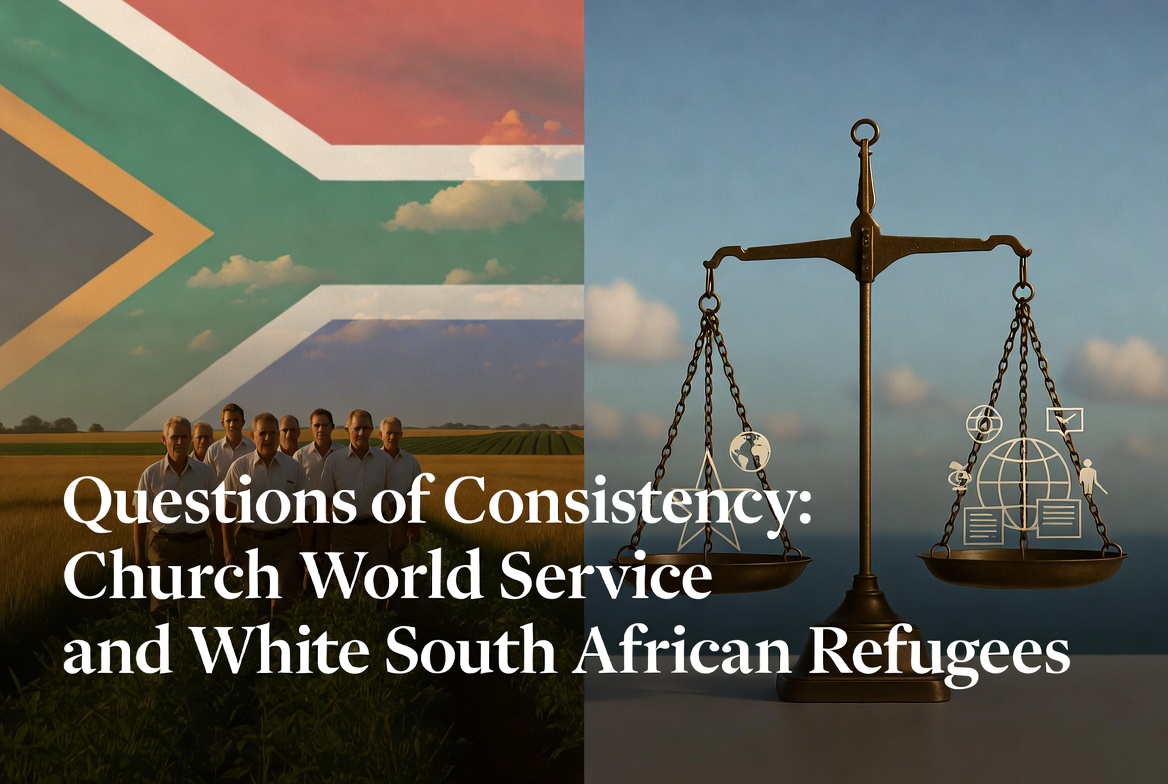
CWS Criticism Focused on White South Africans
In multiple statements and updates throughout 2025 and 2026, CWS has expressed strong dismay over U.S. efforts to prioritize Afrikaners and other white South Africans facing documented threats. The organization has described plans that reserve most available slots for this group as a “moral failure,” an “affront to American values,” and a “cynical betrayal” of the refugee program’s original spirit. CWS has repeatedly highlighted that these predominantly white refugees are being fast-tracked while other populations wait, framing the prioritization as politically motivated rather than driven purely by humanitarian need.
Its “State of Play” email updates, which many subscribers receive, often emphasize concern that the program is being used to favor white South Africans over others who have already been vetted. Even while operating the Resettlement Support Center (RSC) Africa and stating it will serve eligible Afrikaners, CWS has voiced ongoing opposition to the expedited processing of this specific racial group.
This pattern has led observers to question whether white victims of persecution in South Africa are being treated as a distinct target for criticism within CWS communications.
South Africa’s Refugee System: Open to Everyone
South Africa’s own refugee and asylum system, guided by the Refugees Act, is intended to assess claims based on a well-founded fear of persecution — without discrimination based on race or color. Individuals from any background, including Black, White, Coloured, or Indian South Africans, as well as foreign nationals, can apply if they meet the criteria. The system operates on the principle that protection should be available to those in genuine need, irrespective of skin color.
This non-racial approach in South Africa contrasts with the selective focus in some international advocacy. White farmers and families in South Africa have faced well-reported challenges, including high rates of farm attacks, violent rural crime disproportionately affecting commercial farmers (who are often white), and policies perceived as targeting certain racial minorities. Acknowledging these realities and providing targeted resettlement options does not prevent assistance to others — it simply responds to specific evidence of vulnerability.
The Importance of Color-Blind Humanitarian Principles
CWS positions itself as committed to helping “all eligible refugee populations,” including Afrikaners. However, its repeated emphasis on the racial identity of the South African group — describing them as “predominantly white” or “white Afrikaners” in critical contexts — raises legitimate questions about consistency.
Refugee protection works most effectively when it evaluates cases based on individual merit and evidence of persecution, not on whether the applicants belong to a particular racial category. When advocacy organizations appear to single out white South Africans for stronger opposition, even as they process their cases, it can undermine public confidence in the impartiality of humanitarian work.
True compassion should not depend on skin color. Persecution can affect people of any race, and responses should be guided by facts on the ground rather than demographic preferences.
A Call for Fair and Consistent Advocacy
Organizations like CWS play an important role in global refugee support. Maintaining credibility requires applying the same level of urgency and fairness to every group in need — whether from South Africa, Afghanistan, Sudan, or elsewhere.
South Africa’s domestic system shows that refugee claims can be handled without racial bias. The U.S. program’s attention to vulnerable white South African communities aligns with the principle of addressing real threats wherever they occur. Helping one persecuted group does not diminish the need to assist others; it simply refuses to ignore suffering based on race.
As global refugee discussions continue, greater emphasis on evidence-based, color-blind processing would benefit the entire system. CWS and similar groups have the opportunity to demonstrate leadership by treating white South African refugees with the same dignity and support they extend to all others — without selective criticism tied to their racial identity.
Fairness in refugee protection ultimately serves those who need safety most. It is reasonable to expect humanitarian organizations to uphold that standard consistently, free from any appearance of targeting one racial group for opposition.

Comments (0)
Leave a Comment