
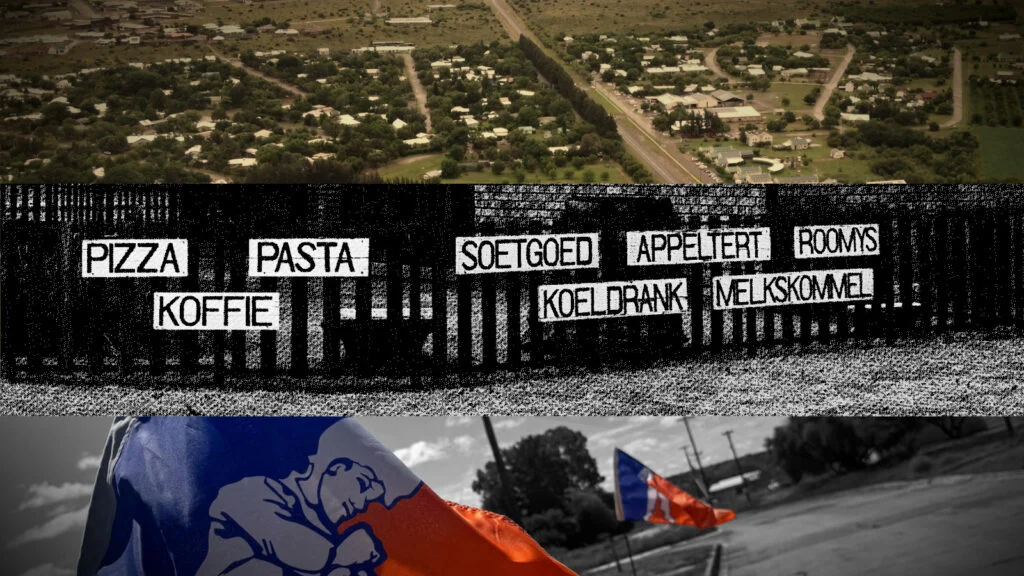
The goal? Repeal Section 235 of the Constitution – that pesky little clause recognising the right of communities sharing a common cultural and linguistic heritage to pursue some form of self-determination.
Because apparently, in the rainbow nation, a few small Afrkanr towns quietly minding their own cultural business are the real existential threat keeping South Africa from achieving its utopian potential. Orania and Kleinfontein, those notorious hotbeds of... checks notes... voluntary cultural preservation and self-governance, must be brought to heel. Sarcasm aside, this feels less like nation-building and more like nation-bullying.
#Sec235 #Selfdetermination Sec 235 was included into the SA Constitution in 1996 after serious conflict to prevent a civil war. Know that. Remember that. Do not let us go there again. @MzwaneleManyi should take it up with his leader @PresJGZuma who was part of the agreement.
— Corné_Mulder (@MulderCorn) April 2, 2026
What Section 235 Actually Says (Before MK “Clarifies” It Out of Existence)
Section 235 states:
“The right of the South African people as a whole to self-determination, as manifested in this Constitution, does not preclude, within the framework of this right, recognition of the notion of the right of self-determination of any community sharing a common cultural and language heritage, within a territorial entity in the Republic or in any other way, determined by national legislation.”
It was part of the 1996 constitutional compromise – a nod to minorities that they wouldn’t be steamrolled in the new democracy. Supporters of places like Orania see it as the constitutional green light for preserving Afrkanr language, culture, and way of life without imposing it on anyone else. Orania runs its own services; Kleinfontein operates as a share-block with cultural criteria. Harmless cultural enclaves? Or, as MK would have it, dangerous “exclusionist, racist” throwbacks that must be erased for the greater good.
Video: Renaldo Gouws
It seems the MK Party is continuing to fight minorities in this country by wanting to strip their rights from them by removing Section 235 of the constitution. pic.twitter.com/lSN5n5lVdK
— Renaldo “Ngamla” Gouws ?? (@RenaldoGouws) April 2, 2026
MK’s Bold Plan: Delete First, Ask Questions Never
MK MP Mzwanele Manyi’s explanatory summary argues that Section 235 is redundant, confusing, and creates the “false impression” that the Constitution tolerates cultural enclaves. Never mind that the Bill of Rights already covers language, culture, and association – apparently those protections aren’t enough if they allow people to actually use them in practice.
The party has long painted Orania as an apartheid relic living off the grid (without “cheap bl labour,” as some colourful online commentary puts it). Justice Minister Mmamoloko Kubayi has similarly dismissed claims under Section 235 as incompatible with a non-racial order. Translation: cultural self-determination is fine in theory, just not if it involves any territorial reality that looks even remotely separate.
Public representations are invited until 26 April 2026. Submit your thoughts to the Speaker – perhaps politely suggest that aggressively stripping away minority assurances might not be the unity masterstroke it’s sold as.
The Sarcastic Elephant in the Room: Civil War Vibes?
Here’s where the irony gets thick enough to choke on. South Africa already grapples with sky-high crime, failing infrastructure, racial tensions, and economic stagnation. Instead of fixing the basics that affect all citizens, the focus shifts to targeting a handful of small, self-sustaining Afrkanr communities that aren’t harming anyone outside their gates.
Critics warn this could backfire spectacularly. Afrkanr advocacy groups and parties like the Freedom Front Plus have long viewed Section 235 as a vital safety valve – a constitutional promise that minorities won’t face outright cultural erasure. Remove that valve, and you risk turning quiet cultural preservation into desperate resentment. Push too hard, and what starts as parliamentary posturing could escalate into deeper polarisation, protests, emigration waves, or worse – the kind of societal fracture that history shows can spiral into serious conflict when people feel cornered with no legal outlet for their identity.
Because nothing de-escalates tensions like telling a group, “Your constitutional compromise is now null and void – assimilate or else.” In a country still healing from its divided past, this smells less like progress and more like poking a sleeping bear with a lit match while yelling “Why so tense?”
Whether the bill passes (it needs a two-thirds majority) remains to be seen. But the message is loud: in MK’s vision of South Africa, diversity is celebrated… as long as it doesn’t involve actual different ways of living. The coming debate will test whether the Constitution’s spirit of compromise still matters, or if “unity” now means one-size-fits-all under threat of repeal.
Public comment is open. South Africans of all backgrounds might want to weigh in – before the next “clarification” turns cultural friction into something far more dangerous.

Comments (0)
Leave a Comment