
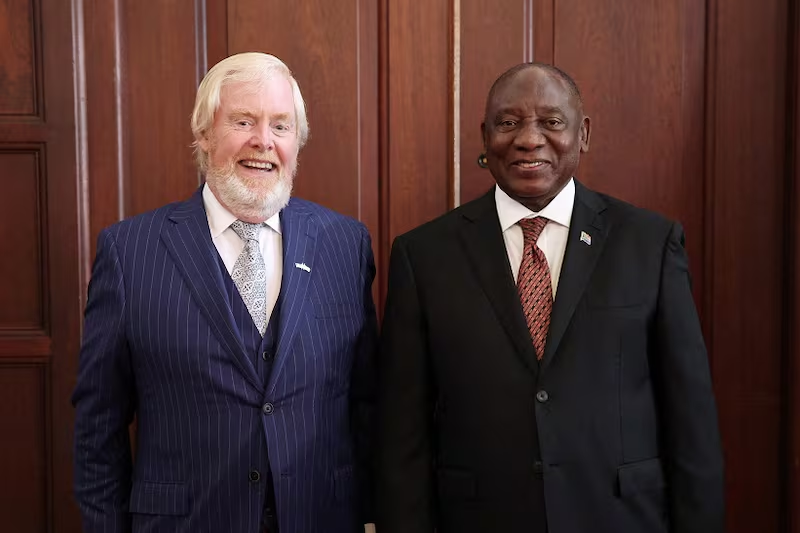
Pretoria, South Africa – April 9, 2026 – In a carefully worded address during the credentials ceremony for new envoys on April 8, President Cyril Ramaphosa reminded diplomats that “non-interference is the golden rule.” The message, delivered as he formally accepted the credentials of U.S. Ambassador L. Brent Bozell III, emphasized mutual respect, private channels for concerns, and avoiding public criticism of host nations. While the speech signals Pretoria’s preference for smooth bilateral ties, it has sparked fresh debate about whether America’s top representative in South Africa is striking the right balance between diplomacy and advocacy on human-rights issues—particularly the ongoing scourge of farm attacks and murders.
Ambassador Bozell, a longtime conservative activist and founder of the Media Research Center, arrived in South Africa earlier this year amid high expectations from supporters in Washington. Early in his tenure, he drew headlines—and a formal summons from the South African government—for describing the “Kill the Boer” chant as hate speech with “no place in a civilized society.” The remarks, made at a business forum, also touched on land-reform policies and judicial rulings, prompting accusations of meddling from Pretoria.
Yet in recent days, Bozell has adopted a noticeably softer tone. In public statements reported across local media, the ambassador has expressed “nothing but respect” for South Africa’s judiciary, declared he has “fallen in love” with the country, and reaffirmed his commitment to strengthening U.S.-South African relations. Critics now argue this shift toward diplomatic niceties has come at the expense of sustained pressure on one of the most emotive and statistically troubling issues in rural South Africa: farm killings.
A Pattern of Violence That Demands Attention
Farm attacks remain a grim reality in South Africa. According to data compiled by agricultural unions and independent monitors over the past decade, hundreds of farmers and farm workers—disproportionately from the white minority—have been killed in brutal home invasions, often accompanied by torture, rape, and extreme violence. While overall crime rates are high across the country, rural safety experts note that farm murders frequently exhibit levels of planning and savagery that set them apart from typical robberies. Families living on isolated plots remain especially vulnerable.
Human-rights advocates and opposition parties have long called on the government to treat farm attacks as a priority national security concern rather than a subset of general crime. They point to slow prosecution rates in some cases and occasional inflammatory rhetoric from political figures that, they say, contributes to a climate of impunity. The “Kill the Boer” chant—sung at rallies by certain political groups—has become a flashpoint, with courts ruling it does not constitute hate speech in specific contexts, a position Bozell initially challenged.
Supporters of a firmer U.S. stance argue that Ambassador Bozell’s early comments aligned with longstanding American values of condemning incitement to violence regardless of historical context. By dialing back that rhetoric in favor of Ramaphosa’s “quiet diplomacy” model, they contend, Bozell risks sending a message that strategic relations with Pretoria outweigh the lives of South African citizens on the land.
Diplomacy Versus Duty: Where Critics Say Bozell Falls Short
Political commentators and South African farm advocacy groups have begun voicing disappointment online and in private briefings. “Ambassador Bozell started strong by naming the problem of hate speech and rural insecurity head-on,” said one agricultural lobbyist who asked not to be named for fear of reprisal. “Now it feels like the golden rule of non-interference has been internalized a little too enthusiastically. Farm families need more than polite photo-ops and trade talks—they need the world’s most powerful nation to keep the spotlight on their safety.”
The timing of Ramaphosa’s April 8 remarks is not lost on observers. Delivered directly to Bozell and other new diplomats, the speech appears designed to reset expectations after months of friction between the Trump administration and the ANC-led government over land expropriation without compensation, Black Economic Empowerment policies, and U.S. criticism of Pretoria’s foreign policy alignments.
Bozell’s defenders counter that effective diplomacy sometimes requires patience and behind-the-scenes engagement. As a seasoned conservative voice now serving in an official capacity, he must navigate Senate-confirmed constraints and the realities of bilateral trade, investment, and counter-terrorism cooperation. Public confrontations, they argue, could jeopardize American interests without delivering tangible improvements for rural safety.
Yet the critique persists: in a country where farm killings have claimed lives for years, silence—or overly measured language—can be interpreted as acquiescence. Independent monitors continue to record incidents, and families in the Free State, KwaZulu-Natal, and Limpopo provinces report living in fear despite repeated government promises of enhanced rural security.
Looking Ahead: Can Diplomacy Deliver Results?
As Ambassador Bozell settles into his role, the question hanging over Pretoria’s diplomatic circles is whether quiet engagement will produce measurable progress on rural safety—or whether the farm killings issue will remain politely sidelined in favor of smoother relations. Ramaphosa’s emphasis on non-interference offers a clear framework; whether Bozell’s restraint serves long-term U.S. principles of human rights and rule of law is a debate gaining traction among those who initially welcomed his appointment.
For now, South African farmers and their advocates say they are watching closely. In a nation still grappling with the legacies of apartheid, inequality, and high crime, the ambassador’s microphone carries weight. Critics maintain it should not be muted by diplomatic courtesy when lives on the land continue to be lost.
This article reflects ongoing public discourse and does not represent the official position of any government or organization.

Comments (0)
Leave a Comment