
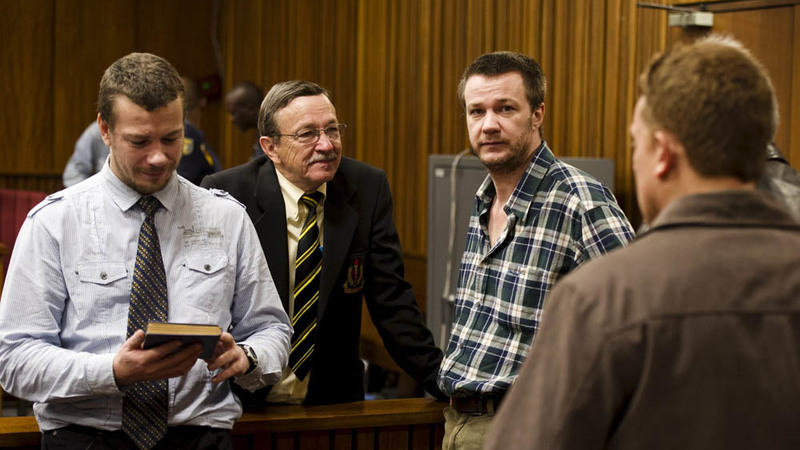
JOHANNESBURG — The United Nations Human Rights Committee has ruled that the rights of certain Boeremag members were violated during their high-profile prosecution in South Africa, directing the state to provide compensation to the affected individuals.
The ruling centers on the long-running treason trial of the Afrikaner nationalist group, which was convicted for a 2002 plot to overthrow the democratic government. While the UN committee’s findings do not overturn the criminal convictions, they highlight significant procedural failures under international law.
Key Findings and Recommendations
The committee’s review focused on the treatment of Johan "Lets" Pretorius and his sons, Johan and Wilhelm, throughout a legal process that spanned over a decade. The ruling identified several breaches of the International Covenant on Civil and Political Rights (ICCPR):
Prolonged Detention: The committee flagged the excessive length of pre-trial detention and the overall duration of the trial, which lasted 1,280 court days between 2003 and 2013.
Procedural Fairness: The findings suggest that the state failed to uphold rigorous fair trial standards as guaranteed under Article 14 of the ICCPR.
Remedies: The UN body has called on the South African government to provide "effective remedies," including financial compensation and measures to ensure such delays do not recur in future complex cases.
Context and Public Reaction
The Boeremag trial remains one of the most significant and lengthy treason cases in South Africa's post-apartheid history. The group was linked to a series of bombings and sabotage aimed at destabilizing the state in the early 2000s.
The decision has elicited a mixed response from legal and political analysts:
Legal Perspective: Experts note that the ruling reinforces the principle that fundamental human rights apply universally, regardless of the severity of the crimes for which an individual is accused.
Public Sentiment: For many South Africans, the prospect of the state compensating individuals convicted of violent anti-democratic plots remains a deeply polarizing issue.
Next Steps for the South African Government
As a signatory to the ICCPR, South Africa is expected to review the committee's findings. While UN treaty body decisions are not directly enforceable in domestic courts, they carry significant international weight and often prompt domestic legal reforms.
The Department of International Relations and Cooperation (DIRCO) and the Department of Justice have yet to release a formal statement regarding how they intend to implement the committee's recommendations. The ruling arrives as South Africa begins its 2026–2028 term on the UN Human Rights Council, placing its domestic justice system under heightened international scrutiny.

Comments (0)
Leave a Comment