
In South Africa, political leaders continue to defend race-based policies as necessary tools of “redress.” But on the ground, the reality is far less ideological—and far more devastating.
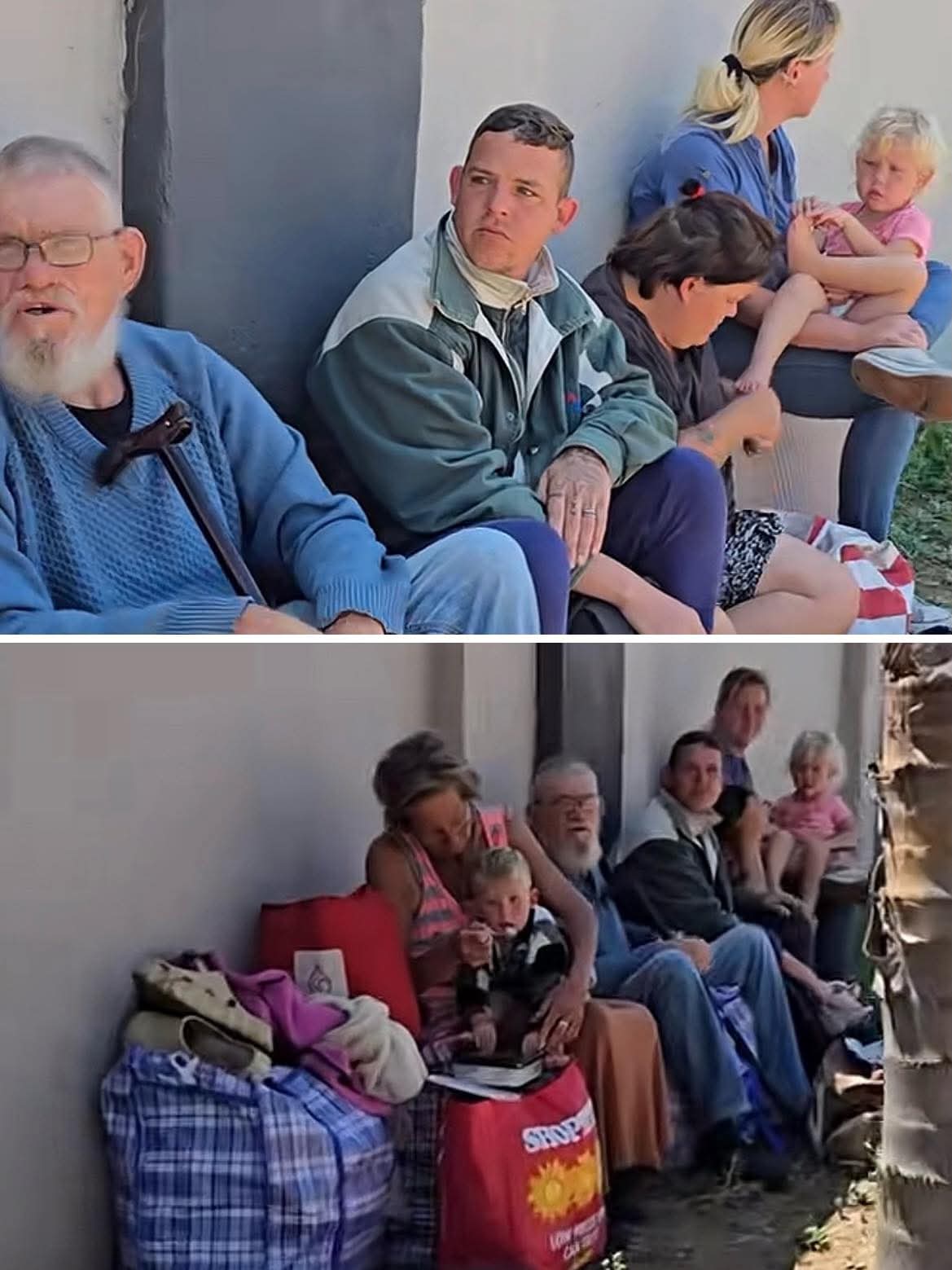
A multigenerational family—grandparents, two daughters, a son-in-law, and two young children—has become the latest example of a system that is increasingly failing ordinary citizens.
Unable to keep up with rising rent, they were evicted from their home. With no safety net, no immediate assistance, and nowhere left to turn, they spent two weeks sleeping on the streets—exposed to cold nights, uncertainty, and the quiet humiliation that comes with losing everything.
This is not theory. This is not politics. This is happening now.
A Government Focused on Policy, Not People
Since the end of apartheid, South Africa has introduced numerous policies aimed at correcting historical injustices. These include employment equity laws, bl Economic Empowerment (BEE), and various race-conscious regulations embedded across sectors.
But decades later, a difficult question must be asked:
Who is being helped—and who is being left behind?
While these policies were designed with good intentions, critics argue they have evolved into a rigid framework that often prioritizes compliance over competence, and ideology over economic growth.
The result?
- Sluggish job creation
- Increasing cost of doing business
- Reduced investment confidence
- A shrinking middle class
And ultimately, more families slipping through the cracks.
The Housing Reality No One Wants to Talk About
South Africa’s housing crisis is reaching a breaking point.
Millions remain on waiting lists for government housing. Rental prices continue to climb. Informal settlements are expanding. And for many families, a single missed paycheck is the difference between stability and homelessness.
Yet public discourse remains fixated on race, quotas, and political narratives—while the most vulnerable are left to fend for themselves.
The evicted family’s story is not unique. It is simply one of the few that gets told.
When Ideology Meets Reality
It is easy to defend policy in Parliament. It is much harder to defend it on the pavement—where children sleep in the cold.
South Africa’s Constitution envisions dignity, equality, and opportunity for all. But when policies—however well-intentioned—fail to translate into real economic inclusion, they risk deepening the very divisions they were meant to heal.
Poverty does not ask about race before it destroys a household.
And hunger does not wait for policy debates to conclude.
A System in Need of Urgent Reform
This is not an argument against addressing historical injustice. It is an argument against ignoring present suffering.
If South Africa is serious about building a future for all its citizens, then priorities must shift:
- From compliance to job creation
- From bureaucracy to opportunity
- From political rhetoric to practical solutions
Economic growth, housing accessibility, and social support systems must take precedence over policies that, in practice, are failing to protect the most vulnerable.
The Bottom Line
The image of a family sleeping on the streets in one of Africa’s most advanced economies should be a national wake-up call.
Not because of politics.
But because no society—regardless of its history—can justify a future where children grow up without shelter while leaders debate ideology.
South Africa stands at a crossroads.
The question is no longer what policies were meant to do.
The question is whether they are still working—and for whom.
What happens when the bl government of South Africa enforces 146 radical race laws aimed at the wh minority: https://t.co/PIv2BTXVUW
— Jason Bartlett (@Jason2bartlett) April 5, 2026
SEO Title:
South Africa Race Laws Debate: Family Left Homeless Amid Rising Housing Crisis
Meta Description:
A South African family forced onto the streets highlights growing concerns over housing, unemployment, and the real-world impact of race-based policies.
Keywords:
South Africa race laws, BEE policies South Africa, housing crisis South Africa, eviction South Africa, unemployment South Africa, economic inequality South Africa, land reform debate, South Africa news 2026

Comments (0)
Leave a Comment