
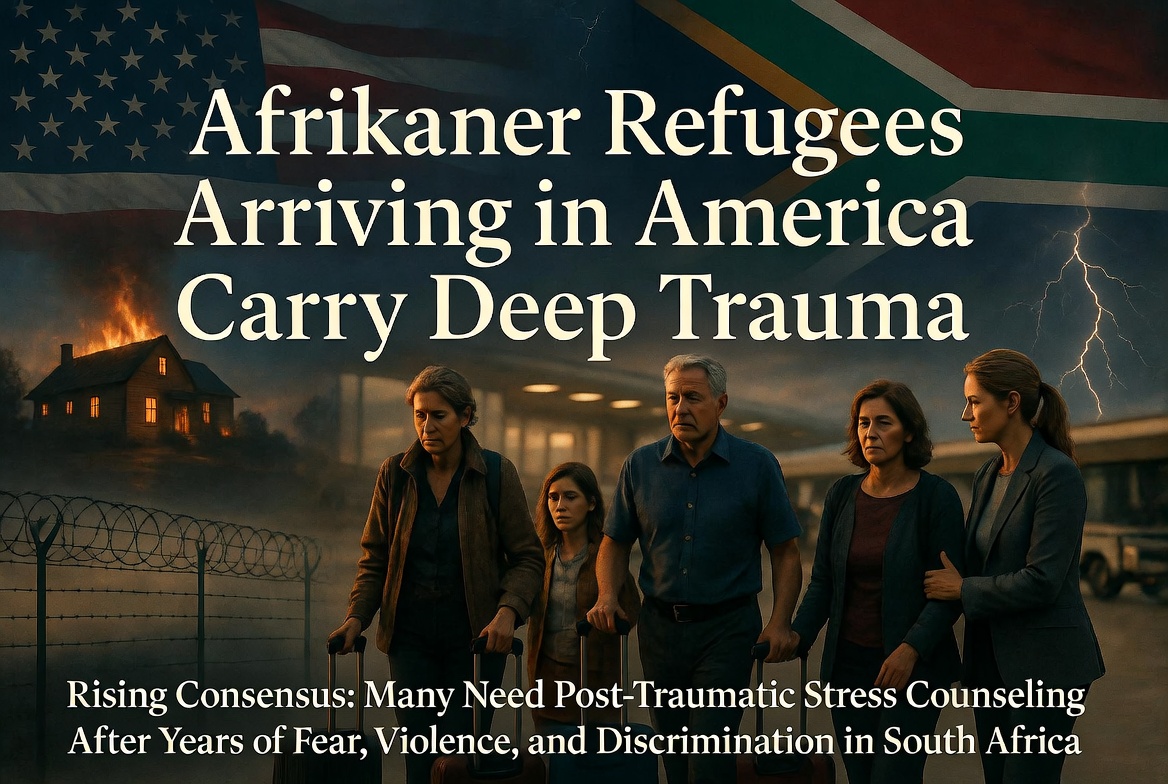
United States – As waves of Afrkanr families from South Africa continue to resettle in the United States under the Trump administration’s expedited refugee program, a quiet but consistent observation is emerging among those working directly with them: many arrive carrying deep psychological wounds that warrant professional counseling for post-traumatic stress.
There is a rising consensus amongst Americans working with Afrkanr refugees that most of them need Post Traumatic Stress counseling for what they have lived though in South Africa:
— Volkstaat (@Volkstaat10) April 5, 2026
The endless threat to life and property, openly discrimted against and hated in their land, etc
Volunteers, resettlement workers, counselors, and community leaders assisting these new arrivals report a rising consensus that the majority of Afrkanr refugees have endured prolonged periods of fear, uncertainty, and loss in their homeland. The experiences cited include repeated threats to personal safety and family farms, brutal attacks on rural properties, and a pervasive sense of being openly discriminated against or vilified simply for their identity and heritage in the land of their birth.
For many Afrkanrs — descendants of early Dutch, French, and German settlers who have called South Africa home for centuries — daily life in parts of the country has involved living under the shadow of violent farm attacks, where families have lost loved ones, homes, and livelihoods in horrific circumstances. Others describe systemic pressures, including policies perceived as racially targeted, employment barriers under broad-based bl economic empowerment frameworks, and a cultural climate where expressions of hatred or calls to “kill the Boer” have at times been normalized in political rhetoric and public discourse.
Those on the front lines of resettlement say the cumulative effect is unmistakable. “These are not people fleeing abstract discomfort,” said one counselor working with a Midwest-based support group for South African arrivals. “They speak of years of hyper-vigilance — sleeping with firearms nearby, teaching children escape routes, mourning neighbors killed in their homes. That kind of sustained threat leaves scars that don’t vanish the moment they reach safety.”
Resettlement organizations have begun quietly integrating trauma-informed care into their programs. Symptoms commonly observed include hyperarousal, intrusive memories of violent incidents, difficulty trusting new environments, and profound grief over leaving behind a country many still deeply love despite its challenges. Some refugees describe a heartbreaking sense of exile — feeling unwanted and hated in the only home they have ever known.
This emerging awareness comes as the U.S. has welcomed several thousand Afrkanrs since the program’s expansion in 2025, with many settling in agricultural communities in states like Texas, Iowa, and the Midwest where their farming skills are welcomed. While the broader political debate around South Africa’s crime statistics and land policies remains highly contentious — with the South African government strongly disputing claims of targeted persecution — the human stories of those who have chosen to leave paint a picture of genuine suffering for a minority community.
Advocates for the refugees emphasize that recognizing this trauma is not about politics, but about basic compassion and effective integration. “These families need more than housing and jobs,” one church-based resettlement coordinator noted. “They need space to process what they’ve lived through — the constant anxiety, the loss of security, and the emotional weight of feeling despised in their ancestral land. Post-traumatic stress counseling could make a real difference in helping them heal and build stable new lives.”
As America continues to absorb these arrivals, mental health professionals familiar with refugee experiences from other conflict zones say early intervention for trauma is crucial to prevent long-term issues such as depression, family strain, or difficulty forming new community ties.
For many Afrkanrs now calling the United States home, the journey has brought relief from immediate danger — but also a quiet acknowledgment that the road to full emotional recovery may be longer than the flight across the Atlantic. Those working closest with them hope more resources will be directed toward addressing these unseen wounds with the sincerity and care they deserve.

Comments (0)
Leave a Comment