
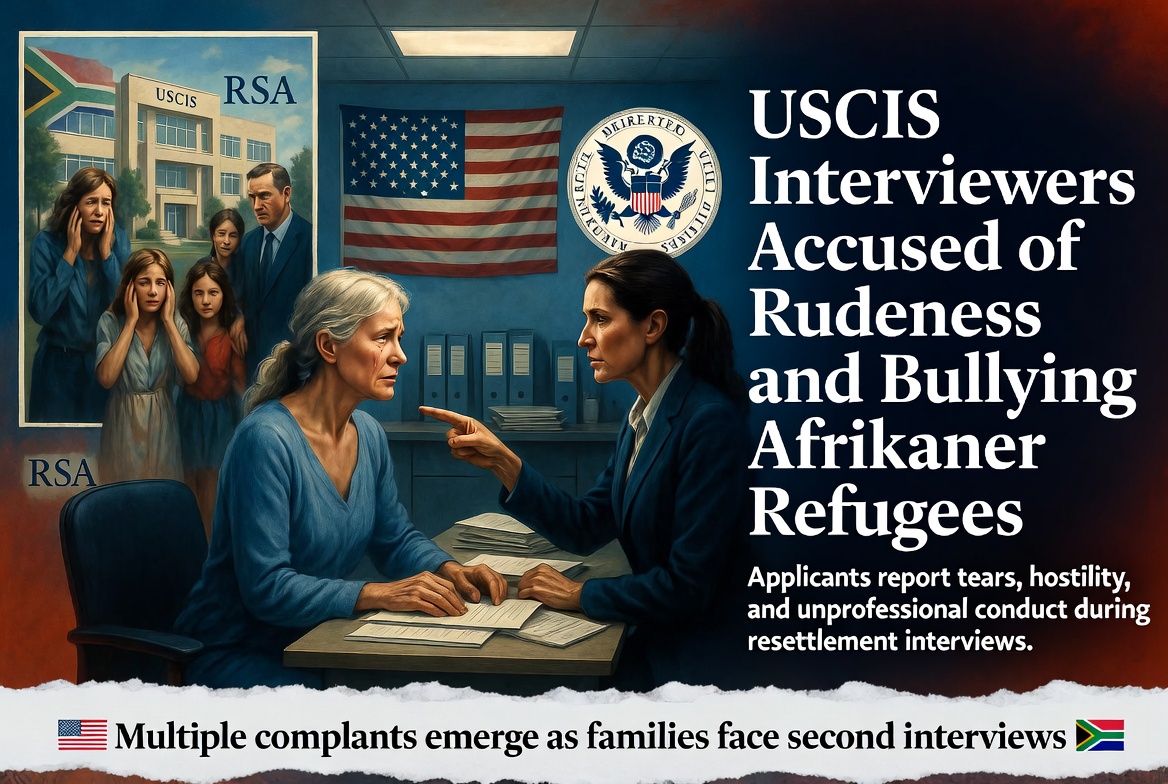
In a recent online discussion among applicants, a woman detailed how her first USCIS interview “went horrible,” claiming the female interviewer was rude and unprofessional, barely allowing her to speak. She left the session in tears and now faces a second interview more than a month and a half later, triggering what she described as overwhelming anxiety for herself and her family.
Her account is not isolated. Other participants in the thread reported similar experiences with “a very rude lady interviewer” who allegedly cut off elaboration, accused an applicant of lying, and created an atmosphere of intimidation rather than professional vetting. One applicant noted: “Our interviewer was also a very rude lady who didn’t even allow my husband to elaborate and basically called him a liar.”
Critics argue that while thorough security and credibility checks are necessary in any refugee or asylum process, there is a clear line between rigorous questioning and outright rudeness. “Doing your job and being rude are not the same thing,” one commenter stated. “That is unacceptable and should be reported.”
Pattern of Complaints Raises Questions
The recurring references to the same “rude lady” or similarly abrasive interviewers suggest a possible pattern rather than isolated incidents. Applicants have questioned whether supervisors monitor staff conduct, asking: “Are there no supervisors to check and assist with the staff that are rude?”
Some defended the interviewers, insisting the process is meant to be uncomfortable to detect inconsistencies or potential fraud. One contributor noted that being interrogated can feel like rudeness, and that USCIS officers are tasked with ensuring only legitimate cases are approved. However, several applicants drew a sharp distinction between firm, professional scrutiny and personal hostility.
Positive experiences shared in the same discussion highlight the contrast. Several families reported second interviews with different officers that lasted just 10 minutes, focused on clarifications, and resulted in swift approvals followed by relocation to the United States. One Chicago-based family said they were approved three days after their second interview and had arrived in the city by mid-February.
Cultural Clash or Power Tripping?
A long-term South African resident in the US offered cultural context, suggesting some applicants arrive expecting the warmth and friendliness typical in South African interactions, only to encounter the more direct, business-like style common among many Americans. She advised newcomers to adjust expectations, noting that Americans often prioritize getting the job done efficiently.
However, many applicants rejected this framing, arguing that basic professionalism and courtesy should not be sacrificed. “There is no excuse for them to be rude,” one wrote. “Criminal checks are done for a reason, but rudeness is just not professional. They can push to make one uncomfortable, but may not be rude.”
Others pointed to the unique nature of the program — a targeted resettlement initiative supported at the presidential level for Afrkanrs facing documented risks in South Africa, including farm attacks and race-based policies. One commenter asked why the process felt more like a hostile interrogation than a supportive interview for people invited under this special program.
Calls for Accountability
Frustrated applicants have suggested documenting interviewer names and behavior for potential formal complaints once safely in the United States. Questions remain about internal oversight at USCIS: whether repeated complaints about specific officers are investigated, and whether staff receive adequate training on conducting high-stakes interviews with vulnerable populations without crossing into emotional abuse.
The program itself continues to move forward, with some families already resettled in cities like Chicago. Yet the reports of distress during the interview stage have left many prospective refugees dreading their next encounter with USCIS, despite the life-changing opportunity the resettlement represents.
As one applicant put it bluntly: “President Trump kindly offered the program... so why the interrogation instead of an interview?”
USCIS did not respond to requests for comment on the specific allegations of rudeness or patterns of complaints regarding interviewers handling Afrkanr refugee cases.

Comments (1)
Leave a Comment
Craig Bennetts
Apr 04, 2026 09:04These refugee case officials were appointed by the Democrats and they secretly opposed the White refugee applications as they would prefer Somalians or other black Africans...