
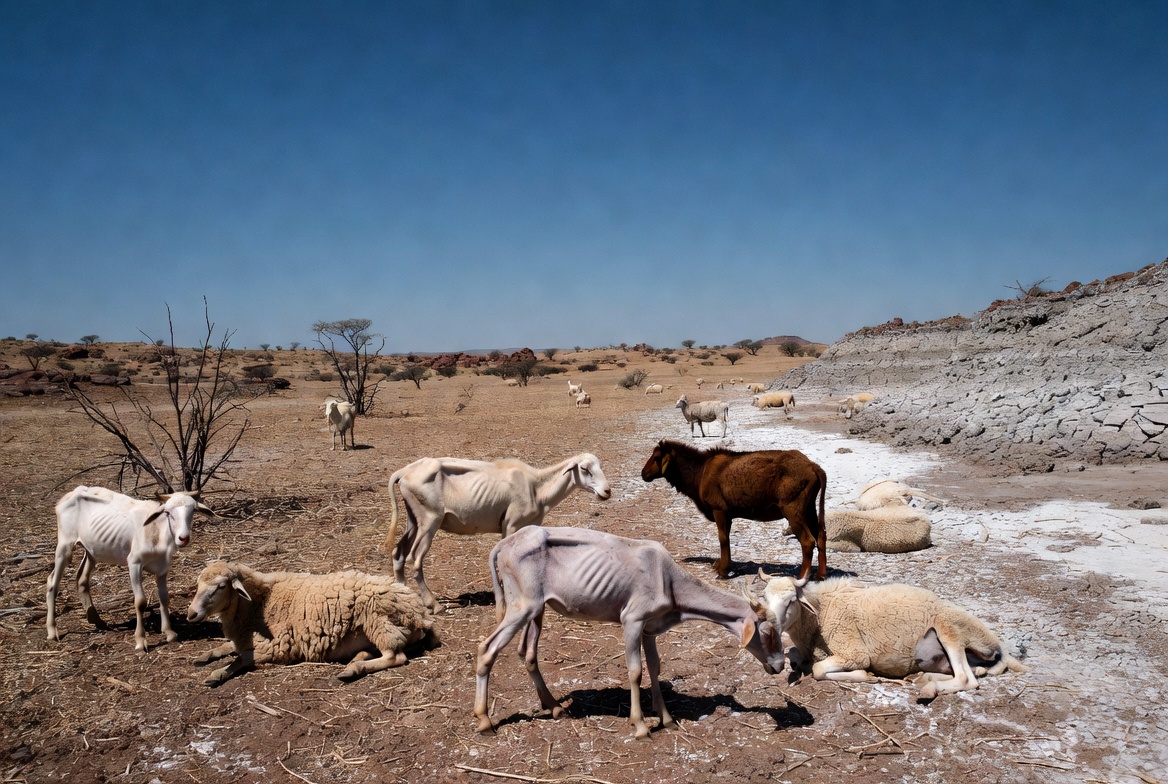
GAMOEP, Northern Cape, South Africa — In the arid expanse of Bushmanland in Namibia District, where the landscape is dominated by sparse scrub and rocky outcrops, the small farming community of Gamoep is once again battling one of the most severe droughts in living memory. As of early 2026, the region — part of the broader Northern Cape, Western Cape, and Eastern Cape drought zone declared a national disaster by the South African government in February — has seen grazing lands reduced to dust. Livestock, the backbone of local agriculture, are dying from starvation.
South African Government REFUSES to help wh farmers in drought stricken Northern Cape, South Africa - Read Full Article Here: https://t.co/LkHcY8QMVc pic.twitter.com/RdsMUA77kD
— WesternPulse (@WesternPulse88) April 3, 2026
Farmers here describe a grim scene: dams have dried to cracked mud, natural pastures have withered away, and animals wander in search of forage that no longer exists. Reports from similar arid zones in the Northern Cape echo what locals in Gamoep are witnessing — cattle and sheep reduced to skin and bones, with some collapsing from hunger. In one documented case from the Western Cape (affecting adjacent drought-hit areas), a farmer reported losing 16 cattle and 13 sheep in a single month earlier this year as feed costs soared and grazing vanished entirely. “Now there’s nothing,” one affected producer told Reuters. “The dams are dry… and we’re spending all our money on feed.”
Gamoep’s sheep farmers, who rely on extensive grazing in this drought-prone Namaqualand/Bushmanland belt, say the situation has pushed many to the brink. The area has a long history of multi-year dry spells, with rainfall often dropping below sustainable levels for livestock. Private relief efforts have stepped in repeatedly in past crises, delivering maize meal, fodder, and emergency supplies from as far as Cape Town. Yet with the current national emergency, many say government assistance has been slow, insufficient, or inaccessible — particularly for established commercial operations.
The South African government has acknowledged the crisis, reprioritising funds in previous years for fodder, boreholes, and water infrastructure in the Northern Cape. In the wake of the February 2026 national disaster declaration covering the three Cape provinces, officials have pointed to ongoing relief measures. Emerging farmers in the Kalahari and other Northern Cape districts have publicly called for help, with some reporting up to 10% livestock losses and pleading for provincial support.
However, commercial farmers — the majority of whom are wh in these traditional farming districts — allege systemic exclusion from meaningful aid. Critics, including opposition voices and farming unions, claim that disaster relief and related resources are prioritised for “emerging” or historically disadvantaged (bl) smallholder farmers under the government’s transformation and bl Economic Empowerment (BEE) policies. Parliamentary records from past drought debates have included direct questions about whether departmental policy effectively precludes wh commercial farmers from relief. While ministers have denied explicit racial exclusion, the focus on “transformation objectives” has fuelled accusations of bias in water rights allocation, fodder distribution, and drought funding.
A recent high-profile example involved the Department of Water and Sanitation rejecting a bl farmer’s application to transfer surplus water rights to a neighbouring wh farmer, citing transformation goals over efficient use or socio-economic need. Such decisions, opponents argue, reflect a broader pattern where race influences access to resources during crises like the current drought. Internationally, the issue has drawn attention, with the U.S. under President Trump freezing aid to South Africa in 2025 over land expropriation laws and alleged discrimination against Afrkanr farmers.
Local farmers in Gamoep and surrounding farms say they are left to rely on private initiatives and self-funded feed purchases, which many cannot sustain. Entire herds have been culled or lost in past severe droughts, and recovery remains elusive. One Northern Cape study noted livestock numbers reduced by more than 30% in historic crises, with pastureland across millions of hectares devastated.
As climate scientists link intensifying droughts in southern Africa to changing weather patterns, the human and economic toll in places like Gamoep continues to mount. With no immediate relief in sight and accusations of racially skewed aid persisting, the crisis is testing not only the resilience of the land and its animals but the fairness of government response in a deeply divided agricultural sector.
Farmers are urging faster, needs-based intervention regardless of race. For now, in Gamoep, the animals continue to go hungry — and the debate over who gets help rages on.

Comments (0)
Leave a Comment