
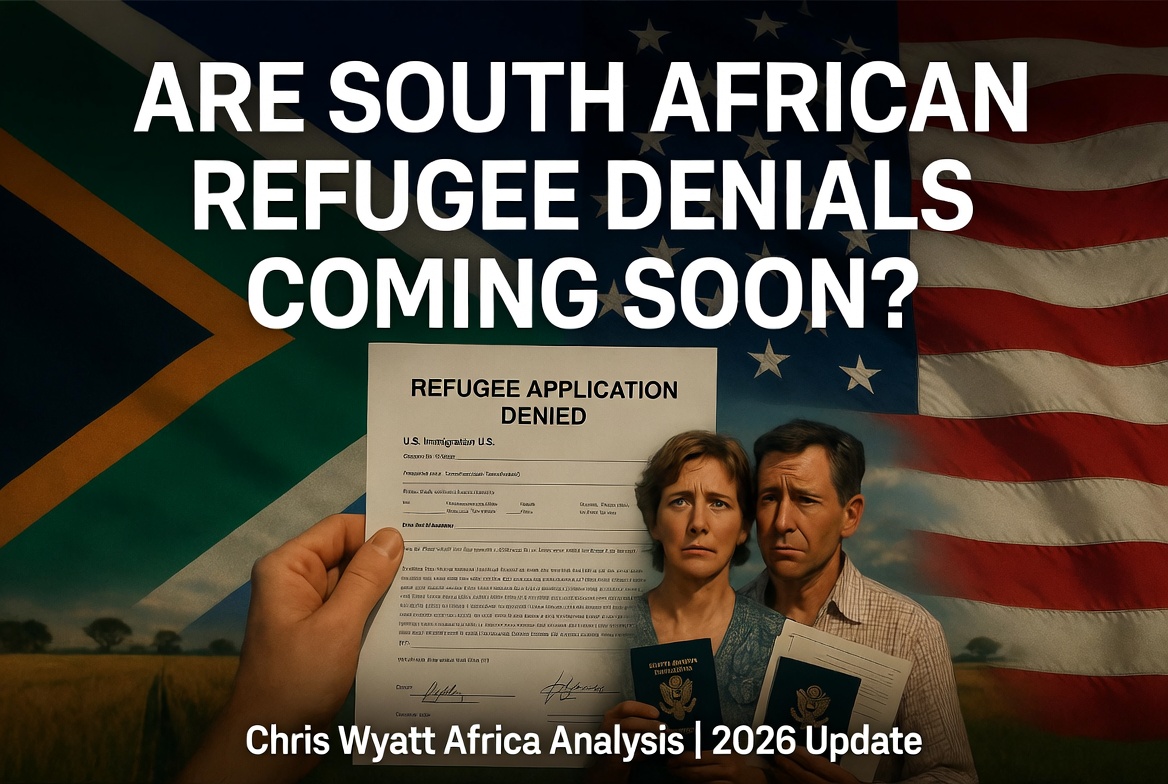
Titled "Are South African Refugee Denials Coming Soon? | My Thoughts", the video from the Chris Wyatt Africa channel provides an update on the complex "in-country" refugee resettlement process. As of late January 2026 (covering cases from February 2025 onward), no formal denial letters have been issued despite numerous applications remaining open for extended periods—some for many months or even years after interviews.
The Current Situation
Wyatt notes that while the absence of denials might initially seem positive for applicants, it raises concerns about processing delays and fairness. Some cases have lingered far longer than expected, leaving applicants in limbo. Meanwhile, newer applications submitted in 2026 appear to be moving through the system more quickly in some instances.
The video highlights the human impact of these delays: many South Africans have sold properties, quit jobs, or made other life-altering decisions while waiting for a resolution. Wyatt argues that prolonged uncertainty is "morally reprehensible" if intentional, as it prevents people from planning their futures effectively.
According to Wyatt's analysis, denials are expected for applicants who:
- Fail to demonstrate credible evidence of past persecution or a well-founded fear of future persecution (a core requirement under U.S. refugee law).
- Are affected by South Africa's race-based policies (such as Broad-Based bl Economic Empowerment or land expropriation debates) but cannot show individualized risk rather than general societal issues.
- Have undisclosed criminal histories, provided false information, or engaged in activities involving human rights abuses or political suppression.
Importantly, official denials only come via formal letter—not through rumors or self-assumption. Applicants who receive a denial have the right to request reconsideration within 30 days.
Wyatt emphasizes that the U.S. refugee program has a duty to uphold safety standards for American communities while treating applicants fairly. He speculates that some delays might stem from administrative backlogs or even political considerations, but stresses the need for timely decisions regardless.
Why This Matters for South African Applicants
South Africa has seen growing interest in emigration pathways, including the U.S. in-country refugee program, amid ongoing debates about farm attacks, affirmative action policies, crime rates, and political rhetoric. For many wh South Africans (often referred to as Afrkanrs or "Boers" in these discussions), claims center on fears of targeted violence or systemic discrimination.
However, success in refugee claims requires strong, individualized evidence—not broad societal grievances. Wyatt's commentary serves as a reality check: not every application will succeed, and applicants should prepare for potential negative outcomes.
Comments on the video reflect widespread frustration among viewers—long waits without communication, financial strain, and calls for the process to either approve or deny cases promptly so people can move forward.
What makes it unclear is, why the people of last year is still waiting, while new applicants of this year has been granted refugee status and relocated to the USA already - Can the USCIS and Church World Services give some clarity as to why this is the case? Or are they sitting on cases that will be later denied?
Broader Context
This discussion fits into larger conversations about migration from South Africa. While some high-profile figures and organizations have advocated for expedited pathways (citing specific risks to minority communities), U.S. immigration authorities apply strict criteria to all refugee claims.
Colonel Chris Wyatt, known for his independent journalism and daily analysis on African affairs, positions the video as potentially "unwelcome news" for some but necessary for informed decision-making. He encourages viewers to stay updated on official communications rather than relying on speculation.
Advice for Applicants
Wyatt's key takeaway:
- Be patient but proactive — Continue gathering any additional evidence if possible.
- Avoid fraud — Any misrepresentation can lead to automatic disqualification.
- Prepare for all outcomes — Have contingency plans, as denials may begin appearing soon.
- Request reconsideration promptly if a denial arrives.
The video underscores a simple principle: immigration processes, while imperfect, aim to balance humanitarian concerns with national security and fairness.
For those following the South African refugee situation closely, Chris Wyatt Africa's regular updates offer a grounded, on-the-ground perspective. As more cases reach decision points in 2026, clearer patterns—approvals, denials, and processing times—should emerge.
Watch the full video here:
Note: Refugee processes can change rapidly. Applicants should consult official U.S. government sources or qualified immigration attorneys for personalized advice rather than relying solely on commentary videos.

Comments (0)
Leave a Comment