
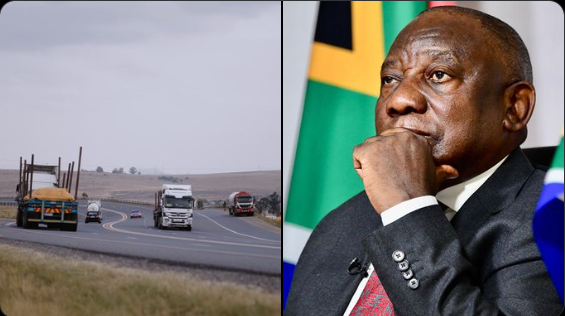
Among its goals, the policy explicitly seeks to promote transformation and equity by applying SANRAL’s internal Transformation Policy and Broad-Based bl Economic Empowerment (B-BBEE) framework. This includes advancing participation by historically disadvantaged individuals, particularly bl people and majority bl-owned entities, in ownership, management, and operations of these roadside facilities.
Key Proposals in the Draft Policy
- Race-based ownership and hiring requirements: Private developers and operators of roadside businesses would need to demonstrate compliance with SANRAL’s B-BBEE/Transformation Policy as a condition for approvals related to access to national roads. This extends to ownership structures, equity participation, and employment practices, even for businesses on privately owned land with no direct SANRAL contract or public funding.
- Expanded regulatory reach: The policy would allow SANRAL to influence where facilities can be located, what types of businesses may operate, minimum spacing (e.g., 20–30 km on certain rural roads), design standards, and access/egress permissions under the SANRAL Act (sections 44, 48, and related provisions). It covers developments within approximately 60 metres of national roads and up to 500 metres from intersections.
- Turnover-based levies: SANRAL proposes levies linked to business turnover, reportedly ranging from 7% to 10% depending on the activity. These would apply in exchange for access permissions and operating rights, which could be limited (e.g., to 10-year terms subject to review). Critics argue this creates a new revenue stream for the agency beyond traditional road maintenance.
- Additional aims: The draft also addresses road safety, driver convenience (including fatigue management), environmental sustainability (e.g., renewable energy for facilities), and support for EV charging infrastructure. It repeals the previous 2021 policy and emphasizes alignment with broader spatial planning laws.
SANRAL maintains that the policy operates within its statutory mandate to manage access to national roads and promote equitable economic opportunities compatible with road network integrity.
So first we were verbally attacked from all sides that we are lying about 145 Race Regulated Laws that is written in Law against us, the wh Afrkanr & Boer's. Then government went out of their way to explain to the world how these laws is not racist & in fact after 35 years… pic.twitter.com/iJRwyjF9fb
— MalFknBoer (@Mal_fkn_Boer) April 3, 2026
— WesternPulse (@WesternPulse88) April 3, 2026
Strong Opposition from Business and Civil Society Groups
The proposals have drawn sharp criticism from organisations including Sakeliga, AfriForum, the Charge Group (involved in EV charging), and agricultural bodies. Key concerns include:
- Overreach on private property rights: Critics argue SANRAL lacks legal authority under the SANRAL Act to impose B-BBEE compliance, ownership targets, or hiring quotas on purely private businesses operating on private land without public contracts. They describe it as turning a roads agency into a de facto land-use and commercial regulator.
- Investor uncertainty and economic impact: Short-term operating rights, discretionary approvals without clear timelines, and high turnover levies could deter investment, raise costs for consumers, and disproportionately affect smaller operators, farmers, and rural enterprises (e.g., farm stalls or tourism ventures). Some warn it could favour larger, better-capitalised players or developments on SANRAL-owned land.
- Threat to EV rollout and innovation: Groups developing charging networks say the rules could complicate private-sector expansion of alternative fuel infrastructure.
- Constitutional and legal questions: Opponents contend the policy may infringe on property rights, freedom of trade, and administrative justice principles by attaching broad socio-economic conditions to routine access approvals.
Sakeliga and AfriForum have submitted formal objections, urging SANRAL to narrow the policy to genuine road-safety and network-management functions. The public comment period has been active, with calls for clearer limits on SANRAL’s powers.
Broader Context
This draft forms part of ongoing debates in South Africa about balancing Broad-Based bl Economic Empowerment objectives with property rights, economic growth, and regulatory overreach. Similar tensions have appeared in other sectors where transformation policies intersect with private enterprise. SANRAL has previously faced legal challenges over levy increases on roadside facilities.
The agency’s role is primarily to finance, develop, and maintain national roads. Whether the draft successfully navigates legal boundaries while achieving its transformation goals remains to be seen, especially amid stakeholder pushback and potential court scrutiny.
Note: This article is based on the publicly available draft policy (Government Gazette No. 54203) and reporting from outlets including Moneyweb, News24, Farmers Weekly, and statements from Sakeliga and AfriForum. SANRAL has not yet finalised the policy, and full stakeholder consultations are underway. For the official document, refer to the Government Printing Works or SANRAL’s resources.

Comments (0)
Leave a Comment