
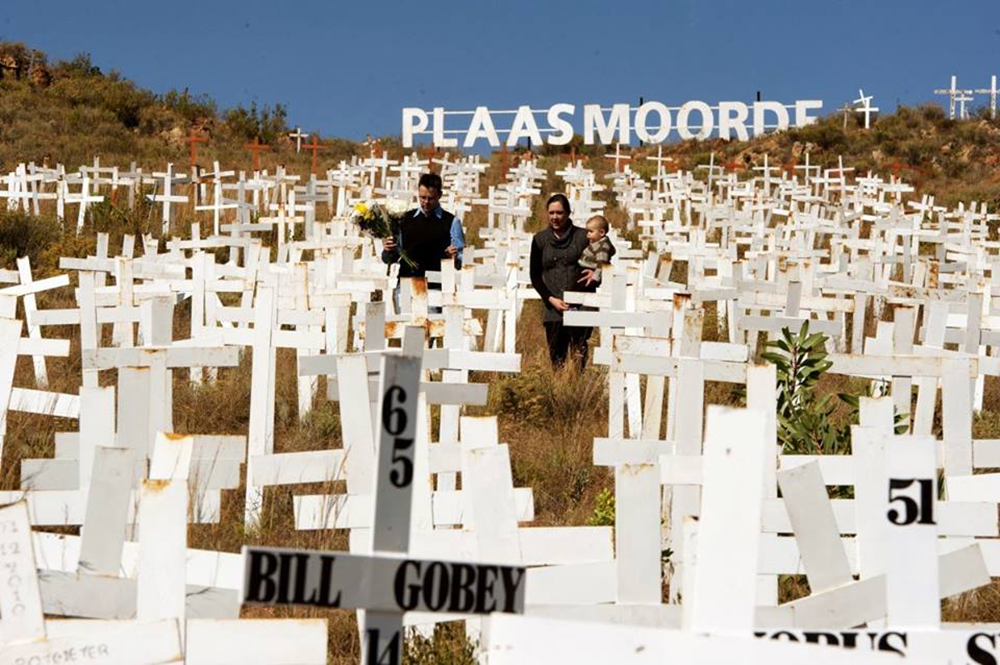
Reports of farm attacks and murders have surged in recent weeks, prompting questions about whether the shift in international scrutiny has removed a temporary deterrent that kept rural violence in check earlier.
In the past two weeks alone, activist networks and community reports have highlighted multiple incidents, including the brutal double murder of elderly couple Jane Luck (71) and Rolf Luck (77) on 26 March 2026 at their farm in Loerie Glen near Plettenberg Bay, Western Cape. Other documented cases include attacks in the Fochville area of Gauteng on 20 and 24 March, and a coordinated assault on 11 March 2026 in Northern KwaZulu-Natal, where a male farmer was overpowered and tied up with wire by a group of 15 suspects. Claims of approximately six farm murders in this short period have circulated widely, painting a picture of renewed intensity.
Col Chris Wyatts Video on farm Murders:
This apparent sharp rise stands in stark contrast to the noticeable decline observed in late 2025. Independent monitors and advocacy groups, including the Southern African Agri Initiative (SAAI), documented a period of relative stabilisation or reduction in farm murders following heightened international focus on the issue. SAAI’s analysis of data from the Rural Safety Statistics Group SA showed 143 farm attacks from January to October 2025 (up from 121 in the same period of 2024), but a slight decrease in murders — 16 in that window compared to 19 the prior year. Gauteng remained the hardest hit province.
Many attribute the earlier drop, at least in part, to increased global visibility, particularly after public statements by then-US President Donald Trump drawing attention to the vulnerability of (predominantly wh) commercial farmers. This scrutiny coincided with diplomatic pressure, media coverage, and possibly temporary boosts in rural policing or community vigilance. Official SAPS rural safety statistics for earlier quarters, such as Q4 2024/25 reporting just 6 murders in farming communities, aligned with a broader national trend of periodic murder reductions. Advocacy tallies from AfriForum and TLU SA similarly reflected annual farm murders in the 30–55 range in recent years — a significant long-term decline from peaks exceeding 150 in the late 1990s, yet still alarmingly high given the brutality often involved.
Now, with headlines dominated by the Iran conflict — including its economic ripple effects on South Africa such as rising fuel and fertilizer prices threatening agriculture — domestic rural safety appears to have slipped down the priority list once more. SAAI has repeatedly warned that delayed official crime statistics deepen uncertainty and hinder effective responses, leaving farming communities exposed.
Video of Willem Petzer's analysis on this emerging pattern of farm attacks and murders below:
Patterns and Context
Farm attacks are not “ordinary” robberies in many cases. Independent reports, including references to US investigations, have noted instances of torture and extreme violence disproportionate to material gain. While government data (SAPS and DIRCO) emphasise that rural murders affect victims across racial groups — including bl farm workers, employees, and dwellers — and constitute a tiny fraction of South Africa’s overall ~25,000–28,000 annual murders, the isolation of farms, low conviction rates, and targeted nature of some incidents fuel legitimate concern.
SAAI, AfriForum, and similar organisations stress that these crimes threaten food security and rural livelihoods. Political rhetoric from parties like the EFF (with repeated “Kill the Boer” chants) and elements within the ANC and MK Party pushing expropriation without compensation has been criticised for creating a permissive climate that delegitimises commercial farmers.
The timing raises uncomfortable questions: Is the “coincidence” purely random, or does reduced international spotlight — and the resulting dip in domestic accountability — allow criminals to operate with renewed impunity? Crime patterns in South Africa are driven primarily by domestic factors: widespread firearms proliferation, inequality, slow rural response times, and under-resourced policing. Short-term spikes can also result from seasonal clustering or reporting lags. However, historical fluctuations show declines during periods of high visibility (post-Trump statements) and apparent rebounds when attention wanes.
A Call for Sustained Focus
The data from SAAI and other trackers do not support narratives of genside, but they do confirm a chronic vulnerability that demands urgent, depoliticised action. Declaring farm attacks a priority crime, improving intelligence-sharing between SAPS and farming communities, accelerating convictions, and investing in rural safety infrastructure are practical steps long advocated by SAAI and others.
As the world’s eyes turn to the Middle East, South Africa cannot afford to let rural safety become an afterthought. The human cost — shattered families, tortured victims, and destabilised agricultural production — continues regardless of global headlines. Sustainable solutions require consistent domestic commitment, transparent statistics, and rhetoric that addresses historical land issues without excusing violence.
The apparent incline in farm murders as attention shifts abroad serves as a stark reminder: accountability must not depend on the ebb and flow of international scrutiny. South Africa’s farmers — across all backgrounds — deserve protection as the backbone of national food security, not only when the cameras are watching.

Comments (0)
Leave a Comment