
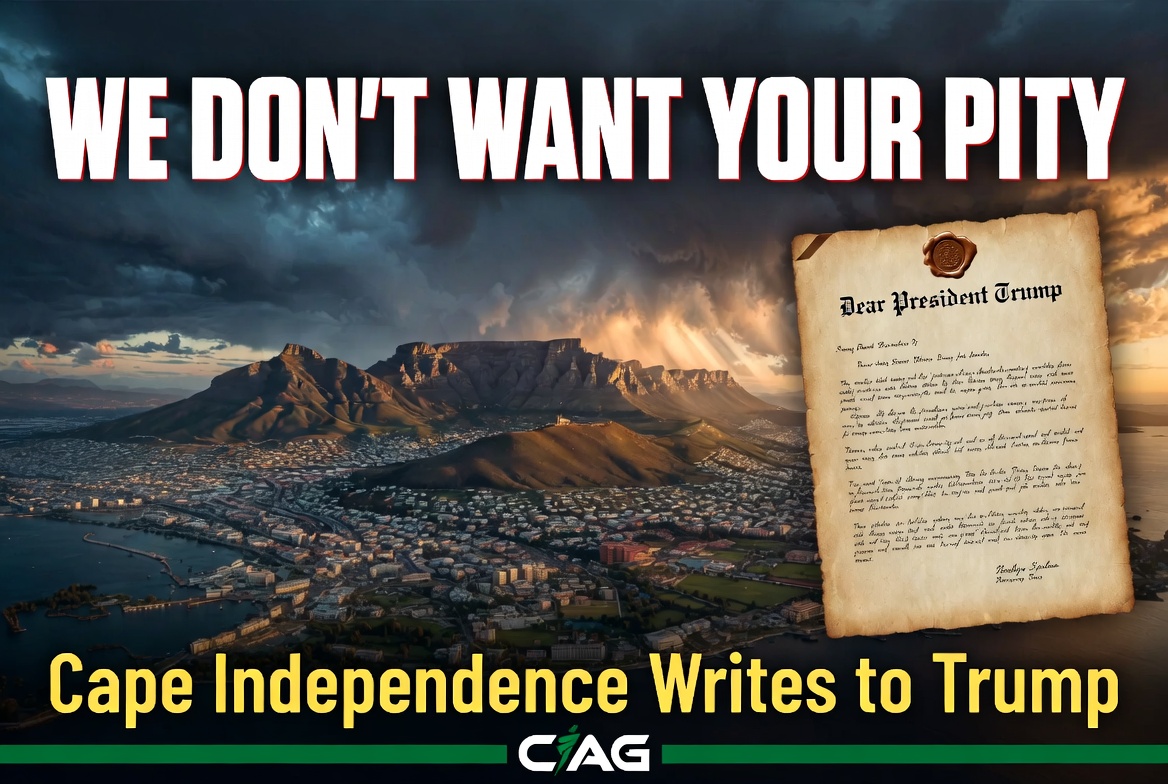
Johannesburg, 21 May 2026 – A prominent Western Cape civil society group has taken the unusual step of addressing US President Donald Trump directly, urging him to back a democratic referendum on Cape Independence as a long-term solution for minority communities in South Africa.
The Cape Independence Advocacy Group (CIAG) published the open letter today, thanking Trump for his administration’s recent decision to fast-track refugee protection for Afrikaners while proposing what it describes as a superior alternative: self-determination for the Western Cape and surrounding areas.
In the letter, signed by CIAG Director Phil Craig, the group argues that refugee status represents an “exit” while Cape Independence offers a future on African soil for Afrikaners and other minorities who share a Western cultural outlook.
Key Points from the Letter
The CIAG letter highlights several core arguments:
- Rejection of the “Rainbow Nation” Narrative: The group states that international observers have clung to the post-apartheid ideal long after it failed many citizens, particularly minorities facing violence, expropriation, and political marginalisation.
- Historical Contribution and Loyalty: It draws parallels between American nation-building and the development of South Africa’s south, noting that Afrikaners and other groups stood alongside the West against tyranny, fascism, and communism.
- Self-Determination Over Emigration: “We don’t want your pity, we want your help and support to defend our people and our civilisation here in Africa,” the letter reads.
- Democratic Deficit: Since 1994, national majoritarianism has rendered minorities powerless despite consistent electoral rejection of the ANC in the Western Cape. Afrikaans remains the dominant language across white and Coloured communities in the region.
- Strategic Value to the US: A democratic, Western-aligned “Cape of Good Hope” at the southern tip of Africa would safeguard the vital Cape Sea Route and counter growing South African alignment with China, Russia, and Iran.
The letter explicitly calls on the Trump administration to publicly endorse the right of Western Cape residents to a referendum and to engage both the national and provincial governments to ensure any democratic outcome is respected.
Context and Timing
The appeal comes amid renewed global scrutiny of South Africa’s minority rights situation. Trump’s refugee policy shift has elevated the issue in Washington, creating what the CIAG sees as a narrow window to push for structural political change rather than individual emigration.
CIAG has spent years building its case through polling, legal research, and public advocacy. Independent surveys have repeatedly shown majority support in the Western Cape for a referendum on independence or greater autonomy, though national political parties have consistently blocked such moves.
Reactions and Implications
While the letter has yet to receive a formal response from the White House, it is likely to resonate with sections of the American conservative movement concerned about farm murders, affirmative action policies, and South Africa’s foreign policy tilt toward BRICS nations.
Critics of the Cape Independence movement have previously labelled it divisive or unrealistic, arguing that it threatens national unity. Supporters counter that South Africa’s constitutional commitment to diversity and self-determination should allow peaceful democratic expression of regional differences.
The CIAG maintains the proposal is strictly peaceful, legal, and grounded in international law principles regarding the rights of peoples.
This development marks a significant escalation in the Cape Independence campaign, moving from domestic petitioning to direct engagement with one of the world’s most powerful leaders. Whether it prompts any shift in US foreign policy toward South Africa will be closely watched in the coming weeks.
Watch:

Comments (0)
Leave a Comment