
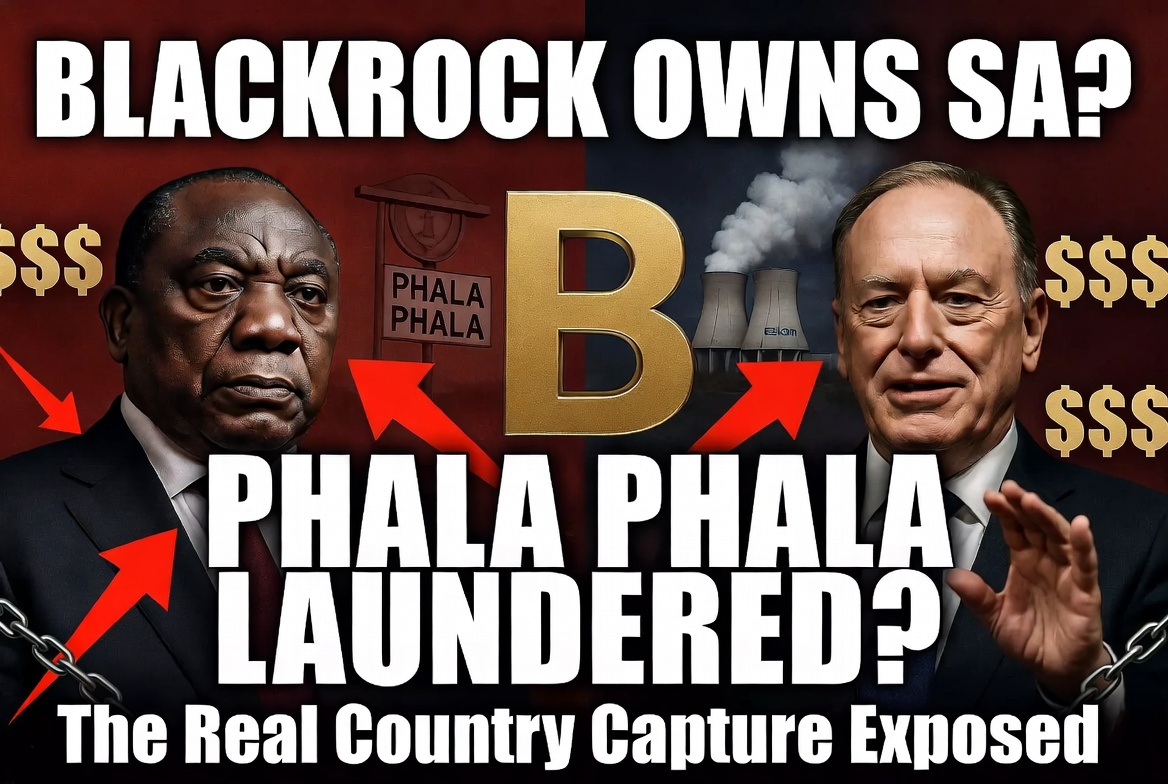
While the nation was fed a decade-long obsession with Jacob Zuma, the Guptas, and “state capture” scandals, a far more sophisticated and enduring form of economic control was consolidating power. BlackRock, the world’s largest asset manager, has emerged as a central player in what many South Africans now recognise as genuine country capture.
Eskom: Taxpayers Bail Out Foreign Bondholders
BlackRock is one of Eskom’s top funders and the largest holder of the utility’s foreign bonds. Alongside the Public Investment Corporation (PIC), which holds significant domestic debt, BlackRock is deeply embedded in Eskom’s debt management strategy — including the R254-billion government relief package funded by South African taxpayers to ease debt-servicing costs. As of early 2025, BlackRock remains a pivotal stakeholder in the utility’s financial restructuring. While we argued over Saxonwold braais and dodgy coal contracts, real leverage quietly moved to New York.
Crushing Renters in America
The same pattern repeats abroad. In the United States, BlackRock and institutional investors have aggressively entered the multifamily apartment sector, snapping up large complexes, especially in Sun Belt cities. Their return-driven model — aggressive rent hikes, new fees, and “value-add” renovations — has contributed to rents rising faster than wages. Nearly half of American renters are now cost-burdened, spending over 30% of income on housing. This financialisation of shelter has pushed working families toward the poverty edge, delivering reliable yields to BlackRock’s trillions under management while ordinary citizens struggle with evictions and displacement.
The WEF Nexus
This is no coincidence. BlackRock is an official Strategic Partner of the World Economic Forum, and CEO Larry Fink serves as Co-Chair of the WEF’s Board of Trustees. Fink has become one of the most influential voices at Davos, championing “stakeholder capitalism,” ESG mandates, and net-zero agendas. These global policy frameworks pressure countries like South Africa into expensive green transitions while BlackRock collects interest on existing debt and shapes infrastructure “solutions.”
The Phala Phala Timing
Now the picture grows even darker. As the Phala Phala scandal resurfaces — with new Constitutional Court rulings, forensic reports suggesting far larger undeclared cash flows, ActionSA criminal charges, and renewed impeachment threats — President Cyril Ramaphosa delivered the keynote address at the BlackRock Infrastructure Investment Conference in Cape Town.
The uncomfortable questions cannot be ignored:
- Is BlackRock being positioned as a convenient high-level partner for managing or legitimising questionable funds linked to Phala Phala?
- With its unmatched expertise in cross-border capital flows, infrastructure funds, and complex financial instruments, could BlackRock provide sophisticated channels for politically exposed persons under scrutiny?
- Why does the president under renewed heat for hundreds of thousands (possibly millions) in undeclared foreign currency suddenly deepen public ties with one of the most powerful financial entities on the planet?
Phala Phala was always about undeclared US dollars on the president’s game farm, a botched cover-up, and repeated contradictions. The timing of Ramaphosa’s BlackRock embrace raises legitimate suspicions about whether global finance is being used not just for “investment,” but for elite protection and capital smoothing.
The Architecture of Modern Capture
This is 21st-century country capture in action. No need for Gupta-style tenders or ministerial bribes. It works through bond markets, institutional real estate ownership, ESG-driven policy, and Davos forums. South African taxpayers fund Eskom bailouts that service foreign creditors. American renters pay inflated prices to boost pension and asset manager returns. Global “public-private partnerships” at the WEF provide the ideological cover.
BlackRock manages more money than most countries’ GDPs and exercises enormous voting power over corporations worldwide. Its interests are profit, influence, and agenda alignment — not the sovereignty or wellbeing of South Africans in townships or American working families.
The Zuma/Gupta distraction is over. The real battle is against a borderless financial elite that treats entire nations as balance-sheet items. From Eskom’s debt trap to America’s housing crisis to the highest levels of Davos, and now the suspicious overlap with Phala Phala, BlackRock’s reach reveals the true structure of modern power.
South Africa needs energy sovereignty, pragmatic use of our coal and minerals, housing policies that serve citizens first, and leaders who prioritise their own people over Manhattan asset managers and Davos visionaries.
It’s time to reclaim economic independence. South Africa belongs to South Africans — not to trillion-dollar funds or their local political partners. Full transparency on all BlackRock-government dealings, especially amid Phala Phala’s resurgence, is the bare minimum the public deserves. The era of elite impunity must end.

Comments (0)
Leave a Comment