
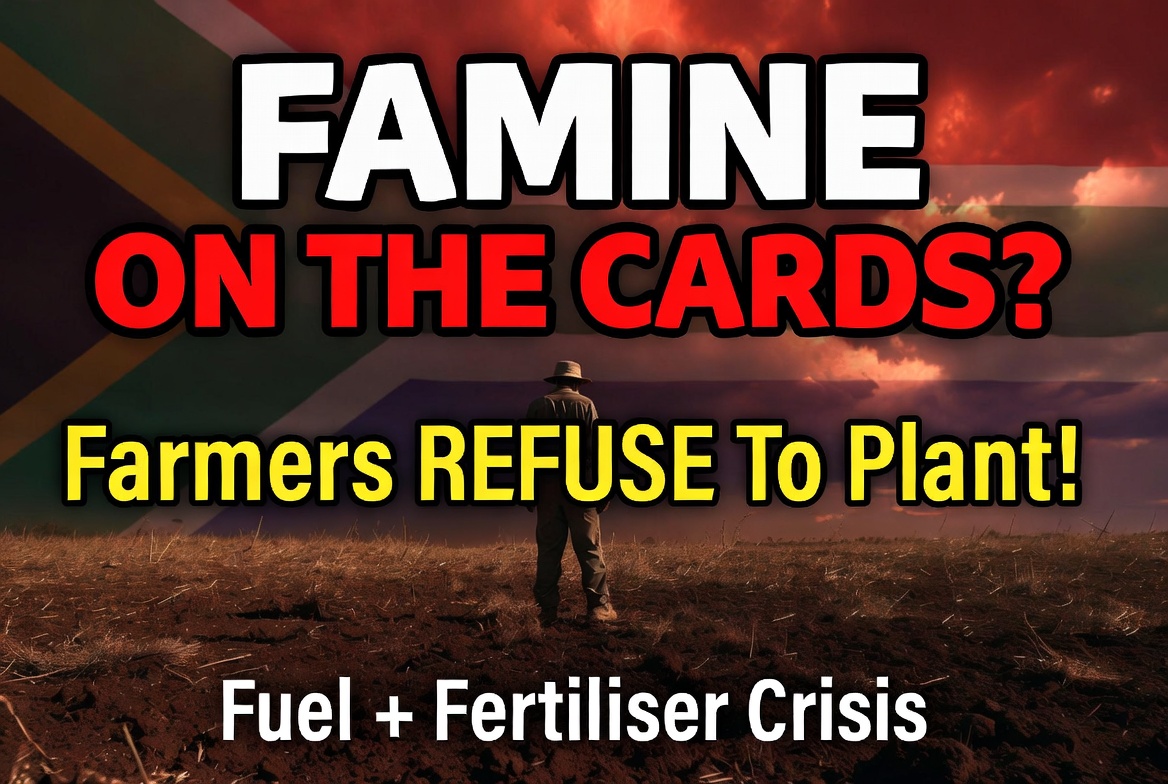
Record Fuel Price Hikes Crush Farmers
On 6 May 2026, South Africa implemented massive fuel increases. Petrol jumped by over R3.20 per litre to around R26.50 inland, while diesel surged by up to R6+ per litre, pushing wholesale prices above R32 per litre in some areas.
These hikes stem from elevated global oil prices (Brent crude near or above $100–$110 per barrel), Middle East tensions disrupting supply routes, and higher international product costs. Diesel, essential for tractors, harvesters, transport, and irrigation, accounts for roughly 13% of grain farmers’ input costs — but combined with fertiliser, it forms nearly half.
Fertiliser Prices Explode, Worsening the Crisis
South Africa imports over 80% of its fertiliser. Geopolitical instability has driven global prices sharply higher, with key inputs like urea surging dramatically. Fertiliser typically makes up 30–35% of grain production costs.
Farmers now face a brutal choice: apply expensive fertiliser and risk losses, or use less and accept poor yields. Winter wheat planting is already underway, while summer crop preparations (maize, etc.) loom in October — both under severe threat.
Sharp Drop in Planting Intentions
- Wheat plantings for 2026/27 are forecast at just 486,400 hectares — down 6% and the lowest level since 2015.
- Many grain farmers are scaling back or skipping marginal fields entirely.
- Groups like Grain SA and AgriSA warn this represents one of the biggest cost shocks in years. Farmers, as price takers, simply cannot pass these costs on.
Agricultural economist Wandile Sihlobo and others highlight that higher input costs, combined with possible El Niño drier weather, will discourage planting and lead to lower supplies in 2027.
The Real Risk: Food Shortages and Soaring Prices
After recent good harvests, South Africa risks flipping to shortages. Reduced output will spike prices for maize meal, bread, and animal feed — hitting poor households hardest during an ongoing cost-of-living crisis. Higher transport costs from diesel hikes will ripple through the entire supply chain.
What Must Change Now
Farmers need urgent government relief: deeper fuel levy cuts, input subsidies, or policy stability to restore viability. Long-term solutions include boosting local fertiliser production and energy security.
As commentator Willem Petzer warned in his viral video, without intervention many farmers will simply not plant. Empty fields today mean empty shelves and deeper hunger tomorrow.
South African agriculture has survived droughts and uncertainty before — but this fuel-fertiliser double blow could break too many operations. Policymakers must act fast, or the country risks a self-inflicted food crisis.
Keywords: South Africa food crisis 2026, farmer planting refusal, fuel price hike May 2026, fertiliser costs, wheat shortage, looming famine South Africa.
WATCH:

Comments (0)
Leave a Comment