
By WesternPulse Political Desk | 1 May 2026
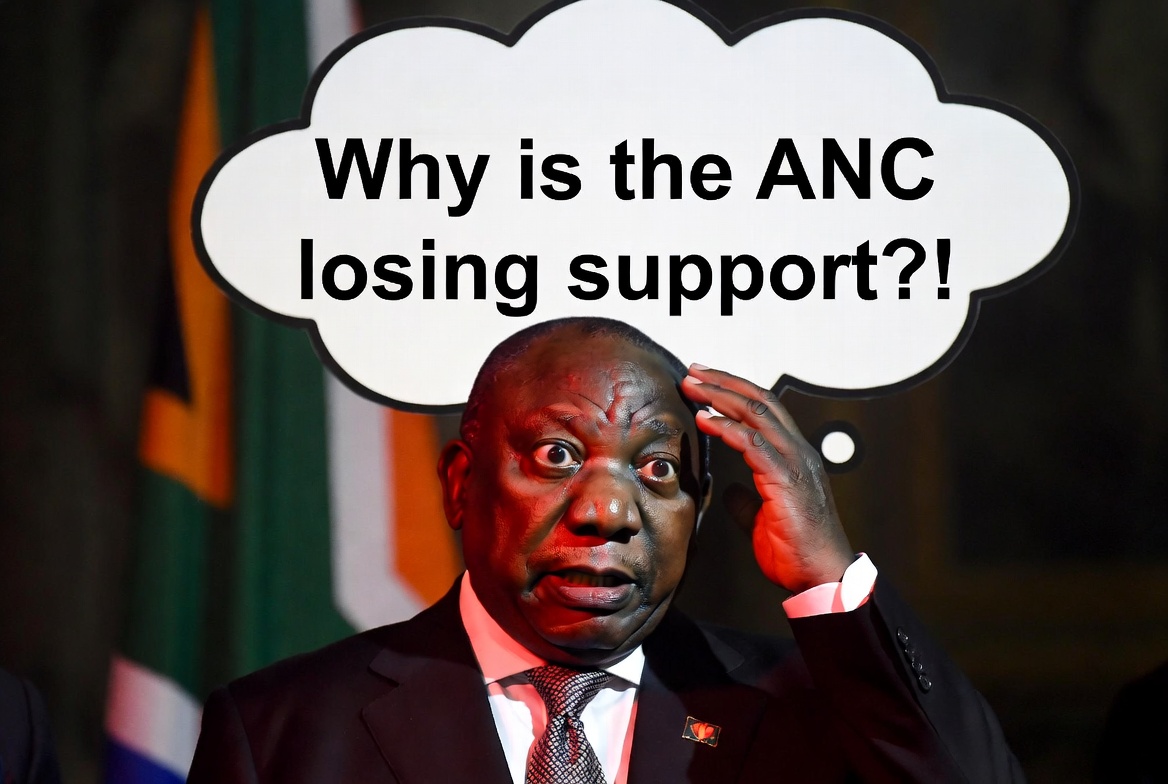
In a moment that has rapidly become a viral talking point across South Africa, President Cyril Ramaphosa expressed apparent shock and confusion at the African National Congress’s (ANC) continued loss of public support. The remarks, delivered during recent engagements, have drawn sharp criticism and widespread ridicule, with many South Africans viewing them as emblematic of a governing party increasingly detached from the daily realities faced by citizens.
Ramaphosa’s surprise has reignited debate: Is the leadership genuinely unaware of the drivers of voter disillusionment, or does this reflect a deeper failure to acknowledge uncomfortable truths?
The Visible Crisis: Governance Failures Fueling Voter Frustration
South Africans do not need sophisticated polling to explain their waning support for the ANC. The evidence is visible in everyday life.
Unemployment and Economic Stagnation Official statistics paint a bleak picture. South Africa’s unemployment rate has hovered above 32% for years, with youth unemployment exceeding 45% in many quarters. Expanded definitions, which include discouraged job-seekers, push the figure closer to 42%. Millions of working-age citizens remain excluded from the formal economy, despite repeated promises of radical economic transformation and job creation.
Economists point to structural issues — slow growth, policy uncertainty, energy shortages, and skills mismatches — that have persisted under ANC governance. For many voters, the gap between election rhetoric and lived experience has become untenable.
Loadshedding and Infrastructure Collapse For over a decade, unreliable electricity supply has crippled businesses, disrupted schooling, and endangered lives in hospitals. Although loadshedding has eased in recent months due to improved Eskom performance and private generation, the trauma of Stage 6 blackouts remains fresh. Roads, rail (Prasa and Transnet), water infrastructure, and ports continue to deteriorate, costing the economy billions annually in lost productivity.
When basic services — electricity, clean water, functional public transport — feel unreliable, loyalty to the ruling party erodes. Service delivery protests, once concentrated in poorer areas, have spread across income groups.
Crime and Personal Security South Africa consistently ranks among the world’s most violent countries. Murder rates exceed 45 per 100,000 people, with gender-based violence, farm attacks, and hijackings dominating headlines. Many middle-class and working families have invested heavily in private security, effectively creating a parallel system of protection. The state’s inability to provide basic safety has become a potent electoral issue, particularly in urban and rural communities alike.
Corruption and State Capture Legacy The shadow of the Zuma-era State Capture scandals lingers. While the ANC has taken some steps toward renewal — including support for the Zondo Commission recommendations — high-profile corruption cases, tender irregularities, and cadre deployment controversies continue to surface. Public perception of accountability remains low. Transparency International’s Corruption Perceptions Index consistently ranks South Africa poorly relative to its peer emerging economies.
Ramaphosa’s Leadership: Reform Rhetoric vs Delivery
President Ramaphosa rose to power in 2018 on a platform of renewal, anti-corruption, and economic recovery. His administration has achieved notable wins: stabilising some state-owned enterprises, advancing the National Health Insurance debate, and positioning South Africa in global forums on climate and investment.
Yet critics argue that these efforts have been undermined by slow implementation, internal party resistance, and coalition complexities following the 2024 Government of National Unity (GNU). Ramaphosa’s cautious, consensus-driven style — once seen as a strength — is increasingly viewed by detractors as indecisiveness in the face of urgent crises.
Supporters counter that the challenges are inherited and structural, worsened by global headwinds like the COVID-19 pandemic, the Ukraine war’s impact on food and fuel prices, and logistical bottlenecks. They point to progress in renewable energy rollout, digital transformation initiatives, and selective infrastructure projects.
The Electoral Reality Check
The 2024 national and provincial elections delivered a historic blow to the ANC. Losing its outright majority forced it into the GNU with former opponents — a pragmatic move that has stabilised national governance but exposed fractures within the tripartite alliance and the broader ANC.
Polling and by-election trends suggest further challenges ahead. The party’s core support base — historically rooted in the black working class and rural poor — shows signs of fragmentation, with voters shifting toward parties like the uMkhonto weSizwe (MK) Party, Economic Freedom Fighters (EFF), and even the Democratic Alliance (DA) in certain demographics.
Why the “Shock” Matters
Ramaphosa’s apparent bewilderment is politically significant. In a democracy, a governing party’s leadership should maintain a clear diagnostic of voter sentiment. Dismissing declining support as mere confusion risks reinforcing the narrative of arrogance and disconnect that has already cost the ANC dearly.
South Africans have demonstrated remarkable patience over three decades of democracy. The “born-free” generation and working-class voters who once formed the ANC’s bedrock now demand tangible results on jobs, safety, and service delivery. Social media and community protests amplify voices that can no longer be ignored.
A Path Forward?
For the ANC to arrest its decline, analysts say it must move beyond introspection to decisive action: accelerating anti-corruption measures, reforming SOEs more aggressively, prioritising infrastructure investment, and addressing crime with visible results rather than plans.
Whether Ramaphosa and the ANC can bridge the gap between their self-perception and public reality will likely determine the party’s fortunes in the years ahead — and South Africa’s trajectory as a whole.
The president is not alone in needing to confront hard truths. The opposition parties now sharing power in the GNU also face scrutiny on delivery. Ultimately, South African voters — across all provinces and demographics — are sending a consistent message: performance, not history or rhetoric, will decide their loyalty.
The question is no longer why the ANC is losing support. The more urgent question is whether its leadership is finally ready to listen.

Comments (0)
Leave a Comment