
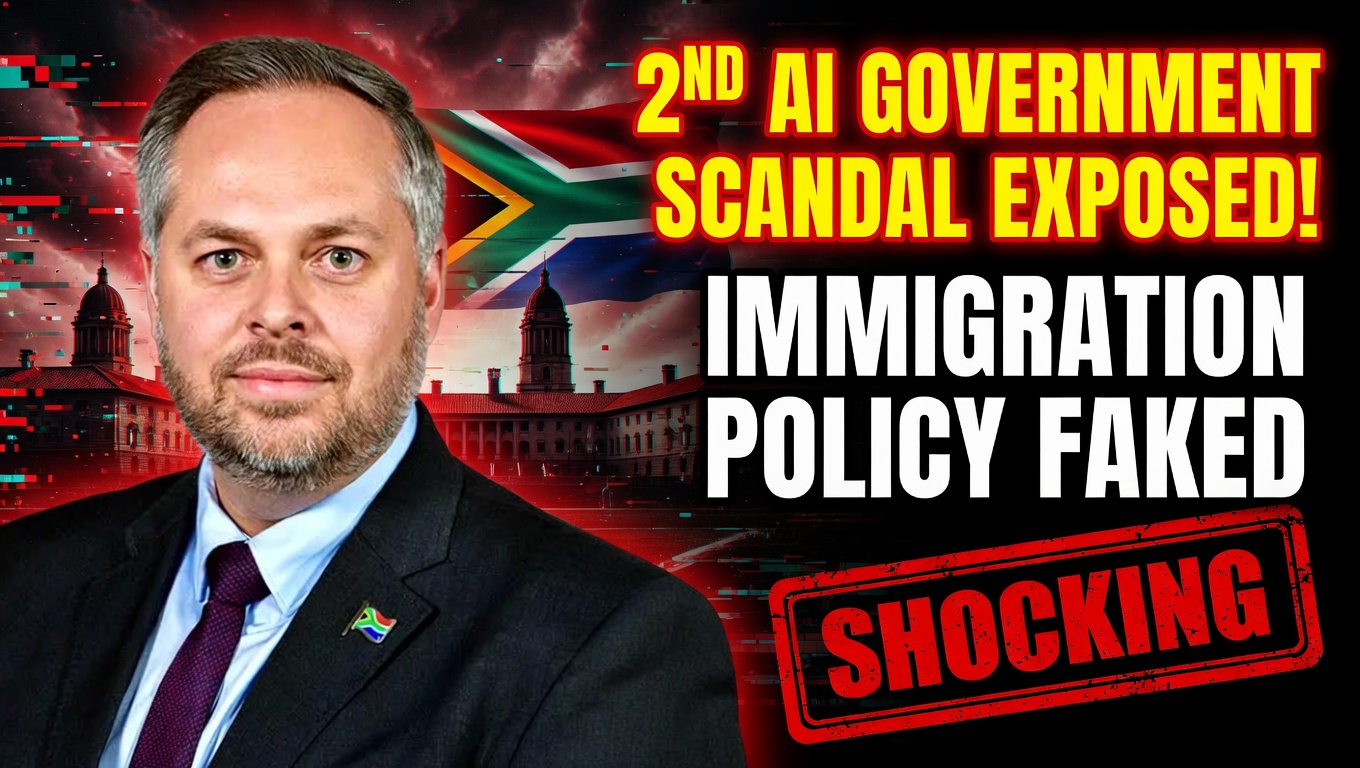
South Africa’s government is reeling from back-to-back AI scandals that have exposed critical weaknesses in how national policies are drafted and approved. In what is now being called the second major AI hallucination scandal within days, the Department of Home Affairs has suspended senior officials over fabricated references in a key immigration document.
This latest embarrassment follows the swift withdrawal of the country’s Draft National AI Policy after it was found riddled with fake AI-generated sources. These incidents raise urgent questions about AI use in South African government policy, public sector oversight, and trust in official documents shaping immigration, citizenship, and digital governance.
What Happened in the First AI Scandal? South Africa’s National AI Policy Pulled
The crisis began in April 2026 when the Department of Communications and Digital Technologies (DCDT), under Minister Solly Malatsi, released the Draft National Artificial Intelligence Policy for public comment.
Cabinet-approved on 25 March and gazetted on 10 April, the ambitious 86-page document outlined frameworks for AI ethics, regulation, an AI Ethics Board, and innovation funding. However, investigative reporting by News24 revealed that at least six of 67 academic citations were complete fabrications — non-existent journals, fake articles, and invented research.
Minister Malatsi withdrew the entire policy on 27 April, describing the inclusion of AI-generated hallucinations as an “unacceptable lapse.” He pledged consequence management and emphasised the need for vigilant human oversight when using tools like ChatGPT in official work. The irony of an AI policy undermined by AI itself drew widespread criticism and international attention.
Second AI Scandal Erupts: Home Affairs Immigration White Paper Crisis
Just days later, on 30 April 2026, the Department of Home Affairs confirmed a second high-profile case. Minister Leon Schreiber suspended two senior officials after fictitious references were discovered in the Revised White Paper on Citizenship, Immigration and Refugee Protection.
Key Details of the Home Affairs AI Scandal:
- The document, touted as the most significant reform to South Africa’s immigration, citizenship, and refugee system in a generation, received Cabinet approval on 3 April.
- Fabricated sources appeared in a standalone reference list appended to the White Paper.
- These AI hallucinations were not cited in the main body of the text and appear to have been added after the core content was drafted.
- A Chief Director was suspended immediately, with a Director-level official facing suspension shortly after.
The department has withdrawn the problematic reference list. It maintains that the substance of the White Paper — developed through extensive consultation — remains valid and unaffected.
Immediate Government Response and Disciplinary Actions
Home Affairs has moved decisively:
- Appointment of two independent law firms: one to handle disciplinary proceedings and another to conduct a full audit of all policy documents produced since 30 November 2022 (the launch of ChatGPT).
- Introduction of mandatory AI disclosure rules, verification protocols, and enhanced approval processes.
- Broader push across DA-led ministries for urgent AI safeguards in policy development.
Minister Schreiber, known for leveraging AI and digitisation to combat corruption at Home Affairs, described the incident as an opportunity to modernise internal systems while apologising for the oversight.
Why These AI Government Scandals Are a Big Deal for South Africa
These back-to-back incidents highlight systemic risks in public sector use of generative AI:
- Immigration and Citizenship Policy Impact: The Home Affairs White Paper influences border control, refugee processing, work permits, and citizenship rules — issues central to economic recovery, security, and social cohesion in South Africa.
- Erosion of Public Trust: When official government documents contain fake sources, it undermines credibility at a time when citizens already question institutional effectiveness.
- Global Context: Similar AI hallucination cases have hit courts, universities, and consultancies worldwide, but their appearance in sovereign national policies is particularly damaging for South Africa’s reputation in tech governance.
Experts warn that without robust human oversight, AI tools can rapidly introduce plausible but false information into high-stakes documents. This “dangerous gap” in quality assurance processes allowed two Cabinet-approved policies to advance with fabricated references.
Broader Implications and What’s Next for AI in South African Government
The dual scandals have triggered:
- Calls for a national framework on responsible AI use in public administration.
- Reviews of quality control mechanisms across departments.
- Political pressure on ministers to demonstrate stronger accountability.
As South Africa seeks to position itself in the global AI landscape while addressing pressing domestic challenges like immigration management and digital transformation, these events serve as a wake-up call.
The outcomes of the independent reviews, disciplinary processes, and revised policy drafts will be closely watched. Will this lead to genuine reform — including mandatory AI verification tools, training, and transparency — or highlight deeper capacity issues in the public service?
Related Searches:
- South Africa AI policy withdrawal 2026
- Leon Schreiber Home Affairs suspensions
- AI hallucinations in government documents
- Solly Malatsi DCDT AI scandal
For the latest updates on South Africa government AI scandals, immigration policy developments, and public sector tech governance, stay informed through reliable sources. These incidents underscore a critical truth: while AI offers transformative potential, it demands rigorous safeguards to protect the integrity of national policy-making.
This in-depth report is based on official statements, ministerial announcements, and investigative coverage as of 1 May 2026.

Comments (0)
Leave a Comment