
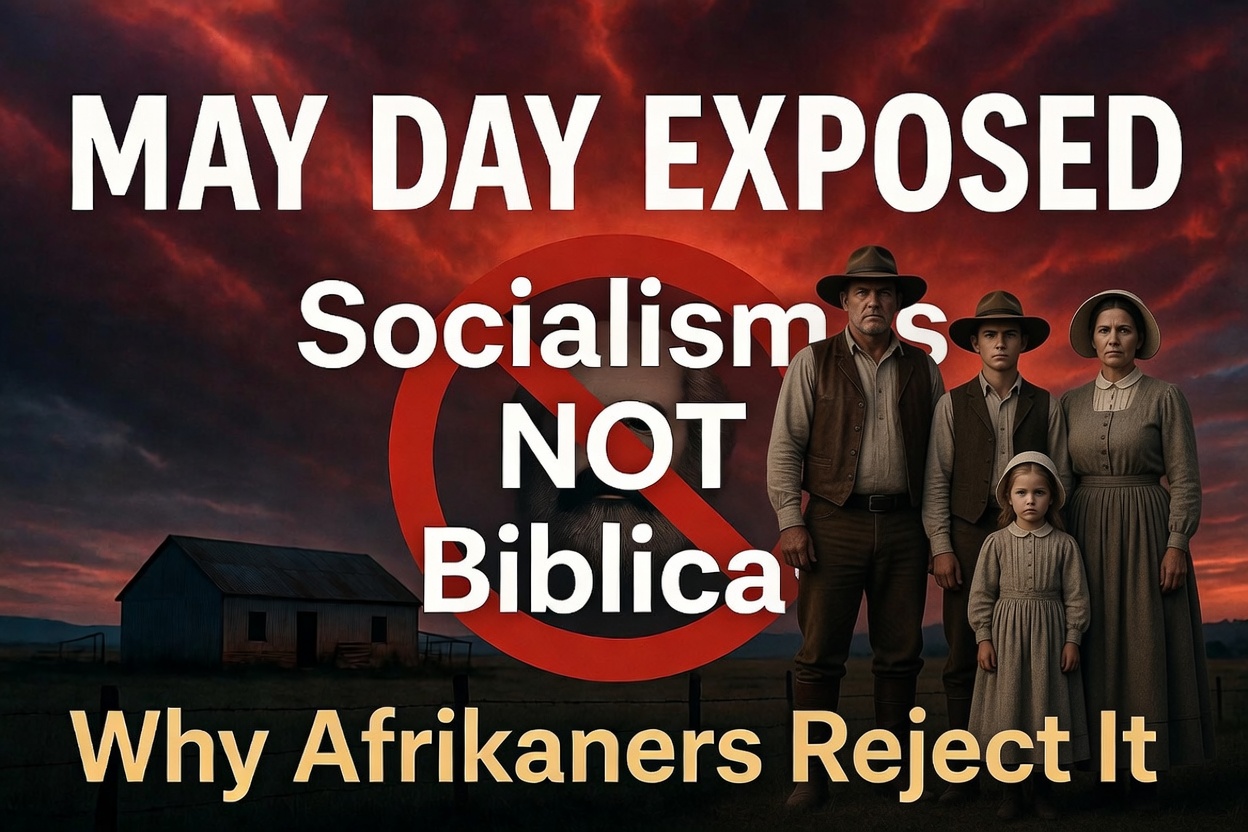
While the ruling party and its allies celebrate it as a triumph for the “working class,” many Afrikaners and freedom-loving South Africans see it for what it truly is: a symbol of the Marxist worldview that has contributed to the country’s economic stagnation, rising unemployment, and erosion of individual liberty.
A Holiday Born in Socialist Struggle
International Workers’ Day originated in the late 19th century from the socialist and anarchist movements pushing for an eight-hour workday. It was formalised by the Second International – a global socialist organisation – and quickly became a rallying point for communist parties worldwide. In the Soviet Union, Maoist China, and Castro’s Cuba, May Day was (and remains) a spectacle of state power, military parades, and class warfare rhetoric.
South Africa imported this holiday post-1994 as part of the ANC’s alliance with the South African Communist Party (SACP) and COSATU. It was never a neutral recognition of hard work. It is explicitly ideological: celebrating “solidarity,” collective bargaining, and the narrative of perpetual class conflict.
WATCH:
Socialism and Marxism Are Not Biblically Oriented
At its core, Afrikaner rejection of May Day stems from a deep Christian conviction. Afrikaner culture was forged in the Calvinist tradition, which emphasises personal responsibility, private property, voluntary charity, and the dignity of honest labour before God.
The Bible does not support Marxist or socialist principles:
- Private Property: The Ten Commandments include “You shall not steal” (Exodus 20:15) and “You shall not covet” (Exodus 20:17), affirming the right to own and steward possessions. Socialism’s drive for state seizure and redistribution directly contradicts this.
- Personal Responsibility: Scripture teaches that “if anyone is not willing to work, let him not eat” (2 Thessalonians 3:10). It praises the diligent farmer and craftsman (Proverbs 31, Parable of the Talents in Matthew 25), not the idle who demand from others.
- Voluntary Generosity, Not Coerced Redistribution: True charity in the Bible flows from the heart (2 Corinthians 9:7 – “Each one must give as he has decided in his heart, not reluctantly or under compulsion”). Marxism replaces God with the State and Christian compassion with envy-driven class warfare.
- Equality vs. Equity: The Bible affirms equality before God and the law, but rejects enforced economic equality that punishes success and rewards laziness. Jesus’ teachings focus on spiritual renewal and individual moral accountability, not revolutionary overthrow of social orders.
Karl Marx himself called religion “the opium of the people” and viewed Christianity as an obstacle to his materialist revolution. Socialism elevates the collective and the state above the individual and the family – a direct inversion of the biblical order where authority flows from God to the individual, family, church, and limited civil government.
Why Afrikaners Say No
Afrikaners, whose ancestors built farms, towns, and industries through grit, innovation, and Calvinist values of personal responsibility, have good reason to reject May Day.
- It Glorifies Collectivism Over Individual Effort Afrikaner culture honours the boer who rises early, works his land, provides for his family, and builds wealth through stewardship – not state handouts or union-enforced equality.
- It Ignores the Failures of Socialist Economics Look at Venezuela, Zimbabwe, or South Africa’s own state-owned enterprises. Since the ANC-SACP-COSATU alliance entrenched its power, economic growth has lagged, investment has fled, and policies have prioritised race over merit. Afrikaner farmers continue producing food despite attacks and expropriation threats.
- Cultural Erasure and Political Weaponisation May Day serves as another tool in the identity politics arsenal – framing productive minorities as oppressors while excusing governance failures.
Why You Should Reject It Too
You don’t need to be Afrikaner to see the problem. South Africa desperately needs a culture of enterprise, secure property rights, and biblical principles – not more redistributionist festivals. Countries that thrive embraced markets, education, and personal accountability, not class warfare.
This May 1, while the tripartite alliance holds rallies, reflect on what truly builds nations: hard work without apology, secure property, voluntary charity, and freedom from ideological coercion. Afrikaners reject May Day not out of hatred, but out of hard-earned wisdom rooted in Scripture and history. South Africa would do well to learn from them before more socialist experiments deepen the crisis.
The path forward lies in returning to timeless biblical truths and rejecting failed ideologies of the past.

Comments (0)
Leave a Comment