
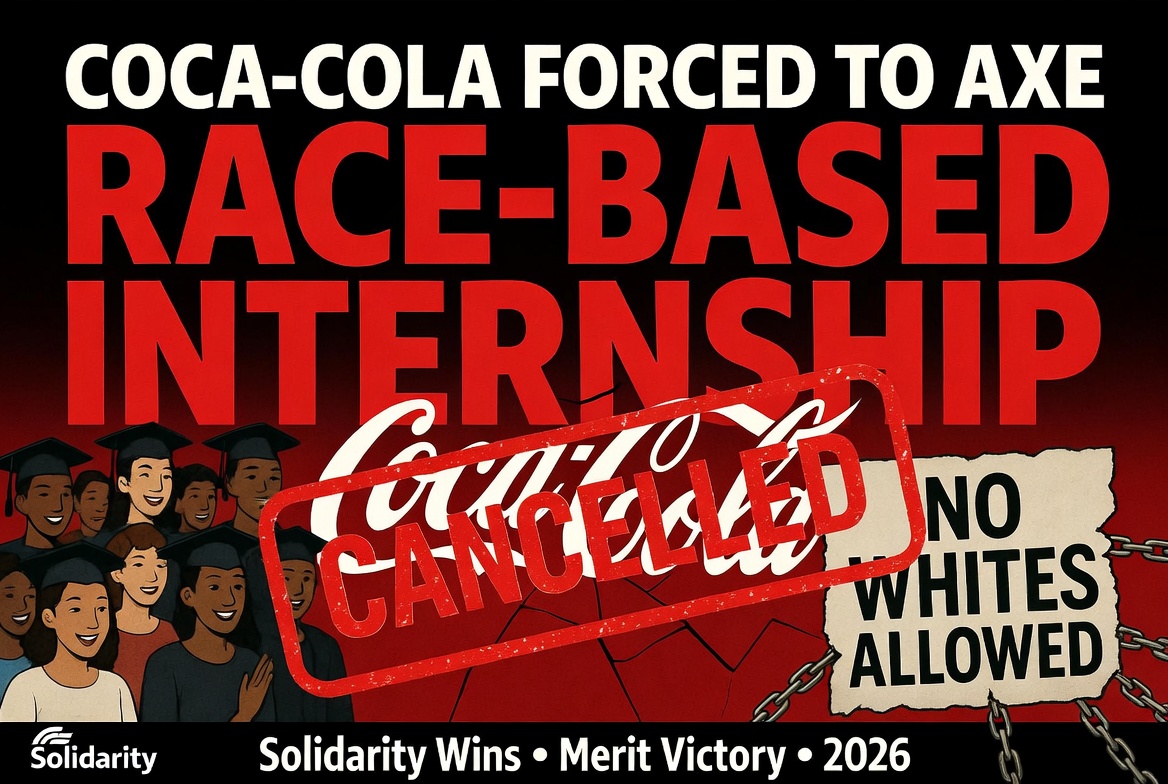
In a rare but significant pushback against South Africa’s entrenched system of racial preference, Coca-Cola Beverages South Africa has withdrawn a 12-month internship advertisement following a formal complaint by trade union Solidarity.
The advert, targeting positions in Durban and Pretoria, explicitly limited applications to candidates from “designated groups” under the Employment Equity Act — primarily Black Africans, Coloureds, and Indians. White, Chinese, and other South African youth were effectively barred from applying, regardless of qualifications, talent, or need.
Solidarity described the exclusion as both immoral and illegal, arguing it violates the constitutional principle of equality and amounts to naked racial discrimination. The union escalated the matter, including complaints to the OECD, and called for an immediate end to race-based hiring requirements across the board.
Coca-Cola quickly backtracked. The company claimed the discriminatory wording was an “error,” removed the advert, issued an apology, and launched an internal investigation into its recruitment practices to “ensure fairness.”
A Telling Admission
This is not an isolated slip-up. It is the predictable outcome of a legislative framework that has institutionalised race as the primary criterion for opportunity in post-1994 South Africa. The Employment Equity Act and Broad-Based Black Economic Empowerment (B-BBEE) have created a culture where major corporations feel compelled — or legally pressured — to advertise jobs and internships open only to certain skin colours.
Solidarity CEO Dirk Hermann has been blunt: the current system is “morally bankrupt.” For years his union has fought these policies in court and in public, arguing that they punish competence, entrench division, and hurt the very people they claim to help by lowering standards and breeding resentment.
The Broader Crisis
South Africa’s youth unemployment rate remains catastrophic — hovering near or above 60% for those under 35. In this environment, every internship, learnership, or entry-level position matters. Yet instead of opening opportunities to the best and brightest regardless of race, companies continue to play the racial quota game out of fear of government penalties, lost tenders, or public shaming by the ANC and EFF.
This case exposes the hypocrisy at the heart of “redress.” Thirty-two years after apartheid, race-based exclusion is still official policy — now directed at a new generation of South Africans who had nothing to do with the old regime. White, Indian, and Coloured youth from poor and working-class backgrounds are told their futures are less important than meeting demographic targets.
Meanwhile, the real drivers of unemployment — failing education, collapsing infrastructure, energy insecurity, crime, and policy uncertainty — go unaddressed.
Small Victories Matter
Coca-Cola’s swift retreat is a small but important victory. It shows that sustained pressure from organisations like Solidarity can force even multinational giants to think twice before openly practising racial discrimination.
However, one withdrawn advert does not fix a broken system. South Africa still has over 142 pieces of race-based legislation on the books. Until Section 9 of the Constitution (equality before the law) is properly enforced and race-based laws are dismantled in favour of need-based, merit-driven policies, these incidents will continue.
Young South Africans — of all races — deserve a country where opportunity is determined by what you can do, not by who your grandparents were. Cases like this prove that pushback works. More of it is urgently needed if South Africa is ever to move beyond the politics of grievance and racial bean-counting.

Comments (0)
Leave a Comment