
Let that number sink in.
Nearly 44% of Americans still find Jimmy Kimmel entertaining enough to keep watching. After years of him mocking a sitting president’s family, spreading division, and delivering hate disguised as humour, almost half the country still tunes in and applauds.
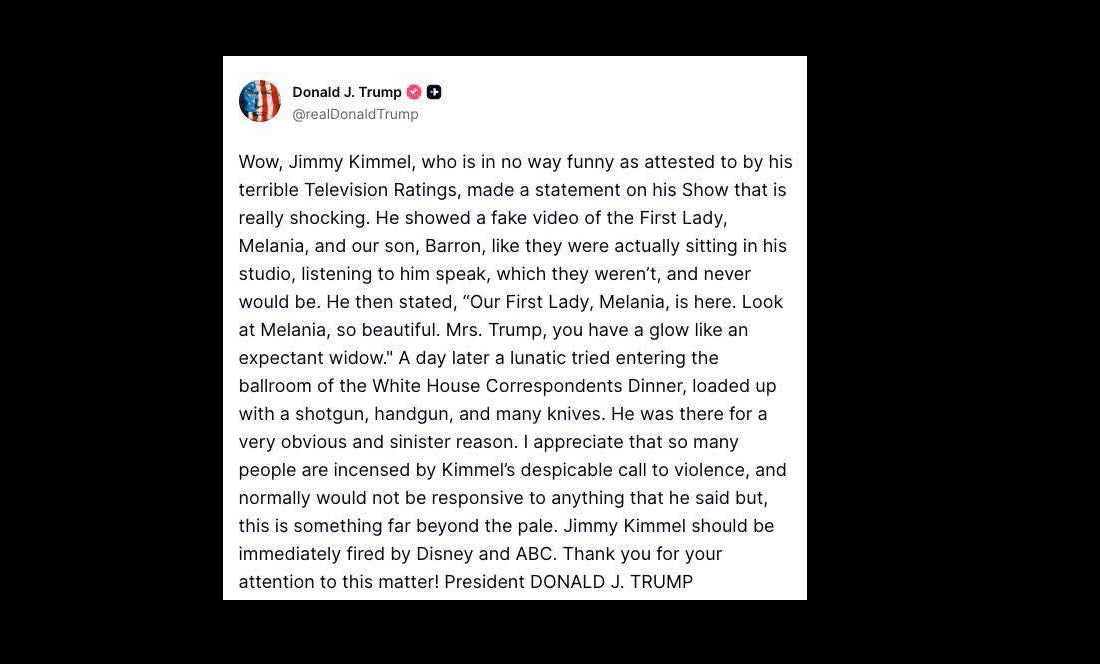
Yesterday, First Lady Melania Trump took the rare step of directly calling for ABC to fire him. In a powerful statement, she condemned Kimmel’s “hateful and violent rhetoric” aimed at her family, calling it corrosive to the nation. President Trump followed with a blistering rebuke, labelling Kimmel unfunny, dishonest, and demanding his immediate dismissal from Disney and ABC.
They are right. But the deeper sickness isn’t one comedian — it’s the large audience that still cheers him on.
The Moral Question for the 44%
To the 44% of Americans still supporting and laughing along with Jimmy Kimmel:
What kind of people have you become?
What does it say about your character, your values, and your basic humanity that you derive entertainment from the public humiliation of a First Lady — a mother — and her family? When did mocking a woman’s dignity, twisting her image, and spreading venom toward political opponents become acceptable evening entertainment? Have you lost all sense of decency, or have you simply been conditioned to see half your fellow citizens as legitimate targets for contempt and cruelty?
This is no longer about comedy. It is about the moral rot that allows millions to celebrate when cultural institutions spit on the other half of the country. If you cheer this, you are not neutral — you are actively participating in the psychological warfare tearing America apart.
The South African Parallel: Where This Road Leads
South Africa offers a grim preview of where this “Kimmel mentality” ultimately ends. For decades, state-aligned media, radical political parties (EFF, MK, and factions of the ANC), and cultural elites have relentlessly demonised Afrikaners and other minority groups as perpetual villains — “settlers,” “racists,” and “oppressors” who deserve everything coming to them.
The result?
- Constant hate speech with little consequence.
- Farm murders and brutal attacks on minority communities framed as “crime” rather than targeted hatred.
- Race-based laws (over 142 still active) that institutionalise discrimination.
- The erosion of language rights, cultural self-determination (Section 235 under attack), and basic safety.
Violence that began as rhetorical has spilled into reality. Johannesburg CBD executions, KZN political killings, and the normalisation of targeting “the wrong” race or group have become routine. The media and political class that spent years stoking resentment now acts shocked when blood flows — just as America’s elites will one day feign surprise if their cultural poison produces real division and conflict.
When nearly half a nation is taught to view the other half as enemies worthy of mockery and eventual destruction, social cohesion collapses. Entitlement, grievance politics, and moral superiority replace shared values. Federal power grabs, court-packing schemes, and weaponised institutions only accelerate the fracture.
America is not South Africa — yet. But the warning signs are flashing red. The same playbook of relentless demonisation, protected by captured institutions, is playing out in real time on American television every night.
Jimmy Kimmel is a symptom. The 44% who still cheer him are the fuel.
If America continues normalising this level of cultural contempt, the discussions about civil conflict will move from podcasts to headlines. The Trumps have drawn a necessary line. The rest of the country — especially that 44% — must now answer the moral question staring them in the face:
How much hatred disguised as humour are you willing to celebrate before you no longer recognise your own country?
The choice remains yours — for now. But history shows that nations do not survive this level of cultivated division indefinitely. South Africa’s blood-soaked streets stand as a cautionary tale. America should heed it before it’s too late.

Comments (0)
Leave a Comment