
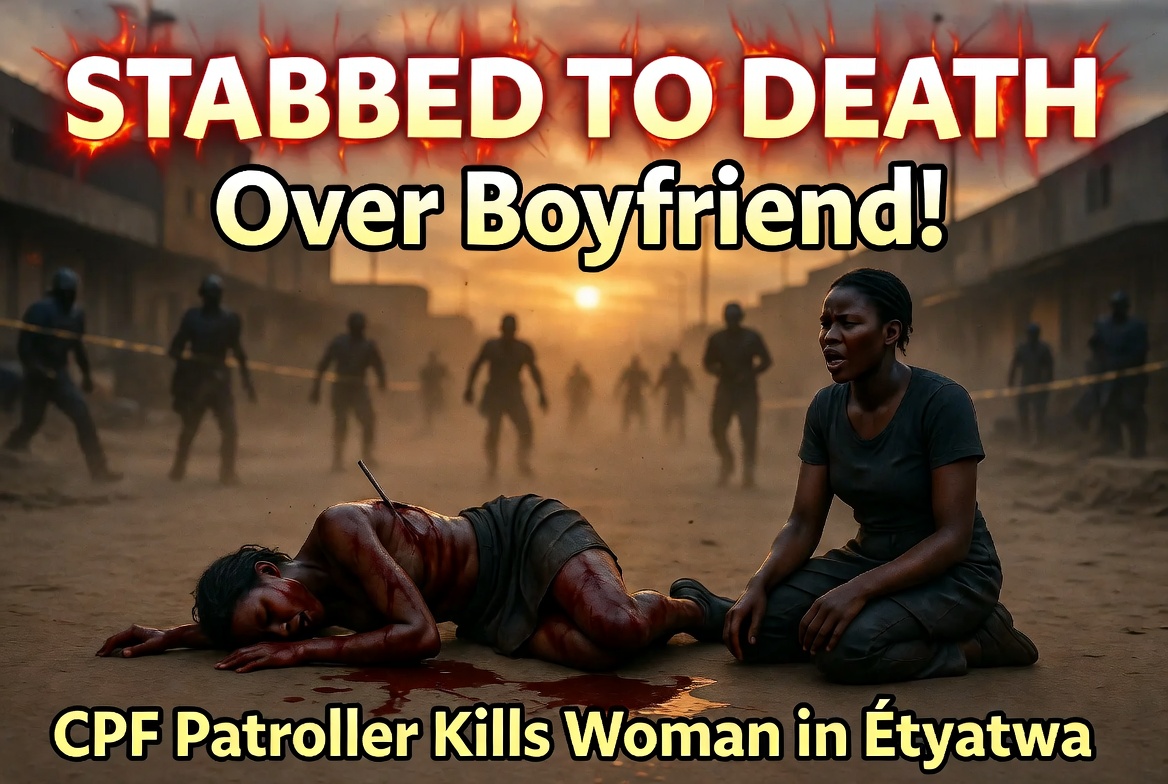
In the early hours of Sunday, April 26, 2026, in the Barcelona section of Etwatwa near Daveyton, two women — both from the same community — descended into a lethal confrontation over a shared boyfriend. The victim was stabbed multiple times in the back while attempting to flee and died on the dusty ground. The alleged killer, a Community Police Forum patroller attached to the Etwatwa Police Station, sat beside the body with no apparent remorse as the video spread like wildfire. This was not a premeditated hit or a robbery gone wrong. It was pure, explosive interpersonal rage — the kind of flashpoint violence that conservative analysts have warned for years defines far too much of South Africa’s township reality.
WATCH:
Psychological Profile of the Two Women: A Window into Low Impulse Control and High Emotional Reactivity
The psychology on display here is textbook for the high-time-preference, low-conscientiousness pattern repeatedly observed in environments of chronic stress, family breakdown, and normalized aggression.
The perpetrator (the CPF patroller) exhibited classic signs of extreme emotional dysregulation and near-zero future-time orientation. Jealousy triggered an immediate, overwhelming urge for dominance and retribution. Instead of walking away, de-escalating, or even using words as weapons, she allegedly escalated to lethal force in seconds. This is not mere “anger issues.” It reflects a cognitive and behavioral profile where the immediate gratification of rage overrides any calculation of consequences — arrest, loss of job, prison, or lifelong stigma. In psychological terms, this points to poor prefrontal cortex regulation of the amygdala’s fight-or-flight response, compounded by cultural modeling where physical dominance in romantic disputes is sometimes tacitly tolerated or even glorified in certain township subcultures. Her role as a community patroller only heightens the tragedy: the very person trusted to restrain violence allegedly embodied its worst expression.
The victim, meanwhile, showed equally flawed risk assessment and conflict-resolution skills. Engaging in a public screaming match over a man, then turning to run only after the knife came out, suggests she too operated in a high-emotion, low-foresight mode. Both women appear to have been operating under what behavioral economists call “hyperbolic discounting” — massively overvaluing the present emotional payoff (winning the boyfriend, exacting revenge) while discounting the catastrophic future costs. Decades of research into interpersonal violence in high-crime environments show this pattern is amplified by absent fathers, multi-partner fertility norms, alcohol abuse, and early exposure to domestic chaos — all statistically overrepresented in many Black South African townships.
This is not unique to these two individuals. It is a microcosm of a broader behavioral tendency: interpersonal disputes (jealousy, arguments, drunken brawls) account for the majority of South Africa’s murders year after year, far outstripping premeditated robberies or political killings.
Why This Pattern of Impulsivity Poses a Direct Threat to White South Africans and Their Economic Assets
White South Africans (roughly 7% of the population) disproportionately own commercial farmland, established businesses, shopping centres, and skilled professional services. This concentration of productive capital makes them predictable, high-value targets when impulsive violence spills out of the townships.
- Farm Attacks and Rural Insecurity: White farmers still own the bulk of South Africa’s commercial agricultural land. Farm attacks — often involving extreme brutality, torture, and murder — are frequently described by victims’ families as frenzied and opportunistic rather than purely profit-driven. The same low-impulse-control mindset that turns a boyfriend dispute into a stabbing can turn a routine burglary into a massacre. Farmers live in isolated homesteads with limited immediate police response. The psychological toll is devastating: constant vigilance, hyper-vigilance, and the knowledge that one impulsive intruder can destroy generations of work in a single night.
- Businesses and Urban Predation: White-owned or managed businesses face relentless pressure from armed robberies, cash-in-transit heists, carjackings, and smash-and-grab incidents. Criminals exhibiting the same rapid-escalation psychology seen in Etwatwa do not stop at township boundaries. They migrate toward perceived wealth. Business owners incur massive private security costs, insurance premiums, and lost productivity — expenses that smaller or newer Black-owned enterprises often cannot match. This creates a self-reinforcing cycle: higher costs drive some White entrepreneurs out, reducing job creation and tax revenue that could otherwise fund better policing.
- Emigration and Capital Flight: The cumulative effect of living under the shadow of unpredictable violence is “White flight.” Skilled professionals and capital owners emigrate in disproportionate numbers, taking expertise, investment, and tax contributions with them. Every impulsive killing that signals societal breakdown accelerates this exodus, weakening the very economy that sustains social grants and public services relied upon by all races.
The Danger Extends to Other Races and the Broader Society
This is not solely a “White problem.” Indian and Asian shopkeepers in townships and rural areas have been repeatedly targeted in xenophobic looting sprees and brutal robberies — the 2021 riots being the most visible example. Coloured communities in the Cape Flats suffer some of the world’s highest gang-violence rates, driven by the same impulsive turf and drug disputes. Even recent African immigrants find themselves victimized by the very low-trust, high-violence environment they sought to escape.
The core danger is societal entropy. When a significant subset of any population normalizes rapid escalation from emotion to lethal force, the rule of law erodes. Property rights become theoretical. Investment dries up. Police resources are stretched thin. Everyone — Black, White, Coloured, Indian — pays the price through higher taxes, worse services, and diminished safety. But those with visible assets (White farmers and business owners) feel the brunt first and hardest because they represent the “soft targets” with the highest payoff for impulsive predators.
South Africa cannot afford denial. Pretending this pattern of impulsivity is merely “poverty” or “colonial legacy” after 30+ years of majority rule ignores the data: the vast majority of victims are Black, yet the spillover consistently threatens the productive minority that keeps the lights on. Honest reckoning — stronger families, zero-tolerance policing, cultural emphasis on restraint and future planning — is the only path out. Until then, incidents like the Etwatwa stabbing are not isolated tragedies. They are warning flares for the entire nation. The blood on the ground in Barcelona is a reminder that unchecked emotion always finds its way to the productive heart of a society.

Comments (0)
Leave a Comment