
By WesternPulse News Desk Johannesburg, 23 April 2026
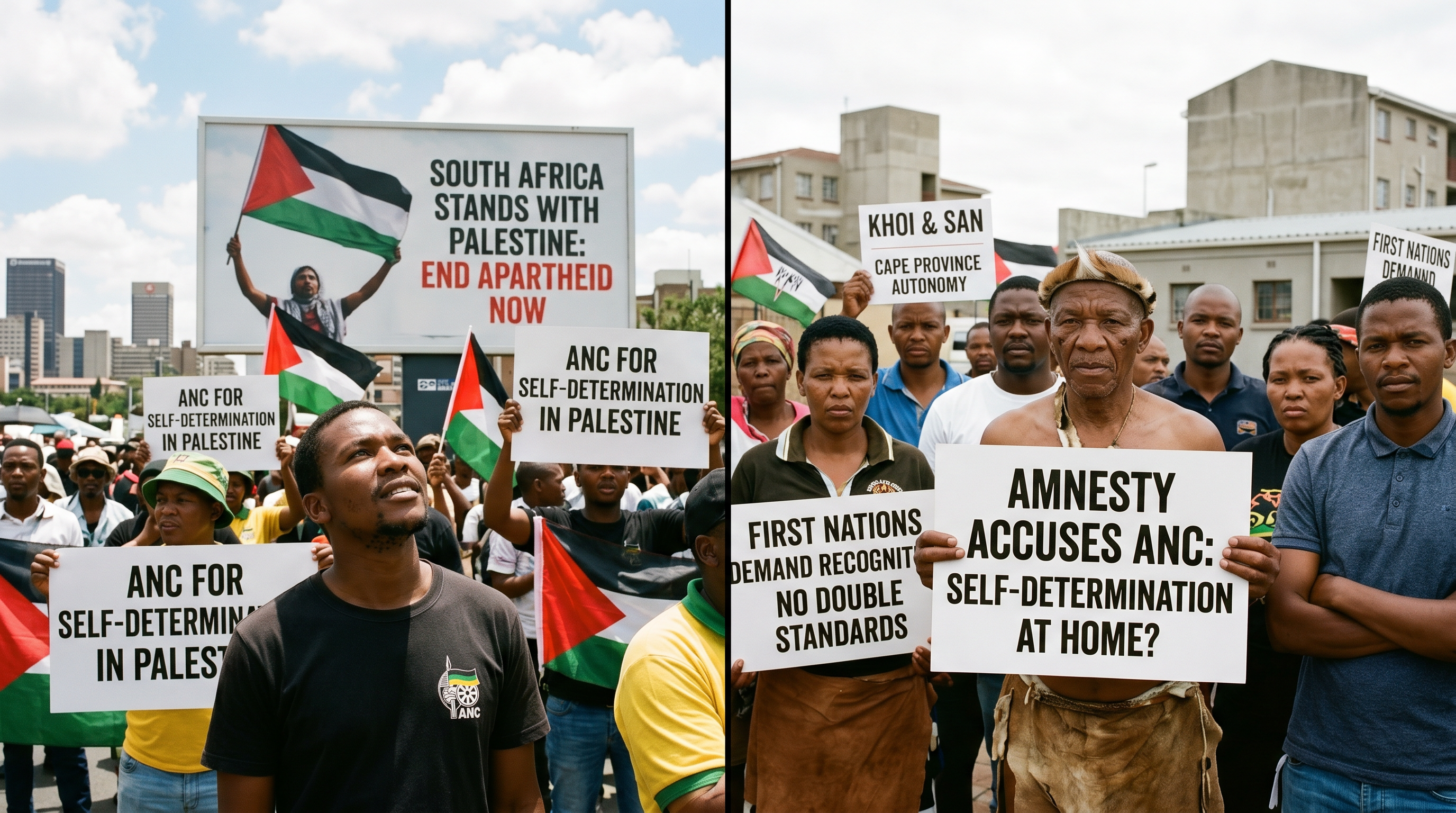
For decades, Amnesty International has stood as a pillar of liberal human rights advocacy, often aligning closely with liberation movements like South Africa’s African National Congress (ANC). The ANC, which led the fight against apartheid and has governed since 1994, enjoyed consistent support from the organization on the global stage. Yet in a notable shift, Amnesty has publicly challenged South Africa’s foreign policy inconsistencies, particularly its vocal backing of Palestinian self-determination contrasted with its domestic stance toward ethnic and indigenous groups within its own borders.
In a November 2025 statement, Amnesty International’s Secretary General Agnès Callamard urged South Africa to demonstrate “principled global leadership” while highlighting the need for greater consistency in its human rights record. The organization called on Pretoria to avoid the “double standards that are destroying universal values and the credibility of international law,” including by addressing violations by allies and ensuring universal application of principles.
This marks what observers describe as a rare public rebuke of the ANC-led government on an issue central to its international identity. South Africa has been at the forefront of international efforts to support Palestinian rights, including filing a genocide case against Israel at the International Court of Justice and championing self-determination for Palestinians. President Cyril Ramaphosa and ANC leaders have repeatedly framed this as an extension of their own anti-apartheid struggle.
WATCH:
The Core Inconsistency?
Critics, including some within South Africa’s minority communities and opposition voices, argue that the government applies self-determination selectively. While championing it abroad for Palestinians, South Africa’s constitution and policies emphasize a unified, non-racial “rainbow nation” under Section 235, which allows for cultural self-determination but has not led to meaningful autonomy or secessionist accommodations for distinct ethnic or indigenous groups.
Indigenous Khoi and San peoples, often called the First Nations of southern Africa, have long complained of marginalization, exclusion from land restitution processes, and lack of formal constitutional recognition as distinct “peoples” with self-determination rights under international frameworks like the UN Declaration on the Rights of Indigenous Peoples. Other groups, including Afrikaners, Coloured communities in the Western Cape, and Zulu traditionalists, have at times raised issues of cultural preservation, language rights, and regional autonomy amid concerns over farm attacks, affirmative action policies, and centralized governance.
Amnesty has historically taken no formal position on sovereignty or territorial disputes within South Africa and continues to focus its South Africa reporting on issues like gender-based violence, police conduct, and socioeconomic rights. However, its broader advocacy for indigenous self-determination globally—emphasizing peoples’ rights to freely determine their political status—has fueled perceptions of a quiet tension with Pretoria’s approach.
A Longstanding Relationship Under Strain?
Amnesty’s history with the ANC dates back to the anti-apartheid era, when the organization documented abuses under the National Party regime and amplified the voices of liberation leaders. Post-1994, the ANC was frequently portrayed as a model of reconciliation and progressive governance. The organization’s reports on Israel, including its 2022 apartheid designation, aligned rhetorically with South Africa’s strong pro-Palestinian foreign policy.
The 2025 remarks represent a departure, occurring as Amnesty’s annual State of the World’s Human Rights reports have grown more pointed about selective advocacy undermining international norms. South Africa has faced domestic criticism too: movements like CapeXit in the Western Cape have pushed for greater provincial autonomy or even independence, citing governance failures, though without broad electoral success.
Government officials have dismissed such critiques as distractions from global solidarity efforts. The ANC maintains that South Africa’s unitary state protects minority rights through constitutional guarantees, while its international stance reflects moral consistency rooted in its history of oppression.
Reactions and Implications
Human rights analysts note the irony. “Amnesty built much of its credibility calling out selective justice,” said one Johannesburg-based commentator. “Highlighting potential hypocrisy in one of its traditional allies is uncomfortable but necessary if universal standards mean anything.”
Amnesty South Africa continues to document local issues, from political killings to service delivery failures, without endorsing separatist claims. The organization stresses that self-determination must align with international law and not undermine other rights.
As global scrutiny intensifies on human rights consistency—from Gaza to Ukraine to Africa—Amnesty’s nudge to Pretoria underscores a broader challenge: Can nations credibly champion distant causes while unresolved tensions simmer at home?
South Africa’s response, and whether this signals a deeper rift with longtime allies in the human rights community, will be watched closely in the coming months. For an organization once seen as reliably aligned with the ANC’s worldview, the message is clear: principles must apply universally, or they apply to none.

Comments (0)
Leave a Comment