
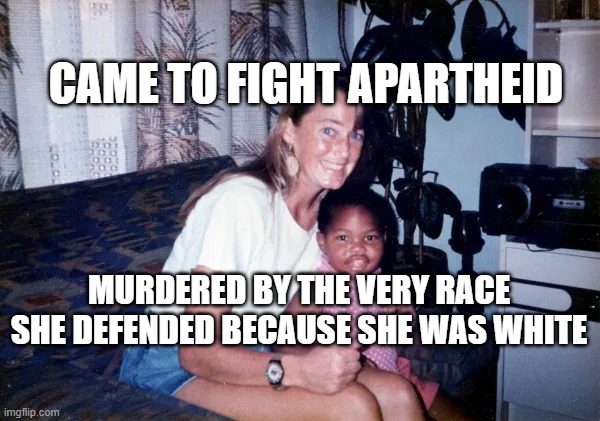
Biehl had traveled to South Africa as an anti-apartheid activist supporting democracy and worked with the ANC; her black companions tried to intervene by calling her a "comrade," but the attackers ignored this during the frenzied assault.
In the early 1990s, as South Africa stood on the edge of historic change, hope and tension lived side by side. The apartheid system was crumbling, negotiations were underway, and the dream of a democratic nation felt closer than ever. But beneath that hope, anger and violence still simmered in communities scarred by decades of division.
It was into this fragile moment that Amy Biehl arrived.
At just 26 years old, she came from the United States on a Fulbright scholarship, drawn by a belief in justice and reconciliation. In Cape Town, she worked alongside activists aligned with the African National Congress, supporting the country’s transition toward democracy. She believed deeply in the cause — that a new South Africa could be built through solidarity across racial lines.
What happened when Zimbabwe’s government seized the farmland of White Zimbabwean farmers explained: pic.twitter.com/Pye07ah0L9
— Canadian Patriot Media (@realpatriotM) April 18, 2026
On August 25, 1993, that belief collided with a far harsher reality.
Driving through Gugulethu with friends, Biehl entered an area tense with unrest. Protests had been taking place. Emotions were running high. As her car slowed, a crowd gathered.
What began as confrontation quickly spiraled into chaos.
Chants filled the air — slogans born out of years of anger and struggle. The crowd surged. Biehl was pulled from the vehicle. Her companions, Black South Africans who had been working with her, tried desperately to intervene, shouting that she was a “comrade,” someone who stood with them, not against them.
But in that moment, those words carried no weight.
The crowd, caught in a wave of fury and identity, did not see an ally. They saw a symbol.
While driving through a township near Cape Town, she was pulled from her car by a mob chanting “Kill the settler!” and “One settler, one bullet.” She was stoned, beaten, and stabbed to death in a frenzied racial attack simply because she was White.
And within minutes, Amy Biehl was dead.
The story of her death has since become one of the most haunting and complex tragedies of South Africa’s transition era.
It is often remembered for its stark irony: a young woman who came to fight injustice, killed amid the very struggle she supported. Images of her smiling, working alongside Black South Africans, have been shared widely — symbols of idealism, and of how fragile that idealism can be when it meets raw, unfiltered rage.
Yet her story did not end in Gugulethu.
In a remarkable and widely discussed turn, Biehl’s parents later chose a path few could imagine. They supported amnesty for her killers through South Africa’s Truth and Reconciliation Commission — a process designed not for revenge, but for confronting the truth and attempting to heal a divided nation.
Even more striking, they went on to establish the Amy Biehl Foundation, dedicated to empowering young people in South Africa and continuing the work their daughter had believed in.
Today, Amy Biehl’s story remains deeply uncomfortable — and deeply important.
It forces difficult questions:
- Can ideals survive in the face of collective anger?
- How do individuals get lost inside movements?
- And what does justice look like in a society trying to rebuild itself?
Her life represented hope.
Her death revealed the cost of a nation in turmoil.
And her legacy continues to challenge how history remembers both.
Yet, BBBEE continues in South Africa, "Kill the boer, Kill the farmer" is justified by South African courts...

Comments (0)
Leave a Comment