
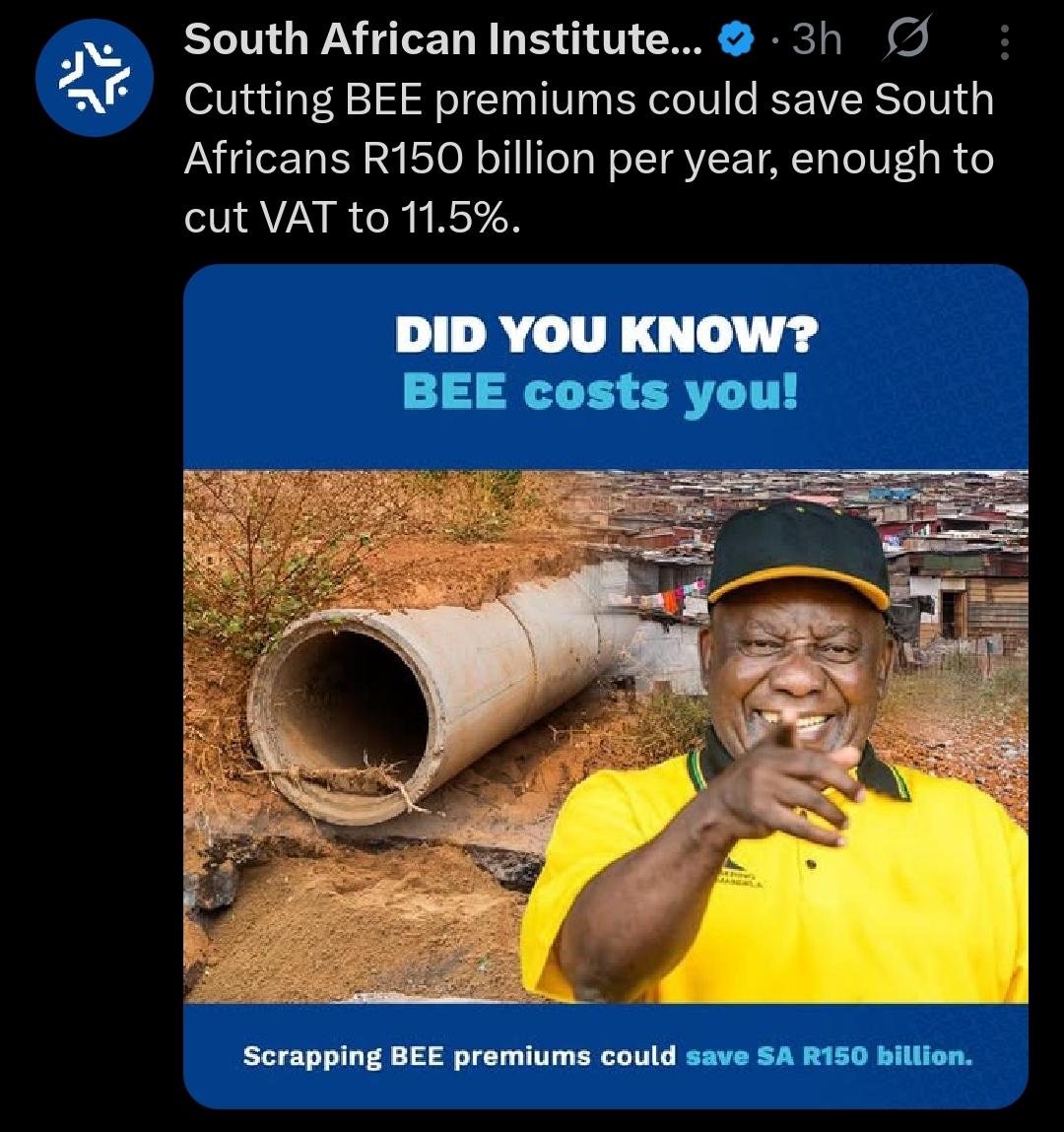
This idea forms part of the IRR’s ongoing “Blueprint for Growth” series, which advocates for a stronger focus on value-for-money in public contracts. The suggestion is generating optimism among those who see it as a practical way to ease financial pressure on households while improving government efficiency.
What Are BEE Premiums?
In South Africa’s public procurement system, BEE policies often allow for preference points or price adjustments that can result in government departments paying a premium for goods and services. These mark-ups — sometimes estimated between 10% and 25% depending on contract size — are intended to advance transformation goals by favouring suppliers that meet certain empowerment criteria.
The IRR argues that these premiums represent a significant hidden cost. With annual government procurement running into hundreds of billions of rands, even modest premiums can accumulate rapidly. Research cited by the IRR places the annual figure in the range of R100 billion to R150 billion. Redirecting these funds, the organisation claims, would not require cuts to education, healthcare, or infrastructure budgets — it would simply mean selecting providers based strictly on the best combination of quality and price.
The Potential VAT Cut: Real Relief for Everyday South Africans
A reduction in VAT from 15% to 11.5% would represent one of the most direct and broad-based forms of tax relief in recent years. VAT affects nearly every consumer purchase, and lower rates typically translate into lower prices for food, clothing, transport, and household goods.
Analysts note that such a cut could particularly benefit lower- and middle-income households, who spend a larger share of their income on VAT-liable items. With inflation and living costs remaining concerns for many families, putting an estimated R100 billion or more back into consumers’ pockets each year could stimulate spending, support small businesses, and contribute to broader economic activity.
Importantly, the proposal emphasises that savings would come from improved procurement efficiency rather than reduced government spending. This “win-win” framing — maintaining service delivery while lowering the tax burden — has resonated with those looking for pragmatic solutions to South Africa’s fiscal challenges.
A Step Towards Greater Competitiveness and Growth
Beyond immediate tax relief, shifting procurement towards pure value-for-money could encourage stronger competition among suppliers. More competitive bidding often leads to innovation, better quality, and long-term cost savings for the state. In an economy seeking to attract investment and create jobs, reducing unnecessary costs in the public sector is viewed by many economists as a positive signal of fiscal discipline.
The IRR’s campaign has extended to provincial legislatures, urging finance MECs to incorporate these changes in appropriations bills. Supporters see this as an opportunity to modernise procurement practices while still pursuing inclusive economic participation through other, potentially more effective mechanisms.
Looking Ahead with Optimism
South Africa faces complex economic realities, but ideas that combine efficiency gains with tangible relief for citizens offer a hopeful path forward. If implemented thoughtfully, removing BEE premiums could free up substantial resources, lower the cost of living for millions, and demonstrate a commitment to responsible public finance.
While transformation remains an important national goal, many observers believe that achieving it alongside faster growth and lower taxes is both possible and desirable. The IRR’s proposal highlights one practical avenue: by focusing on value for every rand spent, government could deliver more for citizens without asking them to pay more in taxes.
As public debate continues and provincial submissions unfold, this discussion underscores a growing appetite for policies that prioritise efficiency, affordability, and shared prosperity. With careful consideration and broad stakeholder input, reforms in this direction could help build a more dynamic and inclusive South African economy — one where resources stretch further and opportunities expand for all.
The coming months will show whether policymakers embrace this optimistic vision of smarter spending and lighter tax burdens.

Comments (0)
Leave a Comment