
The Current Curriculum and the Case for Change
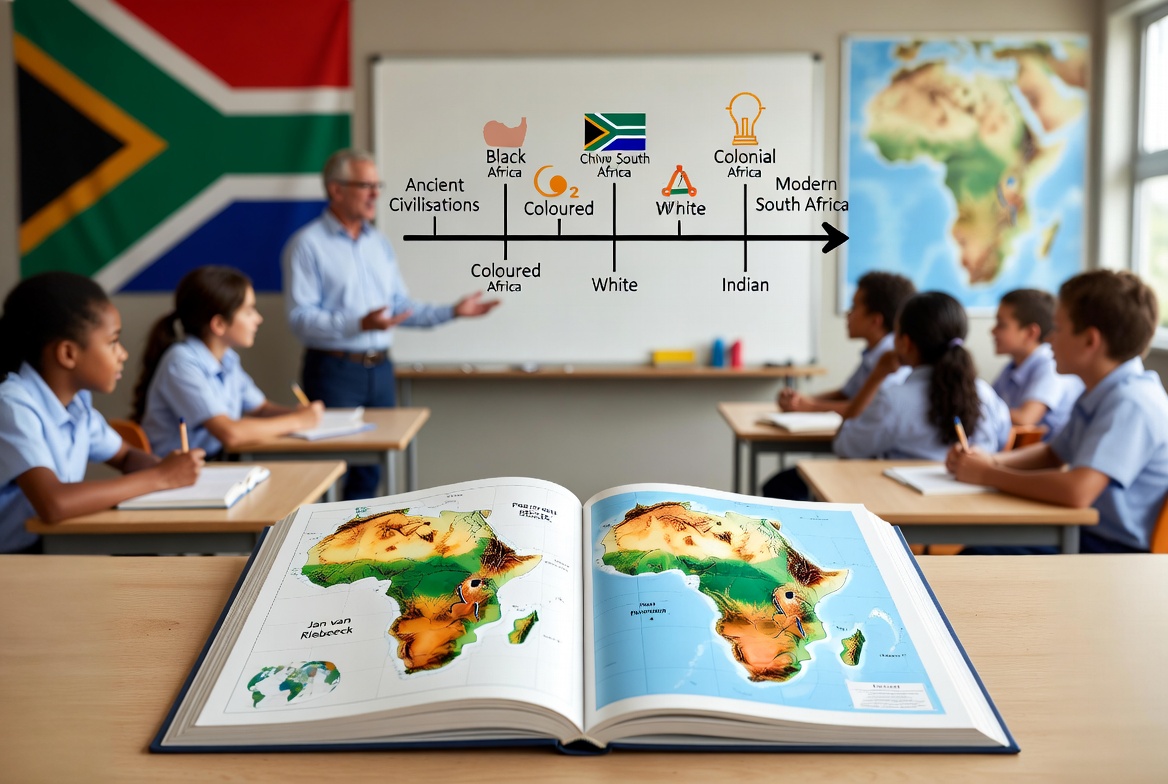
For decades, South African school history has been criticised for its Eurocentric tilt. In many classrooms, particularly in earlier grades, the arrival of Jan van Riebeeck in 1652 at the Cape has served as a prominent anchor point, framing much of the subsequent narrative around colonial settlement, conflicts, and eventual apartheid. This approach, inherited and adapted from earlier systems, has often marginalised pre-colonial African achievements, indigenous knowledge systems, archaeology, and the interconnected histories of African societies before European contact.
Proponents of the overhaul argue that this shift is long overdue. By placing Africa at the centre, the draft curriculum seeks to foster a stronger sense of identity, belonging, and historical continuity among learners. It aims to highlight rich pre-colonial civilisations, gender and cultural histories, labour movements, and the broader story of African resistance and liberation. Supporters, including some education experts and commentators, view it as a corrective measure that better reflects the continent’s role in global history and equips young South Africans with a more relevant understanding of their heritage in a diverse, African society.
Potential Benefits of an African-Centred Focus
A curriculum that gives greater weight to African perspectives could bring several advantages:
- Improved learner engagement: Young people may connect more deeply with history when it includes stories of African kingdoms, trade networks, and innovations rather than distant European events.
- Promotion of national cohesion: Emphasising shared African roots alongside the painful chapters of colonialism and apartheid could help build a more inclusive historical consciousness.
- Broader historical skills: Incorporating oral traditions, archaeology, and diverse sources could encourage critical thinking and an appreciation for multiple viewpoints.
In principle, expanding the temporal scope beyond 1652 makes historical sense. Human settlement in southern Africa dates back tens of thousands of years, and complex societies existed long before Dutch settlement. Teaching this fuller timeline could enrich education without erasing later periods.
Concerns and Risks of the Proposal
Despite these potential gains, the draft has drawn criticism from educators and academics who caution against an overly prescriptive or ideological approach. Prominent voices, such as Professor Jonathan Jansen, have described elements of the proposal as potentially “anti-intellectual” and “soul-deadening” if it prioritises narrative correction over rigorous historical inquiry.
Key concerns include:
- Replacement rather than addition: Shifting focus by dropping or significantly reducing universal topics — such as the Enlightenment, the French Revolution, or global human rights movements — risks narrowing learners’ worldview. Understanding global historical processes remains valuable in an interconnected world.
- Risk of new biases: Any curriculum that centres one geographical or cultural lens too heavily may inadvertently downplay complexity, nuance, or conflicting evidence. History education should strive for balance, evidence-based analysis, and the ability to evaluate sources critically, rather than promoting a single “correct” national story.
- Implementation challenges: South Africa’s education system already struggles with teacher training, resource shortages, and uneven infrastructure. Introducing a substantially new curriculum will require extensive professional development, new textbooks, and assessment tools. Without these, the reform could falter in practice, as seen with previous curriculum changes.
- Political and ideological dimensions: Curriculum design is never neutral. While correcting colonial-era distortions is legitimate, there is a risk that the process could swing too far in the opposite direction, subordinating historical accuracy to contemporary political goals. Effective history teaching should empower learners to think independently, not instil a prescribed identity.
A Balanced Path Forward
The proposal to decolonise and Africanise the history curriculum reflects a genuine desire to address past imbalances in what young South Africans learn. Few would dispute that pre-colonial African history deserves far greater attention than it has historically received in many schools.
However, meaningful reform should aim for inclusion and depth rather than wholesale substitution. A strong curriculum would:
- Integrate robust coverage of African histories and perspectives.
- Retain essential global contexts that help learners understand South Africa’s place in the world.
- Prioritise historical methods — source analysis, evidence evaluation, and debate — over any single narrative.
- Ensure teachers receive adequate training and support to deliver the content effectively.
Public participation in the comment process is crucial. Stakeholders, including historians, teachers, parents, and civil society, should scrutinise the draft for balance, feasibility, and educational rigour.
Conclusion
South Africa’s history curriculum stands at an important crossroads. Moving towards a more African-centred approach has the potential to create a richer, more relevant education that honours the country’s diverse past. Yet, if poorly executed, it could replace one set of limitations with another — producing learners who know less about the wider world or who encounter history primarily as a tool for identity formation rather than critical understanding.
The ultimate test will not be the intentions behind the reform, but its outcomes: Does the new curriculum produce young citizens equipped with accurate knowledge, analytical skills, and an appreciation for historical complexity? As the public comment period unfolds, a measured, evidence-based debate focused on educational quality — rather than political symbolism — will best serve South Africa’s learners.

Comments (0)
Leave a Comment